Overcrowding in A&E departments and corridor care is linked to hundreds of deaths every week in the UK, according to a new study.
A review of more than 19,000 adult patients found that, for every 10% increase in emergency department occupancy, the chance of dying in the following 28 days rose by 1%.
Study details and findings
The work was carried out at 134 A&Es in Wales, Northern Ireland and England last year and presented at the European Emergency Medicine Congress in France.
Dr Ryan McHenry, from the University of Glasgow, and an emergency medicine doctor in the west of Scotland, presented the study, which took place across a two-week period in March 2025 and reflects around 70% of emergency departments in Wales, Northern Ireland and England.
He said: “We found that increased crowding in emergency departments is associated with increased mortality for patients admitted to hospital.
“This is important because we know that emergency departments are now often very crowded, and reducing that crowding has the real potential to save lives.”
Excess deaths estimate
Dr McHenry told the Press Association how hundreds of deaths were linked to busy A&E departments every week.
He said around 550 deaths every week across all of England, Wales and Northern Ireland may be caused by overcrowding in emergency departments.
“Although we cover the majority of the emergency departments in the UK, this was still a relatively small study, and the possible range of expected deaths is therefore large; we estimate anywhere between 33 and 1,083 excess deaths are plausible,” he said.
Occupancy and corridor care
For the research, occupancy was calculated by how many spaces, such as cubicles, the A&E department had compared with how many patients were being treated.
Results indicated that, on average, emergency departments were operating at 175% occupancy, a marker of overcrowding.
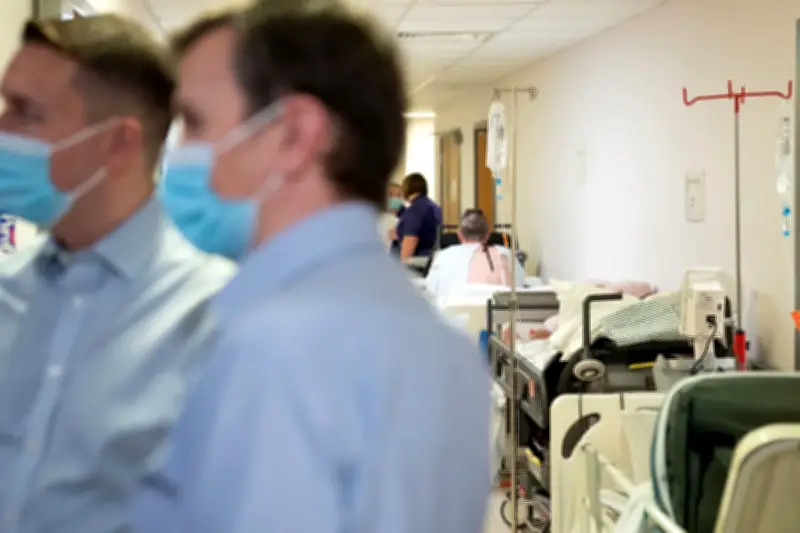
Dr McHenry and his colleagues also looked at the impact of “corridor care” where patients receive treatment in non-standard clinical spaces such as corridors.
This was also linked to an increase in the risk of deaths at a similar rate as overcrowding, although the team said occupancy rate was much easier to measure and record.
Expert and official responses
Dr Felix Lorang, a member of the emergency medicine congress abstract selection committee, said: “Many emergency departments are operating far beyond capacity, and the ‘exit block’ — when patients are stuck in the emergency department because no inpatient ward beds are available – places an even greater burden on these emergency departments.
“This makes it harder for doctors and nurses to deliver the treatment patients need, or even the minimum treatment required to prevent further harm.
“This research makes it unmistakably clear to all of us – patients, medical professionals, and hospital managers alike – that overcrowding and corridor care mean many emergency patients will not survive.”
Dr Ian Higginson, president of the Royal College of Emergency Medicine (RCEM), said: “People are dying in association with overcrowding in emergency departments.
“This should be cause for alarm among policymakers, and yet we are not seeing any urgency.”
He said the findings “add yet more evidence about this utterly normalised and unacceptable state of affairs”.
Dr Higginson added: “RCEM continues to call for the governments of the four UK nations to act to address the catastrophic effect overcrowding and long waits in our emergency departments on our patients – who are suffering harm and will continue to do so because of a failure to act.
“They must also recognise the impact that working in such conditions have on staff, who we risk losing in droves should the problem persist.”
A Department of Health and Social Care spokesperson said: “The NHS faced the busiest summer in its history this year, but thanks to the incredible work of NHS staff, 75% of people in A&E were seen in four hours in August.
“Overcrowding can have a serious impact on patients’ experience and safety, which is why we are taking urgent action to reduce pressure on emergency departments and end corridor care.
“We know there is much more to do to reduce pressures on A&E departments, which is why we’re going further and faster to improve emergency care, deploying expert teams into the most challenged trusts and investing more than £1.5 billion in hospital buildings and facilities to help them withstand year-round pressure.
“And by shifting more care into the community, we are helping people to get the care they need closer to home.”