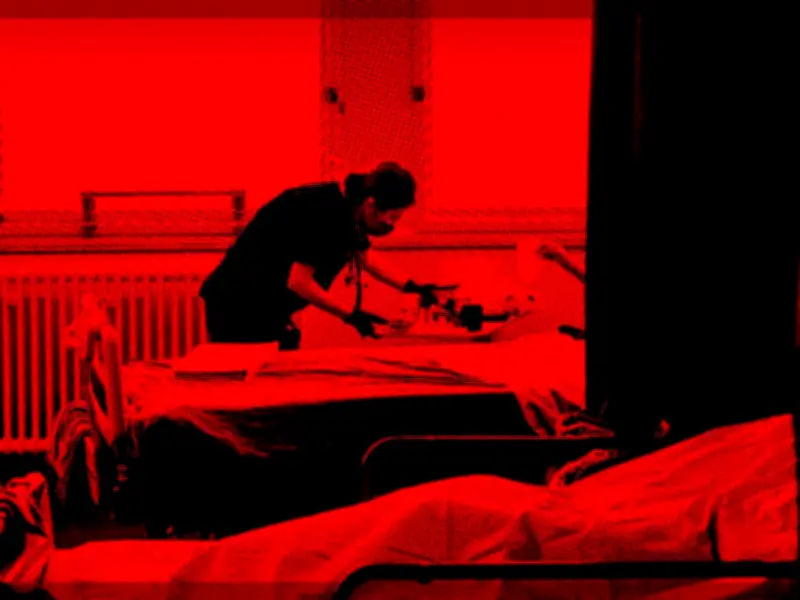
Doctors in Greater Manchester have described how A&E departments saw around 'double' the number of patients they would expect for the time of year during the busiest times of the summer heatwaves, with no respite from the always-hectic winter months. Medics have had to work in soaring temperatures while caring for patients already struggling with the effects of the heat, and they are urging decision-makers to fund vital changes to keep both staff and patients safe as climate change brings the prospect of more extreme weather.
Heat exhaustion and heatstroke cases
Hospitals and GP practices saw patients affected by heat exhaustion and heatstroke during the summer heatwaves. Doctors say that young children and elderly people, particularly those with pre-existing chronic conditions, have been the worst affected.
Dom, an A&E doctor, told the Manchester Evening News: "It's been pretty hard for healthcare workers. I think historically the summer months have been more to recuperate and go to work, and not experience a mad strain and overstretching of services, before you go back into winter pressures that start earlier and earlier each year - since Covid that's been September onwards."

"Having those pressures to also experience in the summer, feeling quite tired going into winter, I think many of us will feel we've not had a proper rest. I think the rate of burnout might be a bit higher over the winter," he added.
Double the patients
Dom worked night shifts during the late June heatwave, when temperatures consistently topped 30C while humidity also remained high. "We just had so many people coming in," he said. "It felt like it was double. I came into the nightshift, there was double the number of patients waiting to be seen by a doctor that I would expect. I really felt it."
NHS Greater Manchester says that while it is not currently possible to attribute an increase in pressure on the service locally to the recent heatwaves, there has been 'increased system pressure' across the NHS as a whole this summer.
Locum pay cap adds to strain
Dr Emma Runswick, deputy chair of the British Medical Association (BMA) council, works in mental health in Greater Manchester. She says it has been a 'really difficult' summer for those working in the NHS. "There is no slow or easy time in the NHS now, and that's a real problem," she told the M.E.N. "Catching up with the elective backlog seems to be impossible because we are constantly running at full steam. That's been a deliberate choice by governments, because it costs money."
In Greater Manchester, the strain on staff has been worsened by a regional limit imposed on pay rates for locum doctors, which has reportedly made it more difficult to fill gaps in shift rotas. The policy was introduced in May 2025, at a time when financial pressures on the region's health service were at the top of the agenda, with job cuts looming.
Dom said: "I think given how tight NHS budgets are I can understand why. But I think it's very easy for [hospital] trusts to expect increased demand for heatwaves. Having locum doctors, extra doctors on shift would help. All the trusts in the region have agreed a rate so they are not competing. But they weren't able to get any staff in at short notice to cover the increased demand and that's because they won't pay the extra rate for night shift... that has a knock-on effect."
Dr Runswick believes the policy puts patient safety at risk. "It's definitely an issue in Greater Manchester and in other places in the country," she said. "Financial pressure is directed at staff spend and that leaves rota gaps - and therefore leaves patients unsafe."
She also has sympathy for locum doctors who decide not to take on work at the rates offered in Greater Manchester, particularly during heatwaves. She said: "[If you] are going to lose a significant chunk of that pay on taxes, on student loan, if you have got a child, on childcare - particularly overnight - working a 12-and-a-half hour shift is not very appealing. Especially if it's in horrible temperatures in a busy A&E. Who wants to work in 33C or 35C heat for 12-and-a-half hours when they could be in their relatively cool home, spending time with their kids? It becomes not financially worth it."

An NHS Greater Manchester spokesperson said: "This guidance has been in place in all Greater Manchester trusts since May 2025, ensuring a consistent and equitable approach to workforce decisions which support patient safety and continuity of care. Our trusts agreed a common set of pay rates for additional clinical activity work for both Resident Doctors and supervised Specialty, Associate Specialist and Specialist doctors. The Medical Directors of each trust agreed this approach, which also provides escalated rates to maintain safety by addressing any last-minute gaps if needed."
'It's been horrific for people'
Those working inside NHS hospitals and buildings often have to contend with extreme heat inside their workplaces, with wards highlighted as particularly hot places for medics and patients. "I've worked in 20 hospitals in my career, I don't think I have ever seen a ward that's air conditioned," said Dom. "A lot of those buildings are from decades ago. We have had no catch-up investment in facilities for many years. I know colleagues working in medical wards, it was very hard on those hot days, very difficult - doing procedures, wearing gowns and PPE. I can't imagine how brutal that must have been."
The BMA is aware of hospitals, NHS offices and GP practices where staff have suffered in 'extremely high' temperatures. One GP practice reported a temperature of 41.8C to the union. "Half of hospitals have had temperatures above 33C since June," said Dr Runswick. "It's been horrific for people. NHS buildings are often quite old. The investment that has been made has been to improve clinical capability. It means [the buildings] are often poorly ventilated, cramped, they don't have air conditioning or temperature control. When we get extreme temperatures outside in the summer - but also in the depths of winter - it means we can't work comfortably or safely."
Retrofitting and prevention
Dr Runswick believes there must be a focus on retrofitting NHS buildings to make them more comfortable and safe for future extreme weather events. She says interventions like external shutters and UV reduction in windows could help cut energy use while keeping those inside hospitals cooler. Improved cooling and ventilation, with air-source heat pumps, could help reduce hospital-borne infections while shifting the NHS towards greener technology. The BMA is particularly keen to see green technology pushed across the UK as a whole to avoid climate catastrophe.
She added: "It's going to be worse in future [with climate change]. Next year we are going to probably have the additional effects of El Nino, and we have done nothing. All UK governments have to invest in our health and care estates now."
All NHS Trusts are required to maintain effective arrangements to manage adverse weather. The government says NHS trusts are urgently coordinating responses to increased demand on health services and protecting vulnerable patients.
Dr Runswick believes there should now be a focus on keeping people cool during heatwaves as a form of preventative health care, similar to the way we think about good diet and exercise. While it is inevitable that vulnerable people - such as those with heart failure or breathing issues - will need medical help during heatwaves, she believes many further hospital admissions could be avoided. "We can 100 per cent put in place better measures for employers and workers to ensure that they do not become victims of the heat," she said. She suggests maximum working temperature limits and points to the example of other countries with warmer climates, where restrictions are imposed on strenuous work in hot weather and places are open to keep people cooler.
"This is another element of prevention and protection," Dr Runswick added. "We have to adapt to this new, very changeable climate - with very dry summers and very wet, cold winters. If we don't we are going to see more and more people die unnecessarily from the effects of that."
Heat-related deaths
Last month, the Met Office and Imperial College London reported that more than 2,700 people were thought to have died from heat-related causes during the May and June heatwaves in England and Wales. Dr. Clair Barnes, Research Associate in Extreme Weather and Climate Change at Imperial College London, said: "We all love the sun, but people need to be aware that we are now seeing dangerous climate-change fuelled heat that is claiming lives, disrupting schools and hospitals and shutting down transport and infrastructure. It's time we woke up to the fact that we now live in a country with dangerously hot summers. To protect people during future extremes, we must urgently adapt to the reality of the climate we now have, and double down on global efforts to reach net zero emissions to stop this from getting worse."
Community role
Oldham councillor Dr Zahid Chauhan works as a GP in Greater Manchester. He believes there is also a role to play for wider society to check in on elderly and vulnerable neighbours during heatwaves, which could ultimately reduce pressure on the NHS. He told the M.E.N.: "We've seen generally, especially the older people that are at home, with the heatwave and any extreme weather - cold or hot - they are always affected. You see people with more dehydration sorts of things, which is a common thing, it's not anything relatively new. We live in a society where everyone is extremely busy with their own lives. It's just looking after those vulnerable people in our society."
Dr Chauhan says that those receiving social care 'might receive 10, 15 or 20 minute visits, if they are lucky four times a day' - and early opportunities to help elderly people could be missed as a result, leading to more strain on the health service. He added: "It's not just what the state can do. It's what we can do as a society to support our elderly neighbours."
NHS preparations for future summers
The subject of dealing with extreme heat has been regularly discussed by NHS bosses across Greater Manchester in recent months, including at board meetings. During last month's board meeting, Manchester University NHS Foundation Trust - which runs hospitals including the Manchester Royal Infirmary, Wythenshawe Hospital and Trafford General Hospital - said: "Extreme weather resilience is one of the Trust's most significant emerging operational risks, reflecting the increasing frequency and severity of heatwaves and other climate related events."
Northern Care Alliance - which runs hospitals including Salford Royal, Royal Oldham Hospital and Fairfield Hospital - said in its July board meeting papers that services were 'continuing to operate under sustained pressure' which was 'made more difficult in recent weeks by the period of very hot weather'. It added: "The heatwave has added further pressure to already stretched services, with increased demand, equipment downtime and additional challenges for colleagues working in clinical environments. Feedback from colleagues indicates that the impact of recent pressures has not always felt manageable, particularly given the hot conditions."
The trust said it had a five-point 'immediate response' to the hot conditions - including hundreds of fans bought, ice packs supplied, and a review on shading and blinds to keep buildings cooler. Some NHS trusts boards have also discussed the Greater Manchester Climate Change Adaptation Plan, which is being drawn up to better prepare the region's health service for future extreme weather, as well as their own local plans for adapting to the changing climate.
A spokesperson for NHS Greater Manchester said: "The Climate Change Adaptation Plan is designed to help the NHS better prepare for the effects of climate change, including more frequent and intense heatwaves. While we can't point to specific impacts in Greater Manchester this summer, nationally the NHS has seen examples of services being affected by extreme heat, from increasing pressure on patients and staff to challenges with buildings and equipment. The plan aims to reduce those risks by improving our understanding of where we're most vulnerable and where targeted actions and interventions are going to have the greatest benefit. As heatwaves become more frequent and intense, many NHS buildings will need to cope better with higher temperatures. For example, adaptation measures might include improving insulation, ventilation, shading or cooling where evidence shows these are needed, rather than responding only after problems emerge. The plan recognises that staff need the knowledge and skills to respond to climate-related impacts. This includes improving awareness of climate risks, embedding climate resilience into planning and ensuring organisations are better prepared when extreme weather affects services or patient demand. Building climate resilience requires a response from multiple stakeholders, not just the NHS. The Green Plan emphasises working closely with the Greater Manchester Combined Authority, Transport for Greater Manchester and other partners because many climate risks are linked to housing, transport, air quality and wider environmental factors. For example, improving poorly insulated homes can help protect vulnerable people during both heatwaves and cold weather, reducing the impact on health services. Rather than responding to problems after they happen, the Climate Change Adaptation Plan provides a structured approach to preparing the health and care system for future climate-related challenges."
A government spokesperson added: "The government recognises how tough it is for NHS staff and patients during extreme heat, and we want to thank NHS staff for stepping up and delivering safe and excellent care for their patients through this heatwave. Many NHS trusts have already taken practical steps to increase access to drinking water, relax uniform requirements, and bring in extra cooling equipment. But we need to go much further to future-proof the health service and ensure it prepares for summer the same way as for winter. That's why we're investing £6.75 billion to tackle the most serious safety problems across NHS buildings, including cooling and ventilation, as well as installing solar panels and ensuring that every new hospital built from 2025 onwards will be designed to cope with extreme heat. The government will work with NHS leaders and staff across the country to ensure we are better prepared and better equipped to handle these heatwaves in the future."