
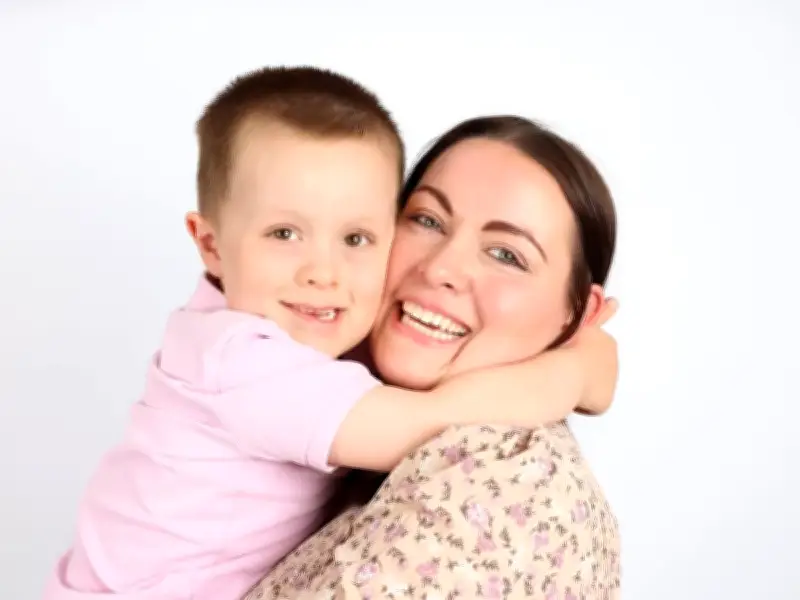
A Newton Aycliffe mum has spoken out about the “hidden barriers” in NHS care that affect families with autistic children – and how her 7-year-old was “passed in circles” and treated with “dismissiveness”.
Candice Burton is mum to Cameron, 7. Cameron has an autism diagnosis and – more recently – was diagnosed with a rare genetic condition called Houge Janssens syndrome. This causes symptoms including developmental delay and some behavioural challenges. It is also, as in Cameron's case, often seen in those who are autistic.
Cameron was only diagnosed this year – and while this has led to what his mum described as “being taken much more seriously” by medical professionals, she said this highlighted how often people with autism don't get the care they deserve.
Dismissiveness and being 'passed in circles'
Candice was speaking to ChronicleLive after featuring in a special new film produced by the North East Autism Society – called Hidden Barriers: Autism and GP Surgeries. As part of this, she highlighted how much difficulty she and Cameron had experienced.
Candice said: “We have been dealing with this for years for Cameron. He has a lot of anxiety – especially around medical settings – and I know a lot of that stems from the medical trauma he has experienced. For example, he has a history of ear infections and this is something that became a big issue.
“Prior to getting the genetic diagnosis, there was such a lot of dismissiveness – which is quite a common thing that people with autism experience. You are told ''it's just behavioural' or 'it's his autism'.”
Ear infections and self-injuring behaviours
Cameron had grommets fitted to help prevent ear infections. However, after a period of time with them in, he began to exhibit the “self-injuring” behaviours that Candice knows mean he is in pain.
She explained how he was repeatedly forward and back to the family's GP – but that this was often met with dismissiveness. She explained how some at the GP practice would suggest A&E as the best option, while at A&E they'd suggest speaking to a GP.
“I would tell them I was following all the advice [from other NHS teams] and that it was making no difference. We were literally just being passed around in circles.”
Candice added: “I’ve lost count of the number of times we’ve had medical professionals say Cameron’s symptoms are just behavioural. They can be very quick to dismiss autistic people, or their parents and carers, and say, ‘this behaviour is just how it is with autism’. It can add so much frustration and heartbreak around an already difficult situation, and it can become dangerous very quickly.”
Genetic diagnosis changes care
Candice said that having the genetic condition diagnosed had changed things for Cameron – with health professionals generally much quicker to listen. She added: “It's incredible how much has changed since he got this diagnosis and suddenly we are taken much more seriously, but that''s also really sad.
“He is so vulnerable. He's non-speaking, he has now experienced so much trauma that he's so incredibly anxious when we go to medical settings. Austistic individuals are human beings. They have as much right to care as you or I.”
The mum – who works for an occupational health organisation and is also a trustee of the charity Little SENDsations – added that while she was speaking of the difficulties, there were individuals within the NHS who were rays of light. For example, she said one of the practice nurses at her GP practice had always understood Cameron; while his paediatrician at Bishop Auckland Hospital had been “exceptional”.
Polling and NHS response
The new film has found that the majority of autistic patients and parents of autistic children don’t believe their doctor understands neurodivergence – and that this leads to the sort of dismissiveness Candice has spoken about. The film has been backed by prominent figures including TV doctor Dr Hilary Jones and campaigner Paula McGowan, who has worked to bring in autism training across health and social care following the death of her own son Oliver.
The North East Autism Society's polling has found that 80% of autistic adults and children find waiting rooms “unbearable”, with the same proportion finding it difficult to highlight pain to doctors and 75% reporting that physical examinations can be difficult due to their sensitivity to touch.
The Equality Act means GP surgeries must offer reasonable adjustments, but only 8% told the filmmakers that they had been offered such adjustments.
Paul McGinnety, the charity's chief executive, said: “We work with some forward-thinking hospital foundations on autism training but we need to see a concerted push by the NHS to embed accessibility into everything it does nationwide.
“No one should have their pain or illness dismissed because they are autistic. Simple adjustments can transform healthcare experiences and ultimately save lives.”
Dr Kathy Petersen, medical director for mental health, neurodivergence and learning disability for the North East and North Cumbria Integrated Care Board, responded to the film. She said: “Our systems are not as autism accepting as we would like, and there’s much work to be done on that.
“One of the things we’re doing is rolling out a digital flag which acknowledges someone might need adjustments and makes them known in the system. That work is rolling out across North East North Cumbria and England from 2026 onwards.”
The documentary is the second in a series – the first film highlighted the difficulties families of those with autism can find in airports.




