
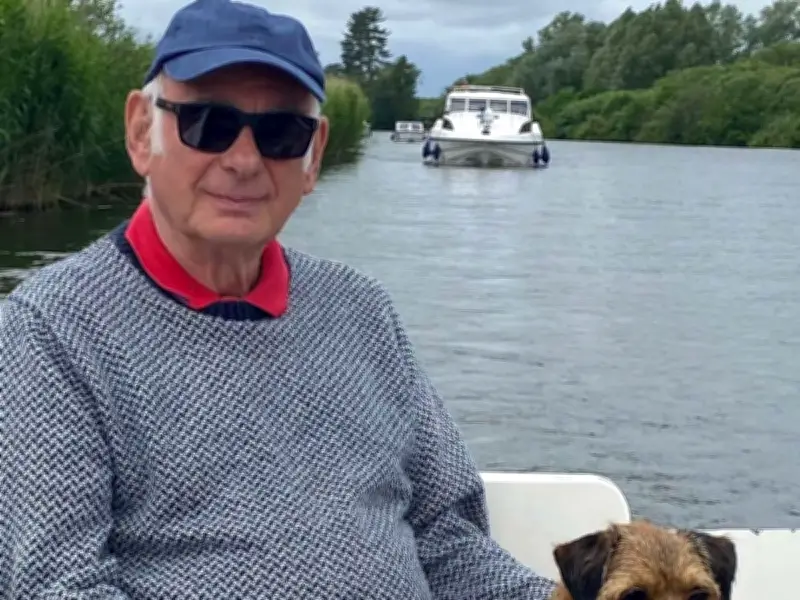
Richard Clark, a 78-year-old from Henley, tripped over a kerb while walking his son's dog and was later told he has six to 12 months to live. The fall led to a series of hospital admissions, a pancreatic cancer diagnosis, and multiple near-death experiences.
From a simple fall to a life-changing diagnosis
After the initial accident, Richard went home feeling 'alright' despite cuts and bruises to his face. Days later, he began experiencing headaches and hallucinations, then collapsed at home and couldn't move. His wife Karen called an ambulance, and he was taken to A&E at Warwick Hospital, where scans revealed a tumour near the base of his spine. He was transferred to University Hospital Coventry in Walsgrave, where surgeons removed the tumour without damaging the spinal cord or cluster of nerves.
Scans showed the tumour was just one of several. Ten days after being discharged, Richard was readmitted to ICU at Warwick with a deadly respiratory disease and ended up on a ventilator. Weeks later, while waiting to be discharged, two surgeons visited his bedside and broke the news that further examination of the scans revealed pancreatic cancer.
Treatment and setbacks
Richard needed a month of physiotherapy to build up his strength before it was safe to have the operation at University Hospital Coventry. He said: "The pancreatic surgeon did an absolutely brilliant job and got the whole thing and it was only because I'd been in hospital that they caught it early. Pancreatic cancer is one of the deadliest cancers, because there are no symptoms until it's too late."
After two weeks, he was well enough to go home and completed a six-month course of chemotherapy. Just before Christmas, he was diagnosed with liver cancer, and in January this year, the father of four adult children was given six to 12 months to live.
A memoir to give back
Richard, who previously worked in housing, has recorded his experiences in a 'warts and all' style personal memoir, After the Fall. Everyone who orders a copy is encouraged to donate to Friends of Stratford Hospital (FoSH). He has already raised more than £700 for FoSH and aims to reach his target of £1,000.
His liver cancer has responded well to chemo, with recent tests showing a 40 per cent reduction in cancer markers. "You can never be complacent, but for the first time for a long time, I feel optimistic that I might actually live rather longer than I thought," he said. The support from fellow residents in Henley has given him a massive boost, with people hugging him in the street and sending him presents. "It's been terrible and very tough at times but it's also been full of good things and people have been wonderful to me," he explained.




