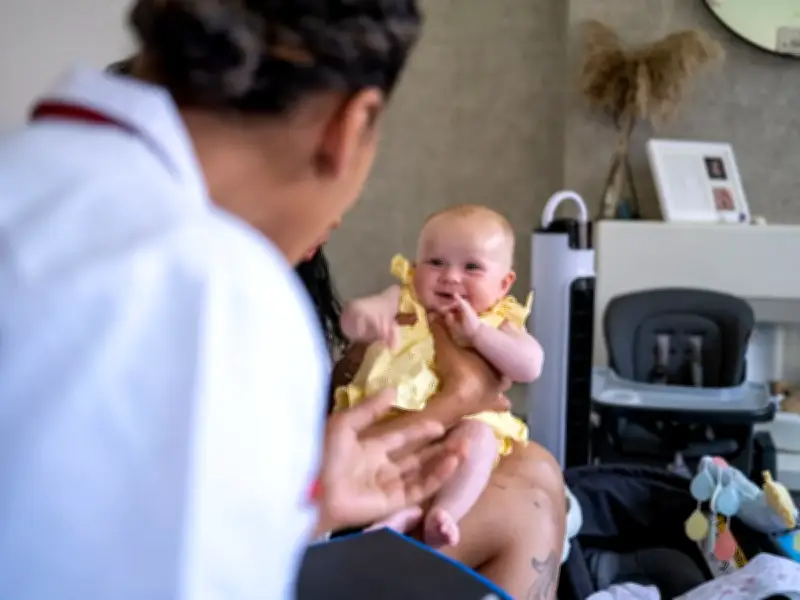
A health visitor with more than 10 years of experience has shared her “favourite” thing to see whenever she visits a parent and baby at home – and it’s not a clean and tidy house. Many new parents feel anxious about health visitor visits, worrying about being judged, their parenting skills, or a perceived lack of privacy during the early months and years with their child.
But the purpose of a health visitor is not to pass judgement on new parents or make them feel sensitive when dealing with the all-consuming care of a baby. A health visitor is a “qualified and registered nurse or midwife who works primarily with pre-school children and families”, and their role is aimed at aiding the “promotion of health and the prevention of illness in all age groups”, per the NHS.
What health visitors do
Health visitors support and assist parents across a range of concerns and topics, providing guidance and advice on “breast-feeding, weaning, emotional wellbeing, attachment, safety, immunisation, physical and emotional development and other aspects of health and childcare”. They can also offer support with “behaviour management, toilet training, sleep and school readiness”.

The UK and Ireland both offer a dedicated health visiting service to families with children aged between 0 and five. Still, parents can feel apprehensive about visits, and many health visitors turn to social media to help dispel myths and preconceptions about their role.
The favourite thing to see
One example is Holly, a midwife with more than 10 years of experience. In a recent video, she highlighted her “favourite” thing to see when visiting parents. Speaking directly to the camera, Holly said: “As a health visitor of over a decade, here is the one thing that I absolutely love to see.
“I love it when I go into a house and the mum leaves the room and the baby starts to cry, they start to get really, really upset - and this isn’t because I'm a psychopath, okay?
“This really says to me that that child or that baby has a very secure attachment to their mother. What happens is as soon as the mum leaves, they feel like their arms been chopped off or their leg’s been chopped off. And instinctively, they go into survival mode and they start to cry because they want their mum back.”
She explained that this is because the child or baby starts to learn what’s called object permanence – that people and things do exist, even if they can’t see them. The baby knows the mum exists and is near, but can’t see her, so they get upset. When the mum returns and gives comfort, the baby stops crying, which shows a secure bond and attachment.
Reassurance for parents
Holly urged parents not to panic if their baby doesn’t respond this way when they leave the room. She added: “Please don’t worry if your baby does not do this - your attachment to your baby is not subject to just one situation.
“But it is definitely something that we look for when we’re looking for the attachment and bond between a mother and a child.”