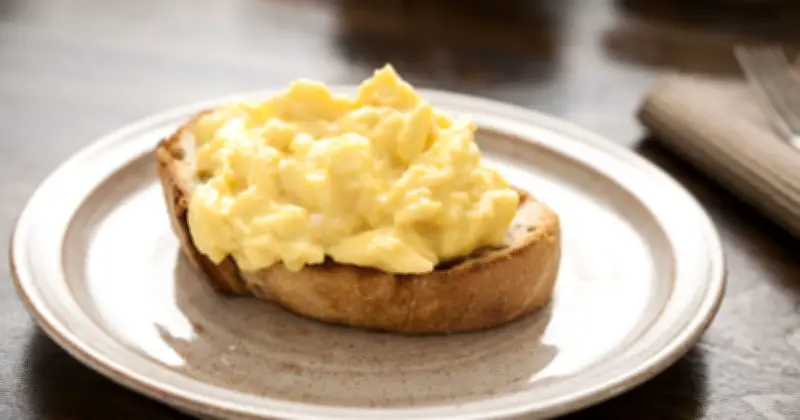
Scrambled eggs are a staple for many, enjoyed at any time of day. The creamy, light eggs are an ideal breakfast addition, an enjoyable lunch, and can be paired with certain dinners. While not considered the hardest dish to make, there can be many pitfalls: scrambled eggs can turn watery and runny or too firm and rubbery. If you have ever wondered why your scrambled eggs don't taste like they do when ordered from a restaurant, it might be down to the way you are cooking them.
The key step chefs agree on
A selection of chefs were asked to share their secrets for making restaurant-quality scrambled eggs, and they all agreed on one way to cook them: on the hob, over a lower heat. So if you are after quality scrambled eggs, ditch the microwave and do not cook them on high.
Mark Sargeant, who worked alongside Gordon Ramsay for 13 years and is the current chef-in-residence at The Victoria Oxshott, urged home cooks to make their scrambled eggs slowly. He explained: "For me, the secret to restaurant-quality scrambled eggs is patience. I use very fresh eggs, beat them lightly with a fork rather than a whisk, and cook them very slowly in plenty of butter in a heavy-bottomed pan.
"The butter should melt gently rather than sizzle, then I add the eggs and stir with a spatula, moving the pan on and off the heat. That gives you a soft, velvety, almost custard-like texture. I don’t add cream — the richness should come from the butter and slow cooking — and I only season once the eggs are around three-quarters cooked.
"My favourite way to serve them is on hot buttered sourdough with a generous layer of Marmite underneath and a little chopped chive on top."
Chefs recommend patience and early removal
Sophie Nahmad, lead recipe developer at Gousto, also recommended having patience with your eggs. She said: "The secret to restaurant-quality scrambled eggs is patience. Cook them low and slow, gently fold them without overmixing so you get big, soft curds, and take them off the heat while they still look a little too soft, because they'll carry on cooking on the way to the plate.
"Finish with a knob of butter or a spoonful of crème fraîche, and you get that silky, creamy texture you'd expect from a restaurant, with no fancy kit needed."
Chef Dennis Littley echoed the need to take the eggs off the heat sooner than you think. He shared: "I prefer to cook scrambled eggs gently in a nonstick skillet over low to medium-low heat with butter. Once the eggs go into the pan, keep them moving with a spatula, gently pushing and folding them as they set. The goal is soft, tender curds rather than dry eggs with browned edges.
"The most important step is knowing when to stop cooking. I take scrambled eggs off the heat while they still look slightly softer and creamier than I want them to be. The residual heat in the pan continues to cook the eggs, so if you wait until they look completely done before removing them, they can quickly become dry and rubbery."
George Ryle, the in-house chef at Swaledale Butchers, also uses the method of cooking over a lower heat and removing it before it is fully cooked. He said: "I warm a non-stick pan over a low to medium heat, melt a knob of salted butter, then crack the eggs straight in. Stir constantly with a silicone spatula, scraping the bottom and sides.
"As they start to thicken, take the pan off the hob but keep stirring. Return it to the heat as needed. You’ve got much more control that way than leaving it on until the eggs are completely set.
"I finish whilst they’re still soft and glossy, taste for salt at the end because the butter’s already salted, then add cracked black pepper once they’re served. Have the toast ready first. Leaving scrambled eggs in the hot pan whilst you sort out the toast is enough to overcook them."
Butter versus oil and creamier options
Many chefs recommend using butter instead of oil, yet Michelle Doll Olson, Head Chef & Associate Director, Culinary at HelloFresh, uses olive oil. She said: "Extra virgin olive oil has to be the best oil to use when making silky scrambled eggs, it gives your meal a floral and peppery taste. As oil is 100% fat it heats up quickly and evenly compared to butter which contains water which can affect the cooking process of the eggs."
Michelle explained that you can change the flavour of food with the oil you use. She uses cold olive oil in her pan and adds her eggs while it is still cool. Then, she turns up the heat and lets the oil emulsify into the eggs for a "smooth and silky finish". Flavoured oils can also work, as chilli-infused olive oil adds a spicy twist to scrambled eggs.
Chef Stuart Gillies, who owns Number Eight and Bank House, makes a simple addition before serving to create creamier scrambled eggs. He shared: "My suggestions for scrambled eggs: Don’t whisk the eggs, but do mix with a spatula to break up gently, do not season until the end. Start with butter in a warm pan then add eggs carefully stir regularly, keep in in chunks not superfine. Add crème fraiche at the end, then season. For a healthier version use yoghurt instead of crème fraiche, both are delicious."