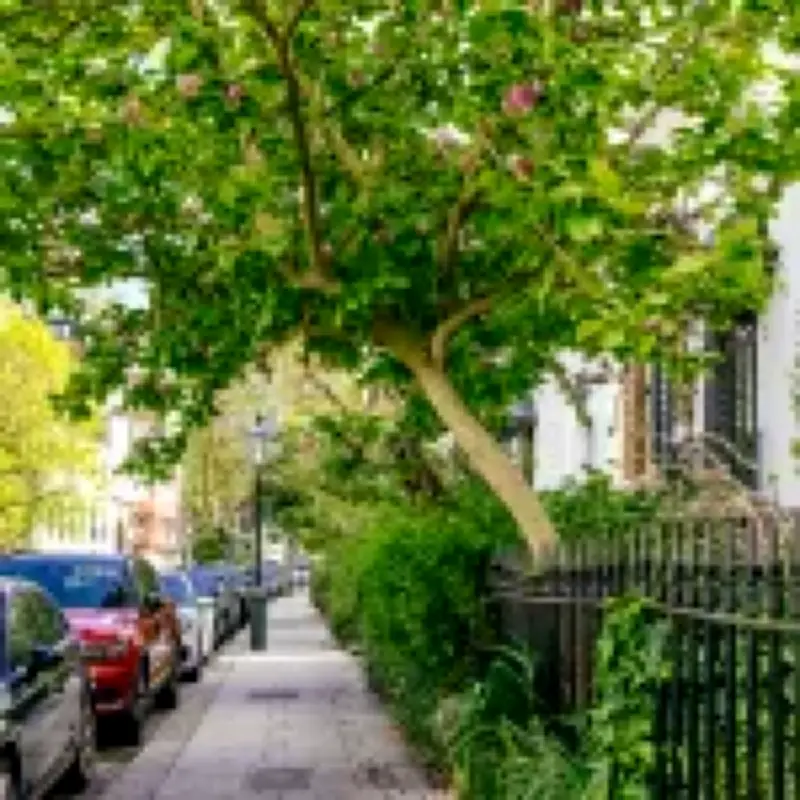
A study commissioned by The Telegraph has identified the UK's so-called 'Blue Zones' – areas home to the most centenarians, a term first coined in 2005. Among the top locations, listed in no particular order, is Wokingham in Berkshire, where women enjoy an average life expectancy of 85.5 years and men 82.8 years.
Kensington and Chelsea also features, with an average female life expectancy of 87.1 years and male life expectancy of 83.9. Honourable mentions include Windsor, Richmond, Totnes, Bearsden, and Monmouth.
What links the UK's 'Blue Zones'?
According to Dr Mohammed Enayat, longevity pioneer, practising GP, and founder of HUM2N, many of these areas have a wealthy population. He told Metro: 'While wealth often plays a role, it's less about income itself and more about what it enables: access to better healthcare, lower stress, and the time and space to prioritise health.'

'What stands out more clearly is environment and lifestyle. These places are typically greener, more walkable, and socially connected, which naturally encourages daily movement, better mental health, and stronger community ties. People aren't necessarily living longer because they're trying harder, but because their surroundings make healthier habits the default.'
He added that the longest-living populations avoid extremes and instead follow steady, sustainable lifestyle choices, such as choosing whole foods, practising good sleep, and doing low-intensity exercises.
Wealth and health inequality
Generally, studies agree that wealthier people tend to live longer. In 2020, research published in the Journal of Gerontology found those with money have between eight and nine years of 'disability-free' life after 50.
Dr Mohammed noted: 'Many of the factors linked to longer life, such as wealth, access to high-quality healthcare, safe housing, and education, are not equally distributed and aren't things individuals can quickly or easily change. Longevity is shaped as much by environment and opportunity as it is by personal behaviour. While lifestyle choices absolutely matter, they sit within a wider system that can either support or limit health outcomes.'
Advice for those without wealth
For those concerned about their own mortality, Dr Mohammed recommended prioritising small, consistent changes. He said: 'Build more movement into your day in a way that feels natural, whether that's walking more or spending time outdoors. Prioritise your environment where possible. Even access to a local park or regular daylight can make a meaningful difference.'
'Focus on eating well most of the time rather than perfectly, and protect your sleep as a non-negotiable.' He also advised keeping an eye on stress levels, as constant, unmanaged stress can hasten ageing. In his view, 'daily moments of calm,' however small, can make a difference, while strong social connections are 'one of the most powerful predictors of a longer life.'
The 10 places in Britain where people live the longest are: Wokingham (female 85.5, male 82.8), Kensington and Chelsea (female 87.1, male 83.9), Windsor (female 85.1, male 81.3), Richmond (female 86.3, male 82.5), Totnes (female 85.9, male 82), Bearsden (female 83.9, male 80.3), Monmouth (female 85.2, male 80.7), Fleet (female 85.5, male 83.5), Lewes (female 85.1, male 80.9), and Stroud (female 84.4, male 80.8).