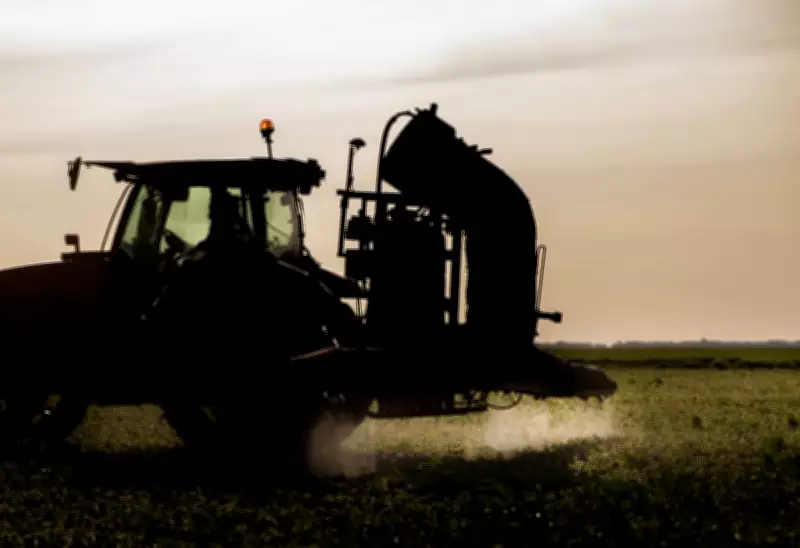
Vermont has become the first US state to ban the weedkilling pesticide paraquat, backed by lawmakers who cited concerns about research showing the chemical substantially increases the risk of Parkinson's disease, an incurable brain ailment.
Governor Signs Legislation
Governor Phil Scott signed the legislation on Tuesday. The new law takes effect on 1 November, though it contains a provision allowing state regulators to issue special permits for paraquat use on fruit-producing tree orchards, berries, and other 'small fruit' crops until 31 December 2030.
The law also mandates annual data reporting on any paraquat use in the state and a state-funded study on recommendations for alternatives to paraquat for farmers.

Debate Among Lawmakers
Some lawmakers expressed concern that a ban will hurt the competitiveness of Vermont farmers if the chemical remains allowed in other states, and argued that more research is needed to fully prove a link between paraquat and Parkinson's. However, others said the scientific research is well established and the risks of not banning the chemical outweigh the risks of keeping it on the market.
Early versions of the law pointed to multiple studies by the National Institutes of Health demonstrating that paraquat exposure substantially increases the risk of Parkinson's disease. Lawmakers also noted that other NIH studies have linked paraquat to non-Hodgkin lymphoma and childhood leukemia.
'There are so many factors that are pointing to the correlation between paraquat use and Parkinson's,' said State Representative Michelle Bos-Lun in a 13 May House committee hearing. 'We have to do something to phase this out. Our job is to support farmers and to support all Vermonters. My belief is that paraquat is causing harm to both.'
Expert Reactions
Ray Dorsey, a neurologist who directs research into environmental causes of brain diseases at Atria Health and Research Institute, said Vermont's action was 'another step toward preventing this largely man-made disease.' He noted that many countries have banned paraquat and said it 'is long overdue for the US to do the same.'
Though Vermont is the first to pass a ban, lawmakers in multiple states have introduced legislation to ban paraquat, and several federal lawmakers have also called for bans on the chemical.
History and Use of Paraquat
Paraquat has been used in the United States since 1964 as a tool to kill broadleaf weeds and grasses. Though banned in several countries, it is one of the most widely used herbicides in the US, applied in growing soybeans, cotton, corn, grapes, pistachios, peanuts, and many other crops.
The chemical is known to be extremely dangerous to anyone who ingests even a small amount, and regulators have issued warnings and placed restrictions on its use because of poisoning risks. However, whether it causes Parkinson's disease has been a matter of fierce debate.
Syngenta's Position and Lawsuits
Syngenta, the key maker of paraquat for decades, has maintained that there is no credible evidence of a connection between the disease and its weedkiller. But numerous scientific studies have found that paraquat damages cells in the brain in ways that can lead to Parkinson's, and more than 8,000 lawsuits are pending in US courts over the allegations. The company has settled several cases without admitting liability and has been negotiating to settle a bulk of the ongoing cases.
In April, the company said it would stop making paraquat and would no longer attempt to sell any paraquat products in the US and other countries, though generic versions are available from other suppliers.
'If there is a chance that we could reduce the harm by making this step, it feels like that is a responsible thing to do,' Bos-Lun said in the committee hearing. 'When I think about the people I've known who've had Parkinson's, we want to do everything we can to avoid that. Every case that we could prevent, that would be a blessing.'

Rising Parkinson's Incidence
The number of people suffering from Parkinson's has more than doubled in the last 25 years, according to the World Health Organization, and incidences are expected to continue to rise. Parkinson's symptoms develop when dopamine-producing neurons in the brain degenerate. The disease is progressive, leaving people without the ability to speak and move normally.
A trove of internal corporate records dating back several decades show that Syngenta and its predecessor entities have wrestled with concerns about paraquat links to Parkinson's and other chronic health issues for decades. The Guardian revealed many of Syngenta's internal files on paraquat in 2022 and 2023, showing the company employed secretive tactics to hide or downplay research linking its chemical to the disease, discredit independent research, and mislead regulatory decisions to protect paraquat sales.
'The evidence linking paraquat exposure to increased Parkinson's risk is strong and has been building for decades,' said Dan Feehan, chief policy and government affairs officer for the Michael J Fox Foundation for Parkinson's Research, a key group pushing for paraquat bans. 'Other states should follow Vermont's lead – and the federal government has an obligation to protect all Americans with a national paraquat ban.'
This story is co-published with the New Lede, a journalism project of the Environmental Working Group.