

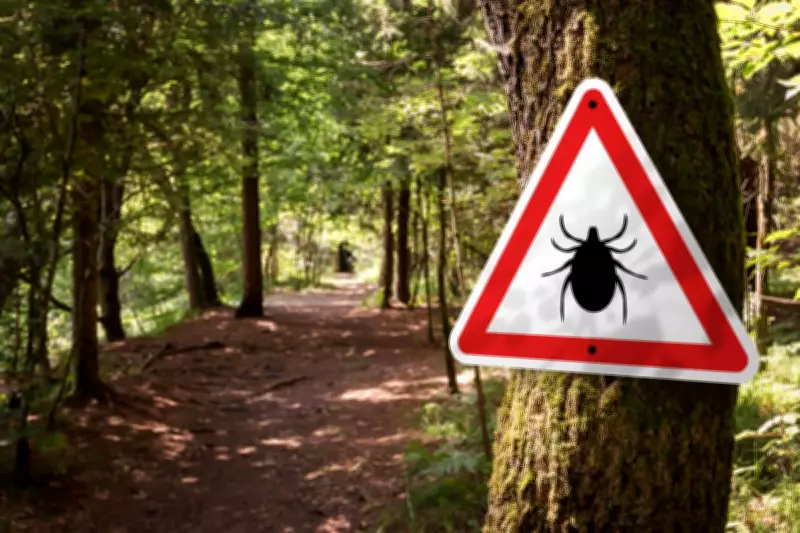
Two probable cases of a potentially life-threatening disease linked to tick bites were “locally-acquired” in the UK last year, health officials have said. One case of probable tick-borne encephalitis (TBE) was reported by a person bitten by a tick while visiting Dartmoor. The second person did not recall a tick bite but had visited the Peak District and the Outer Hebrides, according to a new report.
The first-ever case of locally acquired TBE in England was recorded in 2019 after a person was bitten by a tick in the New Forest. Until then, TBE was considered an “imported disease” to the UK. The new cases bring the total of UK-acquired cases to six, the UK Health Security Agency (UKHSA) said.
Officials said surveillance indicates that the TBE virus remains “limited to a few areas” in Britain, including Thetford Forest, New Forest, Devon, North Yorkshire, Dartmoor, and parts of Scotland. Tick-borne encephalitis virus is transmitted by the bite of an infected tick. Infection causes minimal or no symptoms in the majority of infected people, but in rare cases, the virus can enter the central nervous system and potentially lead to long-term neurological symptoms and, very rarely, death.

There is a vaccine available, recommended for people who work in forestry, woodcutting, farming, and the military where the virus is endemic. The most common locally acquired vector-borne diseases in England are from ticks, with 1,168 cases of Lyme disease recorded last year, according to the report by the UKHSA along with the Department for Environment, Food and Rural Affairs (Defra) and the Animal and Plant Health Agency (APHA). This is a rise from 959 in 2024 but remains “similar” to 2023 when 1,151 cases were reported.
Lyme disease presents with a “bullseye” rash; some people also experience flu-like symptoms such as high temperature, headache, muscle or joint pain, and fatigue. Elsewhere, the report also details mosquito-borne illnesses recorded in England after people had travelled abroad. These include 159 cases of chikungunya, 336 cases of dengue, 1,629 of malaria, and seven cases of Zika virus, all acquired while abroad.
While no locally acquired mosquito-borne infections were reported in England, the report highlights the growing threat of these viruses. Along with the report, officials have updated contingency plans for invasive Aedes mosquitoes in England and for West Nile virus. The Aedes mosquito, which transmits dengue and chikungunya viruses, is now established in 16 European countries, and officials say temperatures in the south east of England are already high enough for these mosquitoes to survive.
“The overall risk to the public from vector-borne diseases in England remains low, but the findings of this report demonstrate how that risk picture is changing due to factors including climate change, urbanisation, and the globalisation of trade and travel,” said Professor Lea Berrang-Ford from the UKHSA. “We are now seeing cases of mosquito-borne infections regularly reported across Europe, while we continue to detect incursions of invasive mosquitoes at points of entry in the UK, and it is therefore vital to maintain robust surveillance to protect biosecurity.”
Dr Arran Folly from the APHA added: “Mosquitoes and ticks are more than just seasonal nuisances; they can act as early warning signals for emerging disease threats.”






