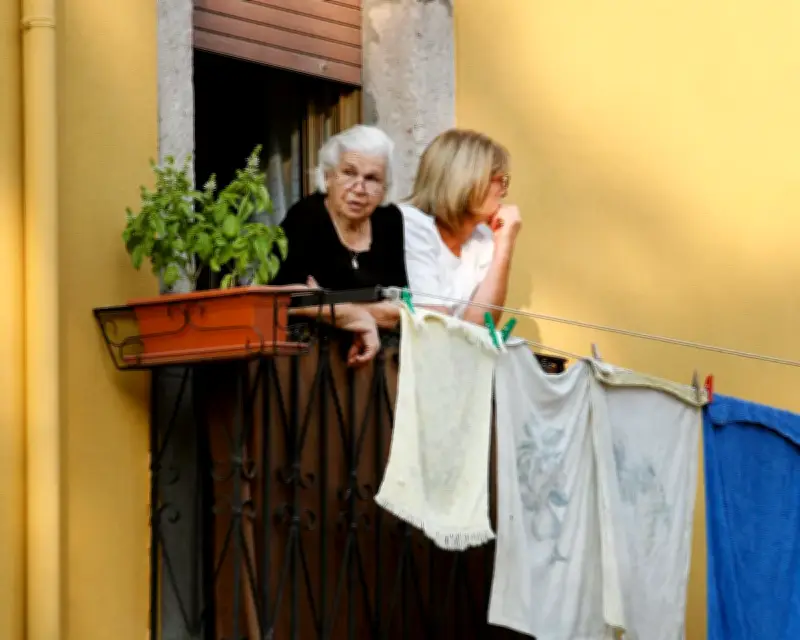
A study of centenarians in the Sardinian village of Bolotana has identified it as a potential new “blue zone”, with female longevity rates second only to Hong Kong. The research, published in the scientific journal Frontiers in Aging, found that 13.8% of women in the village who reach the age of 70 will live to 100.
Study findings on longevity
Professors at Sardinia’s University of Sassari and the University of Alabama at Birmingham in the US analysed records of people born in Bolotana between 1900 and 1925. They found that 38 had lived beyond 100, putting their longevity rate at 57% higher than the Italian national average.
In Italy, where the number of centenarians has more than doubled since 2009, 3.5% of women who make it to 70 will achieve the milestone. The study began in 2024, and as of last year there were 12 centenarians among a population of 2,266 in Bolotana – roughly 12 times the Sardinian average.
Expanding blue zone
Six have since died, and the six who are left are all women, the two eldest being 102. More residents are expected to reach the milestone age by the end of this year and during 2027. The findings also showed that, compared with the world’s other four blue zones – Okinawa in Japan, the Nicoya peninsula in Costa Rica, Ikaria in Greece and Loma Linda in California in the US – Sardinia’s zone was expanding.
“The important thing is that, for the first time in more than 25 years, we have found a place for longevity outside of the conventional blue zone [in Sardinia],” Giovanni Mario Pes, the study’s lead scientist and a co-creator of the blue zone concept, told the Guardian. “But while Bolotana shares the same characteristics, it is even more exceptional. Whereas the original zone had an unusual balance between the two sexes, here female longevity prevails.”
Social relations and lifestyle
Pes said that while it was already well established that women lived longer for biological reasons, “the extraordinary thing is that the longevity of the women in Bolotana is three times higher than that of most western women”. He declined to be drawn into hypothesising over the secrets to the village’s longevity, saying the study was “limited to pointing out the existence of the phenomenon”.
However, after spending time with sprightly centenarian women there, he said what struck him most were the “very intense and very real social relations” maintained throughout their lives. He gave the example of Giovanna Marras, 101, who lives with her sister. “They live together, they cook together, they talk to each other easily,” said Pes. “There was absolutely no sign of cognitive decline.”
Francesco Manconi, the mayor of Bolotana, offered some theories. “I’m not a scientist but it’s probably a mix of things,” he told Corriere della Sera, citing a clean, fresh diet, although he said nobody renounced seada, a traditional local pastry filled with cheese, or mustazzolus, a spiced biscuit often eaten at breakfast. The “uncontaminated nature” surrounding the village could also play a role, Manconi added, as well as physical activity, despite Bolotana not having a gym. “Elderly people have always walked a lot … as much as 20km [a] day. And I would say they were mostly women.”
As of November 2025, official statistics showed there were 23,548 residents in Italy who were aged 100 or over, up 2,000 from the previous year. Of those eclipsing a century last year, 82.6% were women. Women also take the lead among Italy’s 724 semi-supercentenarians, people aged 105 and over, and among the 19 supercentenarians, those in the 110-plus age bracket.