
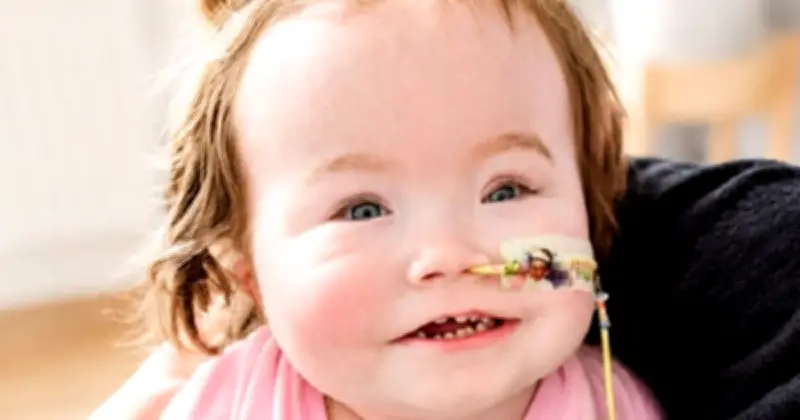
A mother has described being “forced” to beg for help while her daughter was dying, as health service restrictions meant the toddler was not eligible for support because of her age.
Hayley Dripps, from Cookstown, Northern Ireland, and her partner Robert Weir, 39, were told at 37 weeks of pregnancy that their unborn baby had severe hydrocephalus – a build-up of fluid on the brain. The 34-year-old said the diagnosis was “frightening and overwhelming”, especially as she did not know what lay ahead.
“I had gone from believing I was having a normal pregnancy to being told that my baby was seriously unwell and might not survive,” she said. “She was then born unresponsive. From then on, we knew she was extremely unwell.”
Rare disorder and daily challenges
At four weeks old, Lila was diagnosed with pyruvate dehydrogenase deficiency, a rare inherited disorder affecting how the body breaks down food and drink. She later developed epilepsy, with up to 20 seizures a day. Parents were told she was unlikely to survive infancy, but after a period of end-of-life care she improved enough to come home.
Lila was also diagnosed with blindness, deafness, fixed talipes, and a soft cleft palate. She was tube-fed, unable to sit, stand or walk, and required 24-hour care. Hayley said the daily situation was made worse by lack of support.
“She was completely dependent on us and could become critically unwell without warning,” she said. “Even leaving the house required careful planning around oxygen, suction and feeding equipment. Travelling to hospital appointments, or even just in general, became particularly dangerous.”
Denied mobility and continence support
The couple spent £800 on a specialist car seat because Lila’s head would fall forward onto her chest, causing her oxygen levels to drop. It lasted only three months. They were told the safest way to travel would be in a wheelchair-accessible vehicle, but because Lila had to be three years old to receive the mobility tool, nothing could be done. Despite multiple letters from professionals and medical evidence, their claims were denied.
Hayley said: “I was practically begging for basic help while my daughter was dying. Lila’s time was precious and her needs were immediate. These children aren’t guaranteed the time to simply wait. That is why I believe children with profound and complex disabilities should be assessed on their actual needs, safety and medical circumstances – not on age alone.”
She also said they were denied continence products because Lila was not yet five years old. As a result, they had to use respite support to travel to the next town to buy the nappies she needed.
Lila’s Legacy campaign
Hayley has started a petition called Lila’s Legacy, aiming to secure fair access for children with profound disabilities. She is calling for reviews based on each child’s needs rather than age.
Lila died on 31 May 2026, aged two, in Hayley’s arms. In her final weeks, her parents spent time filling in forms so they would not miss the deadline to apply for mobility DLA before her third birthday.
“When people hear Lila’s story, I don’t want them to see the machines or the diagnoses first,” Hayley said. “I want them to see her; our beautiful girl. Lila’s life was heartbreakingly short and difficult, but it was not insignificant.”
A spokesperson for the Department for Communities said: “The Department for Communities recognises the significant challenges faced by families caring for children with complex and life-limiting conditions. As with other social security benefits, parity is maintained with the Department for Work and Pensions, and we are not aware of any plans to review the age restrictions that apply to mobility.”
A spokesperson for Health and Social Care Northern Ireland said: “The children’s bladder and bowel service should be consulted if there are any concerns or the child is not progressing as expected. In line with the National Guidance for Provision of Continence Containment Products to children and young people 2021, products will only be provided to children who are at least five years old and have been fully assessed and then supported for at least six months with an individualised programme to develop the skills required for toilet training. However, every child will be considered on an individual basis, and decisions will be made based on the outcome of assessment.”




