
Nearly six in ten disabled customers feel they are being left behind in the electric vehicle (EV) transition, according to data from the Motability Scheme's EV Transition Tracker. The statistics also show affordability remains the greatest obstacle for the general public, with 52% pointing to the upfront cost of an EV as a primary reason for feeling excluded.
Practical challenges for disabled drivers
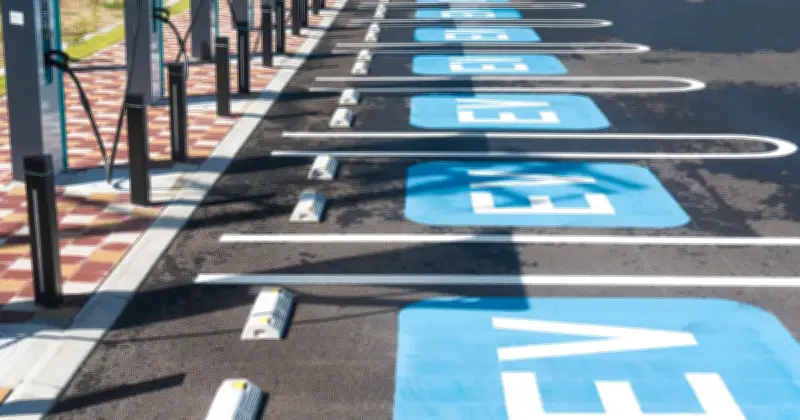
Disabled drivers encounter additional practical challenges, with 31% of the scheme's customers who have experience driving EVs highlighting charging cable weight or bay width as a significant concern. Research indicates that just 28.6% of motorway charging bays meet the minimum accessibility width standard.
The fifth instalment of the Motability Scheme's EV Transition Tracker (EVTT), carried out in conjunction with More in Common, shows that both disabled Motability Scheme customers (60%) and the broader public (59%) feel as though they are being shut out of the UK's shift towards electric vehicles.
Cost versus accessibility
Yet the reasons behind this sense of exclusion differ considerably. For the general public, cost is the dominant factor, with the purchase price of an EV being the most frequently cited reason for feeling left out (52%). Cost is a concern for disabled motorists as well, with 26% highlighting the initial purchase price of an EV.
However, they also encounter practical obstacles that can dictate whether making the switch to electric is feasible at all. More than a third (39%) point to being unable to charge at home, while 31% of Scheme customers with experience of driving EVs identify either charging cable weight and ease of use, or difficulty accessing charge points due to bay width, as a significant worry.
With the 2030 prohibition on new petrol and diesel vehicles drawing nearer, these accessibility challenges could threaten disabled people's ability to travel to work, education, and participate in daily life.
Motorway accessibility shortfall
These accessibility difficulties are especially acute across the UK's motorway network. Motability Operations commissioned an independent surveyor to examine charging bays at 95% of Britain's motorway service stations. The examination revealed that due to bay widths, raised kerbs, and obstructions, of the 1,166 charging bays evaluated nationwide, only 28.6% can be categorised as 'accessible', with a total width of at least 360cm, in line with requirements established by British Standards.
Michele Matonti, a disabled motorist on the Motability Scheme from Northwest London, explained: "I'm on my second electric car lease and, for most of my day-to-day driving, having a home charger makes it easy. The challenge comes when I'm travelling further and need to use motorway charging. As an amputee, I need enough room to open the car door properly and get my leg out. Some charging sites have wider bays, but there aren't enough and you can't guarantee they'll be available when you arrive."
Regional divide
The research - carried out in November 2024 and now accessible via the Motability Go app – revealed that throughout Great Britain, 11 service stations have no accessible charging bays whatsoever, accounting for roughly one in eight of the nation's service stations.
The lack of accessible charge points poses difficulties for motorway drivers in every region. Only the East of England and the North West substantially exceed the national average, with 43% and 40% of their charging bays considered accessible, respectively. The poorest performing area of the country is the North East of England, where merely 16% of charging bays on motorways meet accessibility standards.
Andrew Miller, Chief Executive of Motability Operations, commented: "For disabled people, their vehicles are fundamental to their freedom - to work, see family and take part in their communities. If the infrastructure around electric vehicles isn't designed with disabled people in mind, we risk losing this independence to a new set of barriers."
"The UK's transition is moving quickly, and the charging network is growing with it. But more chargers alone won't solve the problem. Accessibility must be built into that growth, so disabled drivers have the same confidence and ability to travel as everyone else."




