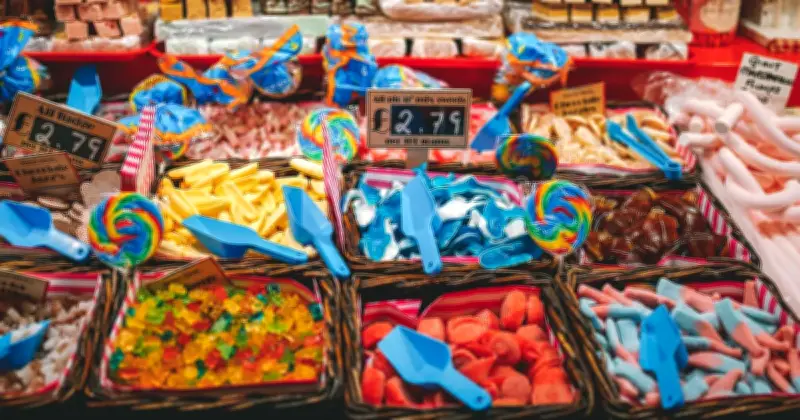
Blackpool has been named the UK's sweet tooth capital in new research by Forever Dental and Skin, with 12 sweet shops serving its 143,492 residents.
That works out at 8.36 sweet shops for every 100,000 people, more than five and a half times the UK average of 1.47.
Top 10 sweet shop hotspots
Gwynedd in north Wales, which includes Barmouth, Pwllheli and Caernarfon, is a close second with 8.31 per 100,000, while East Lindsey, covering Skegness and Mablethorpe, is third with 8.18.
Fourth is Pembrokeshire (Tenby) with 7.15; fifth is Derbyshire Dales (Bakewell) with 6.94; sixth is North Devon (Ilfracombe, Barnstaple) with 6.91; seventh is South Hams (Salcombe, Dartmouth) with 6.44.
Eighth is Conwy (Llandudno) with 6.12; ninth is Leicester with 6.00; and tenth is North Norfolk (Cromer, Sheringham) with 5.79.
Dentist's advice on sweet treats
The study was carried out ahead of Christmas, the busiest time of year for sweet sales. Dr Murray Pratt, principal dentist and clinical director at Forever Dental and Skin, said: "Most of us get through more sweets than usual over Christmas, so it's worth thinking about when you eat them, not just which ones you pick."
"The best time to have them is with a meal or just after one. Every time sugar reaches your teeth, the bacteria in plaque turn it into acid, so a bag of pick and mix that's picked at all afternoon does a lot more harm than the same bag finished after dinner."
On Blackpool's sweet shop density, Dr Pratt added: "Seaside rock and boiled sweets take a long time to dissolve, so they keep your teeth covered in sugar for much longer than you'd think. Fudge and toffee are the other ones to watch, because they stick in the grooves of your back teeth and between them, where a toothbrush struggles to reach."
He advised: "If you've had sticky sweets, clean between your teeth with floss or an interdental brush before bed, as well as brushing with a fluoride toothpaste. It takes a minute and gets out the sugar that brushing misses."
Health and dental guidance
The NHS says eating too much sugar can cause tooth decay, and that adults should have no more than 30g of free sugars a day, roughly seven sugar cubes.
If a sweet does chip or crack a tooth, the NHS advises seeing a dentist and, if a piece has broken off, keeping it in milk or saliva and taking it with you, as it may be possible to glue it back on.
Half of all winter confectionery sales are made in December, according to Mondelēz International, and sales of seasonal confectionery jump by 55% in the week of Christmas itself.
Dr Pratt added: "Many dental practices close for a few days over Christmas, so if a tooth has been niggling, or a filling feels rough or loose, get it checked before the holidays rather than finding out on Boxing Day with a mouthful of toffee."
Britons spent £853 million on seasonal Christmas sweets and chocolate alone in 2024, £88 million more than the year before.
Forever Dental and Skin counted the UK's sweet shops on Google Maps in November 2026 and compared the number in each council area with its population, using ONS mid-2025 estimates. A sweet shop was defined as a shop, kiosk or market stall where anyone can walk in during opening hours and buy sweets over the counter, including traditional and pick and mix sweet shops, seaside rock shops, fudge shops, Indian and Middle Eastern sweet shops, and brand shops such as Haribo and Mr Simms, with each branch counted once.
The ranking covers sweet shops per 100,000 residents in each of the UK's 361 council areas, with only areas of at least 50,000 residents and at least five sweet shops ranked. Because figures count shops per resident, towns that serve large numbers of visitors rank highly.