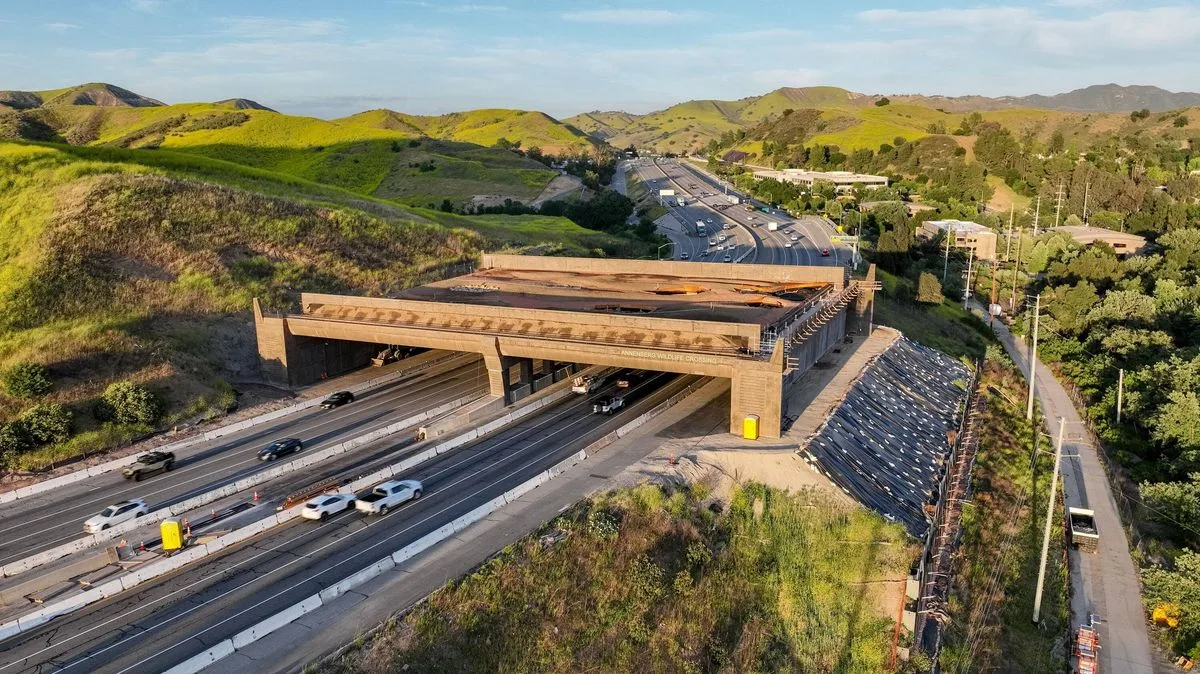
The Wallis Annenberg Wildlife Crossing in California is set to become the world's largest wildlife bridge, costing £85 million ($114 million). The structure will span ten lanes of the 101 Freeway in Agoura Hills, linking the Santa Monica Mountains and Simi Hills.
Expected to be completed by the end of 2026, the bridge will provide safe passage for coyotes, cougars, deer, mountain lions, and butterflies. The project aims to reconnect an ecosystem fragmented by the busy motorway.
Rorie Skei, Chief Deputy Director of the Santa Monica Mountains Conservancy, said: 'The Santa Monica Mountains Conservancy & MRCA are excited to enter this last critical phase in making a safe passage for wildlife across the 101 and delivering on our 30 plus years of work to preserve habitat linkages.'
Other notable wildlife crossings include the Greenland overpass in Colorado and the Gloucestershire Way bridge in the UK, which is scheduled for completion by 2027 and will become Britain's largest wildlife crossing.