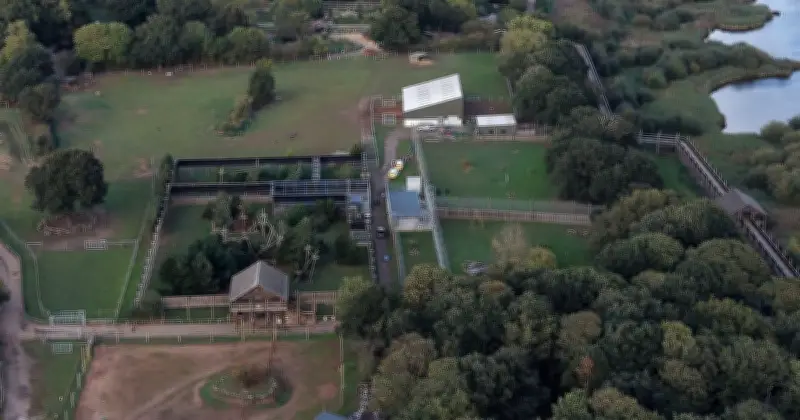
Authorities did not shoot the tiger that mauled a man to death at Yorkshire Wildlife Park because, in most cases, lethal force is unnecessary when a person enters an animal's enclosure, a wildlife expert has explained.
Will Travers, executive president of the Born Free Foundation, said zoos would generally try to save both the person and the animal in such circumstances, particularly when the animal had remained inside its enclosure. His comments came after a man died following an incident involving a tiger at the wildlife park near Doncaster on Saturday afternoon, with reports of loud, gunshot-like bangs as keepers tried to intervene.
Lethal force usually unnecessary
Mr Travers said: “Hopefully, in the great, great majority of cases, lethal force will not be necessary, because as I say, the animal didn't come into the human space. The human went into the animal space.”
He added that the circumstances could be very different if a dangerous animal escaped into a public area. Mr Travers said: “You cannot rule out lethal force.”
He explained that if an animal escaped among members of the public, the situation could quickly become even more dangerous. He said: “If the animal had escaped, for example, into the public space and was now out, now there's literally dozens, hundreds of people running in different directions. Who knows what's going to happen? You can't rule that out.”
Condolences and police response
The Born Free Foundation also expressed its condolences to those affected by the tragedy. Mr Travers said: “First and foremost, my sympathies are with the family and friends of the man who died.
“Born Free’s thoughts are also with the staff at Yorkshire Wildlife Park who must be traumatised - and also with the wider public who will have been shocked by events.”
South Yorkshire Police said they received a report of a man entering the tiger enclosure at 1.35pm on Saturday. The force said the tiger subsequently attacked the man, causing serious injuries. Emergency services attended, but he was pronounced dead at the scene.
Intervention plans and previous cases
Police confirmed the tiger was uninjured and remained in its enclosure, adding there was no wider risk to the public. They urged people not to share footage of the incident circulating online.
Mr Travers, who previously sat on a former incarnation of the Government's Zoo Expert Committee, said licensed zoos had emergency intervention plans as part of their inspection arrangements. However, he warned that responding to an incident at a large site could take time, while an encounter with a tiger could turn fatal within seconds.
He said: “It is a very large, powerful, dangerous wild animal.” Mr Travers said staff could use a range of measures to intervene, depending on the circumstances, and that the priority would often be to get the person out and secure the animal so staff could safely enter the enclosure.
He referred to the death of Harambe, a gorilla shot at Cincinnati Zoo in the United States in 2016 after a young boy entered his enclosure, as an example of a case in which an animal was killed.
Tiger not at fault
Mr Travers stressed that the Yorkshire incident should not automatically be framed as the tiger being at fault. He said: “The human being is in the tiger space, and tigers are dangerous wild animals, and they're large predators. And in a matter of a few seconds, things can go very badly wrong.”
The tiger involved, named Altai, arrived at Yorkshire Wildlife Park in February 2025 from Dyreparken Zoo in Norway. The park closed after the incident and said it was working with the authorities to establish exactly what happened.