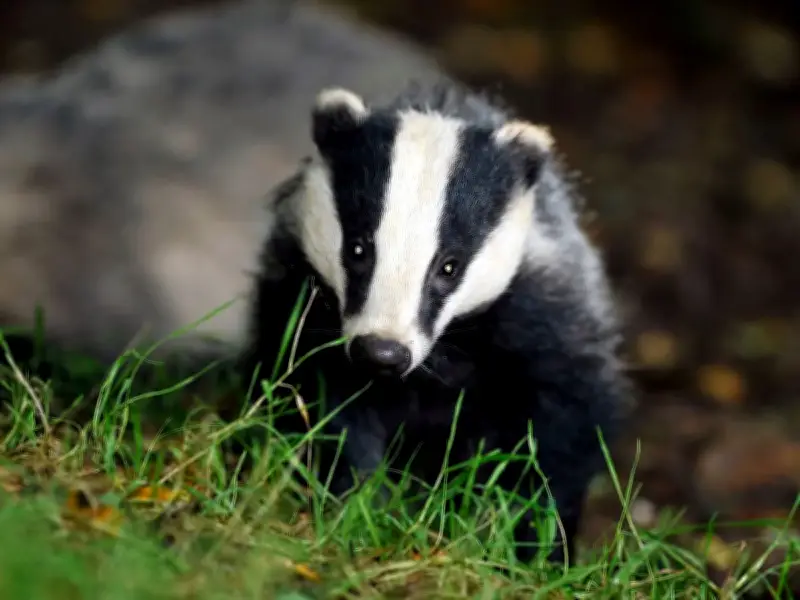
The Welsh Government will not carry out a mass cull of badgers, confirming changes to its approach to tackling the spread of bovine TB.
Recent speculation had suggested the Plaid-led minority Welsh Government would pursue a cull of badgers. Nearly 96% of cattle herds in Wales are now TB-free, but a target set by the previous Labour-run Welsh Government of being officially TB-free by 2041 is unlikely to be achieved without changes.
New approach announced
Advice from the Bovine TB Eradication Programme Board and a technical advisory group has been published, and Welsh Government farming minister Llyr Gruffydd said a mass, non-selective cull of badgers was not being pursued.
Instead he said: "Where there is evidence of infection threatening farmers' herds, and consequently their livelihoods, we will intervene."
Mr Gruffydd said: "Bovine TB remains one of the most serious animal health challenges facing Wales. For farming families, a TB breakdown can mean months or years of restrictions, uncertainty, and difficult choices.
"Nearly 96% of herds in Wales are now TB-free. However, on current progress, Wales is unlikely to be officially TB-free by 2041.
"The status quo is not an option. That's why we are taking a new and pragmatic approach to eradicating bovine TB. We will not stand by while farmers face uncertainty and anxiety, nor will we pursue a mass non-selective cull.
"Instead, we will be taking evidence-based and science-led action, incorporating the three pillars of cattle, people, and wildlife. Where there is evidence of infection threatening farmers' herds and consequently their livelihoods, we will intervene."
Three pillars of action
The approach is being broken down into three pillars. In terms of cattle, the Welsh Government said an approach will be developed so that farmers with persistent TB breakdowns, and their vets, will be able to choose an approach that tailors biosecurity and managing out high-risk cattle, learning lessons from trial projects in Pembrokeshire, north Wales, and Nant y Garth.
Reducing the length of time herds stay under restriction is a priority, and options for diagnostic testing to spot infection earlier while keeping statutory skin testing will be brought forward. The government will also explore safe ways to move cattle out of TB restricted herds, and farmers and vets will get better information on the TB status and disease risk of cattle, including those they plan to buy.
For people, the pledge is for farmers and vets to receive proactive support, rather than only after a TB breakdown has occurred. Farmers, private vets, the Animal and Plant Health Agency (APHA) and Welsh Government will work more closely, using local knowledge to manage disease.
Wildlife measures
In terms of wildlife, the Welsh Government is not pursuing a mass, non-selective cull of badgers, but said action will be taken on TB in wildlife. "Targeted, proportionate options – where evidence supports them – will be developed, guided by the principle that intervention should follow the disease. This may include testing, vaccination and removal or release where the evidence supports this."
New badger population surveys and fieldwork will add to the evidence, and work on the role of deer will do the same. A petition closed on the Senedd website two weeks ago calling for there to be no badger cull in Wales, having gathered more than 28,000 signatures.