
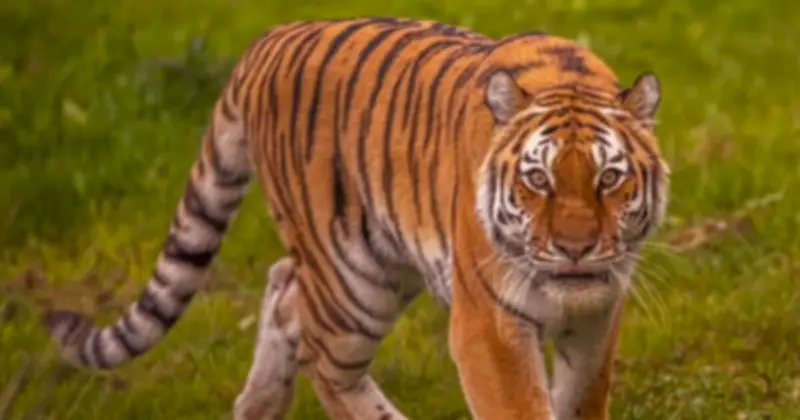
The fatal tiger attack at Yorkshire Wildlife Park has prompted urgent questions about zoo safety and the future of wildlife parks, according to the co-founder of the Born Free Foundation.
Will Travers, co-founder of Born Free Foundation, said his first thoughts are with the family and friends of the man who lost his life, as well as the staff, visitors and emergency responders involved in the incident. He also mentioned Altai, the Amur tiger, which he said was placed in an extraordinary situation through no fault of its own.
Urgent questions over zoo standards
Travers said the tragedy raises urgent questions that cannot be ignored. He asked whether the guidelines in the Standards of Modern Zoo Practice – a 173-page document created by the Zoos Expert Forum to advise zoos and the Government – are fit for purpose. He also questioned whether authorities could have done more, and what the wider context is regarding zoos and the role of social media.
Travers said he and his Born Free colleagues have carefully read the guidance, which was updated in 2026. He noted that while a great deal of emphasis is placed on preventing animals from escaping their enclosures, and there are detailed recommendations on keeper safety, provisions aimed at protecting the public from harm are light.
Recommendation to revisit standards
He said they cannot find anything that specifically seeks to prevent a person from entering the enclosure of a wild animal. Barriers designed to deter visitors from reaching the barrier separating them from the animal are mentioned, but he said there is a big difference between discouraging a behaviour and preventing it.
On that basis, Born Free strongly recommends that the standards are revisited, and Travers said they will be writing to Dame Angela Eagle, the Secretary of State for Environment, Food and Rural Affairs, as a matter of urgency.
Rapid reaction plans and zoo future
Travers said all zoos displaying Category A1 animals such as tigers and lions are required to have a rapid reaction plan, including the potential use of lethal force by trained staff where human life is under threat. However, he noted that getting to the location of an incident at a large zoo can take time, and even a few minutes may be too long.
He said there is no question that Yorkshire Wildlife Park staff acted professionally and as quickly as possible, and he does not believe they could have done more.
Born Free, founded by Travers and his parents, Virginia McKenna and Bill Travers, has argued for more than 40 years that the conservation work carried out by zoos is, at best, very modest. The foundation claims that funds deployed by zoos to protect wildlife in natural habitats are meagre, that zoo claims about educating the public are hard to substantiate, and that millions of wild animals are confined in the world's 10,000 zoos largely for entertainment.
Travers said the modern zoo concept has been around for about 200 years, with London Zoo founded in 1826, and he believes its time is over. He said this does not mean randomly releasing captive animals into the wild, as most would surely die. Instead, he said the emphasis should shift towards conserving species in their natural habitat through effective conservation policies, land management practices that leave space for nature, and innovative finance models that recognise the value of ecosystem services.
Social media and wild animal posts
Travers also addressed what he called the selfish selfie, referring to social media posts portraying individuals cuddling a lion cub, embracing a primate, or encircled by a snake. He said such images are designed to generate engagement and take no account of the impact on the exploited animal or the physical and disease-transmission danger to the person involved.
Born Free is campaigning to hold social media companies to account through tougher controls on what they can publish involving wild animals under the provisions of the Online Safety Act (2023). Travers said getting too close to dangerous wild animals is another tragedy waiting to happen, and we have a responsibility to do something about it.




