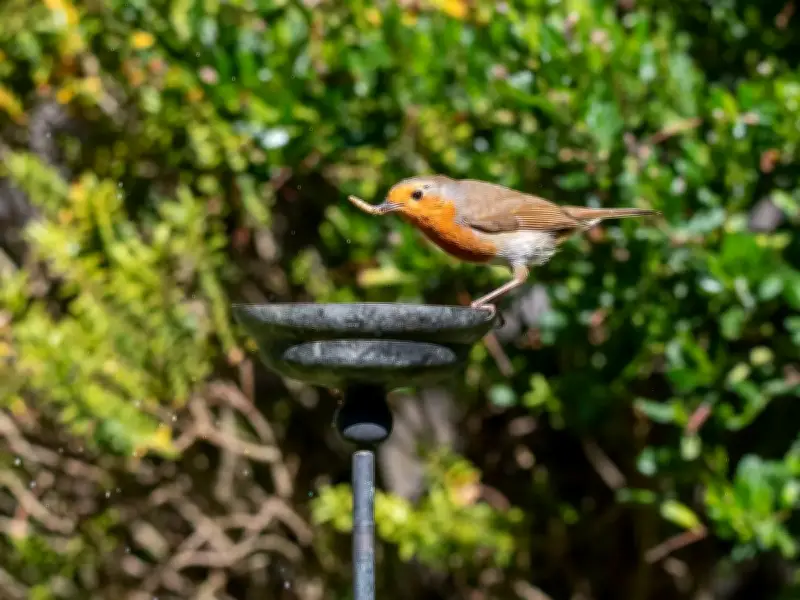
Robins will keep returning to your garden all autumn if you provide two foods they love, according to an expert. Mealworms and suet balls are among the top choices to attract them.
Robins' favourite foods
Robins are among Britain's most beloved birds, and while they are a delightful presence all year long, they become especially visible in gardens during colder spells as they search for shelter and sustenance. Birds require support throughout the year, whether that involves offering a bird bath or providing food for them to feed on. This becomes particularly crucial during the autumn and winter months when natural food sources become limited.
Understanding what robins prefer to eat is important. They adore food, yet their insect supply during winter becomes scarce. Offering mealworms and earthworms is an excellent starting point, and according to the specialist, they'll "keep coming back".
The expert stated: "Suet balls are a firm favourite, with their high-fat, high-energy content, they're not only appealing for robins, but essential to support their physiology and carry them through the harsh winter months. Apples, pears, and dried fruit can be a great source of fibre and vitamins A, E and C for robins - supporting digestion, healthy feathers and eyes, and immunity."
Hydration and shelter
Robins require water for both drinking and bathing purposes. Maintain a shallow bird bath filled with fresh water throughout winter, or place a small dish near shrubbery.
The expert explained: "Robins prioritise safety, so positioning water by shrub shelters them from predators. Never underestimate how important water is for robins to bathe in. Providing a place for robins to bathe keeps their feathers clean and free of parasites, and they also make their feathers more pliable when they bathe, allowing them to take flight more efficiently, thus getting away from predators more effectively."
If you're hoping to encourage robins to return to your garden repeatedly, establishing dense shrubs, hedges and climbing plants is the ideal approach. They provide refuge from severe weather conditions and safety from larger birds.
Nesting and planting
The expert noted: "A top choice for attracting robins and other songbirds is a serviceberry tree - known by many names, including juneberry, shadbush, and snowy mespilu. Serviceberries are a gardener's dream; they flower in mid-spring, attracting pollinators and, in turn, birds. Their fruit ripens from late spring through summer, providing robins with a steady supply of soft, energy-rich berries - perfect for feeding their young."
Robins are notoriously fussy about where they nest, so the expert advised that any bird box should be positioned somewhere peaceful and sheltered, well away from strong gusts and the harsh heat of the midday sun. The style of bird box is equally important - opt for an open-fronted design, mounted roughly one to two metres off the ground. That means high enough to avoid ground-level disturbances, but not so elevated that it disappears into the treetops.