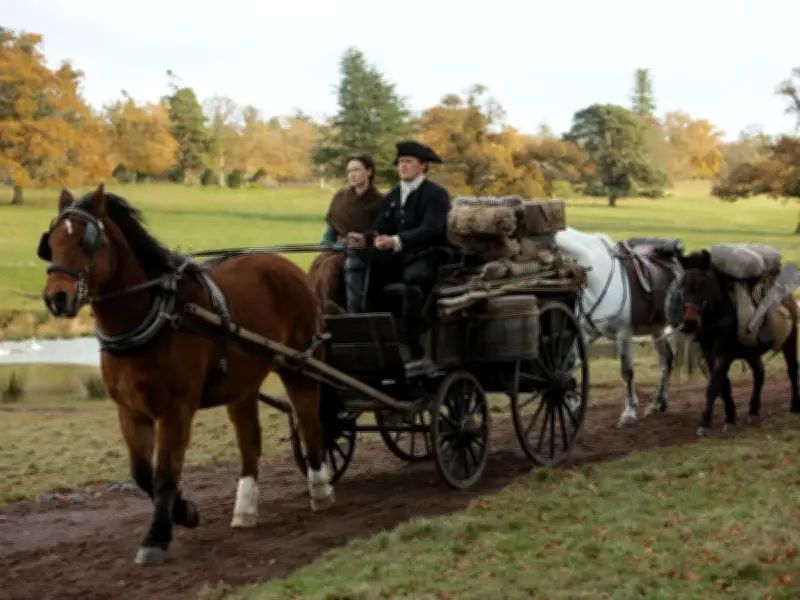
The Outlander storyline that sees Jamie and Claire Fraser settle in North Carolina draws on a genuine chapter of American history, when thousands of Scots crossed the Atlantic in the 18th century to start new lives.
Like the fictional couple, many Scots left their homes in search of fresh opportunities, with a significant number establishing themselves in an area of North Carolina during the 1730s that later became known as the 'Valley of the Scots'. The name refers to the Cape Fear valley, where the Argyll Colony was officially established in 1739.
Reasons for the Scottish Migration
Many Scots felt the voyage was worthwhile after being displaced or seeking economic opportunities in the wake of the Jacobite rebellions. By the 1770s, Scots made up around a third of the region's population, earning the valley its nickname.
North Carolina encyclopaedia website NCPedia states: "The place they chose to settle became a Mecca for succeeding generations of Scottish immigrants; indeed, the Valley of the Scots became home to the largest aggregation of that nationality in the continental United States."
Key Figures and the Plantation Economy
Gabriel Johnston, Royal Governor of North Carolina from 1734 to 1752, was instrumental in encouraging Scots to move to the region. Born in Scotland, Johnston enthusiastically promoted the colony as a land of opportunity.
As depicted in Outlander, the area's colonies relied on the practice of slave labour, and many Highlanders in North Carolina owned slaves in the late 18th century. NCPedia adds: "A plantation economy developed from the beginning of settlement, and considerable numbers of enslaved black people were transported to the area from the West Indies, South Carolina, and other colonies. In 1790, when the first federal census was taken, more than 38 per cent of the population of the Lower Cape Fear counties of New Hanover, Bladen, Brunswick, Duplin, and Onslow consisted of enslaved Black people."
Enduring Scottish Heritage
Scottish surnames such as Stewart and Campbell remain common in the area today, and events like the Grandfather Mountain Highland Games celebrate this heritage. Founded in 1956, the games began as a small gathering but now attract thousands of visitors from North Carolina and Scotland, with attendees wearing kilts and taking part in traditional Highland sports and dances.