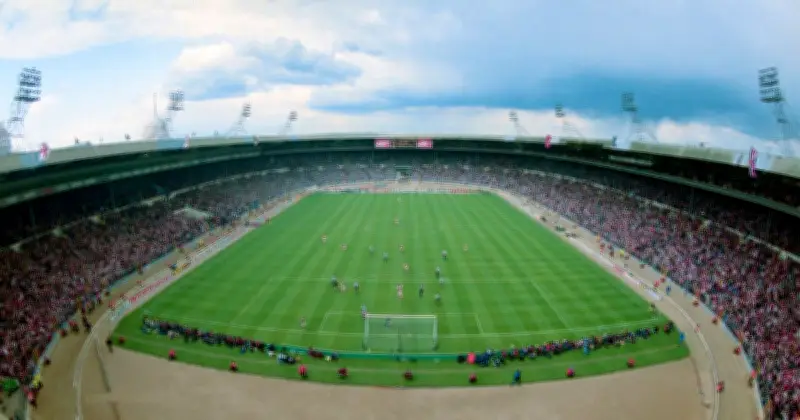
Rubble from the original Wembley Stadium, demolished in 2003, was used to construct the four artificial hills at Northala Fields in Ealing, London. The debris from the 82,000-seater venue now forms a permanent part of the park's landscape, which opened in 2008, a year after the new Wembley Stadium was completed.
A slice of football history in a London park
The original Wembley Stadium hosted nearly a century of iconic football matches, finals, and concerts before it was torn down to make way for the modern arena, which opened four years later. While that history is widely celebrated, few fans realise that physical fragments of the legendary venue still survive elsewhere in London.
Today, football supporters can trace the old ground's legacy to nearby Ealing, where tons of Wembley's rubble were transported to Northala Fields and repurposed to shape the park's four signature artificial hills. The site remains a favoured destination for Britons seeking outdoor recreation.
What visitors will find at Northala Fields
Countless residents may have even climbed the hills without realising they were treading upon a fragment of national heritage. Northala Fields additionally features several fishing lakes, a café and a children's playground to guarantee entertainment for visitors of every age.
The location is perhaps best recognised for the four-tiered, climbable mounds scattered across it. Each hill comprises three separate levels and can be scaled to gain a broader perspective of the surrounding landscape.
The park's name and the old stadium's legacy
The park's name is reportedly derived from the medieval spelling of Northolt, where the site is situated. This name ('Northall') appeared in the Domesday Book in 1086 as 'Northala'.
More than eight centuries passed before the original Wembley Stadium was finally constructed in 1923. It remained standing for 77 years until the decision was taken to begin anew and relocate to England's present home, featuring its enormous arch. Its forerunner will undoubtedly occupy a cherished position in the memories of countless British football supporters.
The twin towers flanking the entrance became an especially iconic sight on matchdays and are what most people will instantly recall when thinking of the venue. Nevertheless, it may reassure some to discover they can still, in a sense, return to that former ground today. All that's needed is a brief journey along the A40 from its original location.