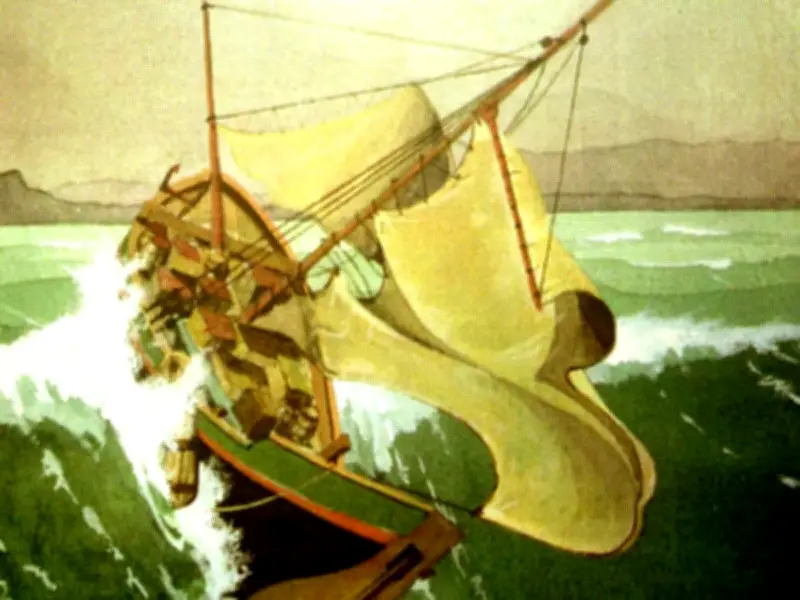
A local history group believes it has found the wreckage of a 17th-century royal ship that sank carrying treasure belonging to King Charles I off the coast of Scotland.
Members of Burntisland Heritage, a community group, say they have pinpointed the location of The Blessing of Burntisland in the Firth of Forth. The 60ft timber ferry sank in 1633 carrying the king's possessions shortly after he was crowned King of Scotland in Edinburgh.
Ship sank in storm while king watched
King Charles I was reportedly watching from his own flagship, the Dreadnought, as a sudden storm swallowed The Blessing and its crew. Only two of the 35 people on board survived. The vessel was carrying gold, silver, and a 280-piece silver dining set commissioned by Henry VIII when it went under.
Its final resting place on the seabed has remained a mystery ever since, but Burntisland Heritage says it has found convincing new evidence that the ship is buried below a layer of silt, around one mile from the shore.
New evidence points to wreck
A new report from the team of local enthusiasts said they had visited the site and pulled a timber core sample, which along with scans from a subsea radar "now strongly point to the wreck being that of the Blessing".
The group said in a report: "The royal cargo was reported to have been worth £100,000 at the time, a sum equivalent to several hundreds of millions today." It added: "A 30-year search for the vessel has now located what is believed to be the wreck of the Blessing, and work to retrieve items from the wreck is imminent."
The items on board are thought to include a gold and silver dinner service commissioned by Henry VIII. The group has provided the timber sample to the UK Receiver of Wreck, the coastguard department responsible for dealing with shipwrecks.
Treasure worth millions today
It is hoped a specialist diving team can soon be sent down for further examination to conclusively establish the ship's identity and find out whether any treasure remains inside. If proven, it would mark one of the significant maritime archaeological discoveries in Scottish history, with the treasure on board worth £100,000 in the 17th century, equivalent to £30 million today.
Burntisland Heritage's role in locating the wreck could see it awarded a "substantial proportion" of the value of the treasure, local media reported. In the four centuries since its disappearance, the Blessing has become a focus of local folklore along Scotland's east coast, including claims that King Charles I had 10 witches in Lancashire burnt for placing a curse on the ferry.
Historians believe the vessel succumbed to torrid weather conditions, made worse by being overloaded with heavy royal treasure. Modern searches for the wreck began in 1991, led by Kirkcaldy businessman Alex Kilgour. In 1994, the US Global Explorers Group got involved, carrying out multiple diving missions each summer before cutting their losses and returning home two years later, with the ill-fated ship no closer to being found. Efforts were taken over by the Burntisland Heritage Group in 1997, who bought radar equipment and have run volunteer dives ever since, despite shifting silts, fierce tides, and near-zero visibility that had thwarted previous expeditions.