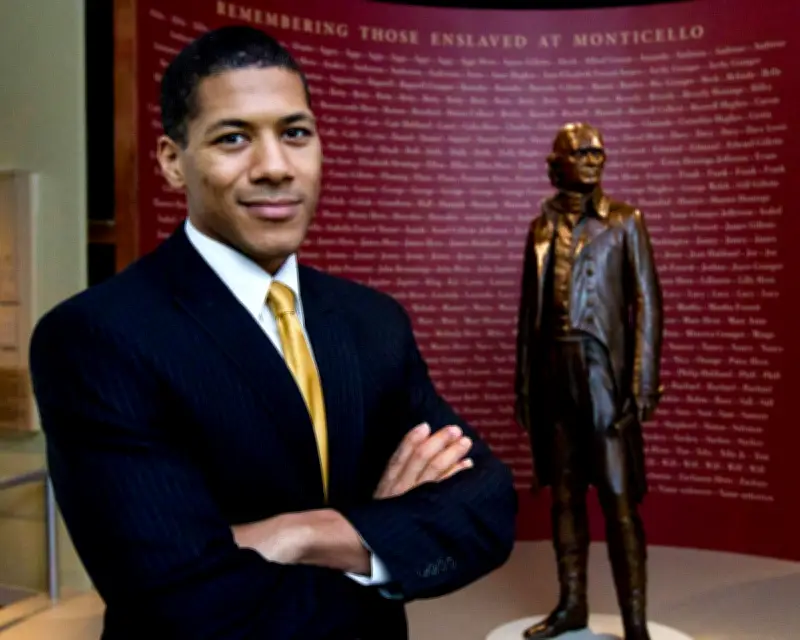
Shannon LaNier, the sixth great-grandson of Thomas Jefferson and a direct descendant of Sally Hemings, is grappling with the fundamental contradictions in America's origin story as the nation prepares to celebrate its 250th anniversary on Saturday. LaNier, 47, a television personality and co-author of Jefferson's Children: The Story of One American Family, acknowledges the duality of his feelings toward his famous ancestor.
Jefferson, the primary author of the Declaration of Independence and third US president, owned more than 600 enslaved people during his lifetime, including Hemings, who bore several of his children. The exploitative relationship began when Hemings joined Jefferson in Paris at age 14 and lasted for decades. LaNier expresses a wish that Jefferson had done more to free enslaved people and practice what he preached, noting that despite Jefferson's genius, his hypocrisy set society back.
Childhood Revelation and Resilience
LaNier has been aware of his lineage since childhood. He recalls a painful incident in second grade when he proudly announced his ancestry during a class lesson on presidents, only to be laughed at and told to sit down by his teacher, who accused him of lying. The next day, his mother visited the school to correct the teacher, an experience that taught LaNier the importance of knowing his identity and not letting others define him.
As he grew up, LaNier saw Jefferson's name on mountain peaks, schools, streets, and a grand monument in Washington DC, but he also realized that his sixth great-grandmother, Sally Hemings, had been largely written out of history. He now emphasizes her agency and resilience, noting that Hemings negotiated the emancipation of her children with Jefferson. While in Paris, where she was legally free, she agreed to return to enslavement in Virginia only after Jefferson pledged to free their unborn children when they turned 21.
Acknowledging Enslaved Ancestors
LaNier stresses that credit must be given to Hemings for preserving the family story and negotiating freedom for her children. He also commends all enslaved people for their strength and survival, viewing slavery as a moment in a longer journey of resilience and thriving. He warns against historical amnesia or deliberate erasure, pointing to rightwing attempts to reframe the American narrative around heroic white Christian men while sidelining diverse origins.
As a positive example, LaNier highlights Monticello, Jefferson's Virginia estate where Hemings lived and worked. In 2018, Monticello opened six exhibits spotlighting the roles of Hemings and other enslaved families in the estate's creation and daily life. LaNier believes other historical institutions can learn from Monticello's approach of telling the full story, including the good, bad, and ugly.
Fourth of July and African American Perspectives
The Fourth of July has long been a subject of debate among African Americans, with Frederick Douglass's 1852 question, 'What to the Slave is the Fourth of July?' still echoing. LaNier acknowledges that some in the Black community prefer to celebrate Juneteenth instead, but he argues that celebrating July 4 is important to honor the contributions of people of color to the nation's founding. He notes that enslaved people labored to build the White House and supported Jefferson while he wrote the Declaration of Independence, contributions that are often whitewashed or forgotten.
Saturday also marks the bicentenary of Jefferson's death on July 4, 1826, at age 83, the same day John Adams died. LaNier finds beauty in the Declaration of Independence not in Jefferson's narrow, hypocritical story but in the expansive capacity of its words to be claimed by all generations. Despite current societal anxieties, he remains optimistic, believing that acknowledging past mistakes can lead to healing and reconciliation.
LaNier concludes that understanding the past is crucial to moving forward without repeating errors, and he hopes the nation can eventually take leaps forward to realize the ideal that 'all men are created equal.'