A bar-tailed godwit's 6,800-mile migration from the east coast of England to Siberia and back has been mapped for the first time using new lightweight trackers.
Conservationists have revealed the route taken by “Phil”, a bar-tailed godwit overwintering on The Wash, an area that hosts hundreds of thousands of birds during the winter months, to the Taymyr Peninsula in central Siberia and back.
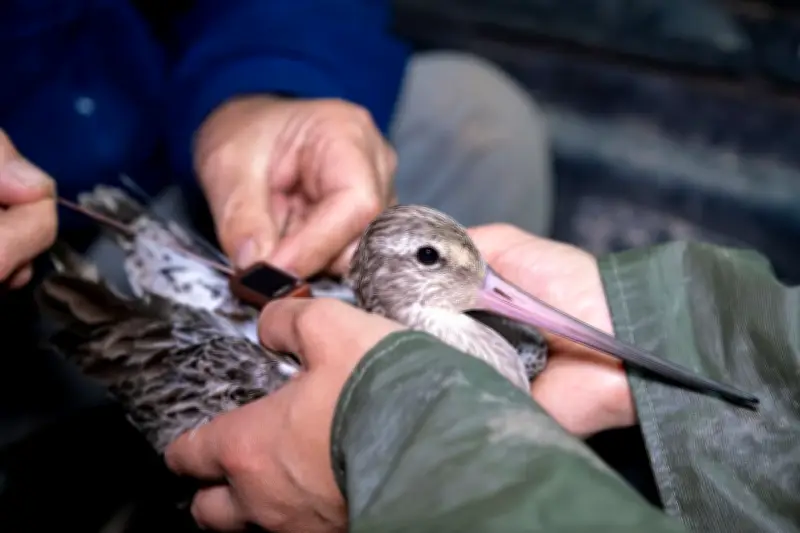
The bird was fitted with a tiny 6g solar-powered tracker that feeds data such as location and acceleration to nearby phone masts, storing information until it is in range.
New Tracking Technology
Jeff Kew, RSPB coastal adviser, said: “It is amazing to think that a bird we tagged here on the Wash in January has travelled thousands of miles to Siberia and made it all the way back again.”
He told the Press Association that tracking of the bar-tailed godwits – a bird a little bigger than a pigeon with a long bill and long legs – was made possible by the new lightweight tags, which had become available in the past three years and did not affect the bird in any way.
Phil is one of a small group of bar-tailed godwits that have been tagged to follow their migration.
Migration Route Revealed
“What we've achieved through tagging is actually understand in detail how birds get there and back, and the importance of the interconnected wetlands on the way,” Mr Kew said. “It has opened our eyes to what these birds are really doing.”
Bar-tailed godwits are thought of as one of nature's “ultimate endurance athletes”, with one subspecies undertaking the longest known non-stop migration of any bird, travelling from Alaska to New Zealand.
Birds that spend the winter in the UK migrate along the East Atlantic flyway, from breeding grounds in the Scandinavian Arctic or Siberia before flying south to the UK or further south.
The exact routes taken by individual bar-tailed godwits wintering in the UK were previously unknown, but the tracker placed by the Wash Wader Research Group on Phil – named after Phil Ireland who led the group for many years – has helped change that.
Phil's Journey
The tracking revealed that Phil travelled from the Wash to the Wadden Sea, which stretches along the coast of the Netherlands, Germany and Denmark, in March, then onto the Taymyr Peninsula in late May.
As he returned, Phil travelled across the Arctic Ocean – taking the most geographically direct route rather than sticking to land – to northern Norway, stopping on three islands along the Norwegian coast, before returning to the Wadden Sea and eventually back to the Wash.
He has now joined thousands of other wading birds at RSPB Snettisham, where they roost and feed on the mudflats, and take to the air in a “whirling wade spectacular” when high spring tides cover the mud.
Importance of Wetlands
Mr Kew said: “By tracking Phil, we're reminded why protecting migratory birds needs to be a global effort. Many species cross borders and depend on a whole network of wetlands along the way. That's why it's so important to look after these special places.”
The tracking helped to emphasise how important the UK's wetlands such as the Wash were for birds that travel along the East Atlantic flyway, he said, adding: “These other places wouldn't have birds unless we had the sites to support the wintering birds and the passage birds. It's like a big jigsaw and if you start taking pieces out of a jigsaw, the whole puzzle starts unravelling.”
Dr Nigel Clark, from the Wash Wader Research Group, said: “The Wash is the UK's single most important coastal wetland for migratory waders and spectacular numbers can be seen here in autumn and winter. But tracking birds like Phil the Godwit shows us how connected the Wash is with the rest of the flyway. This network of sites is more important than any single 'service station' alone.”
The East Coast Wetlands between the Humber and the Thames has been put forward as a potential Unesco world heritage site, in recognition of its importance to the natural world.