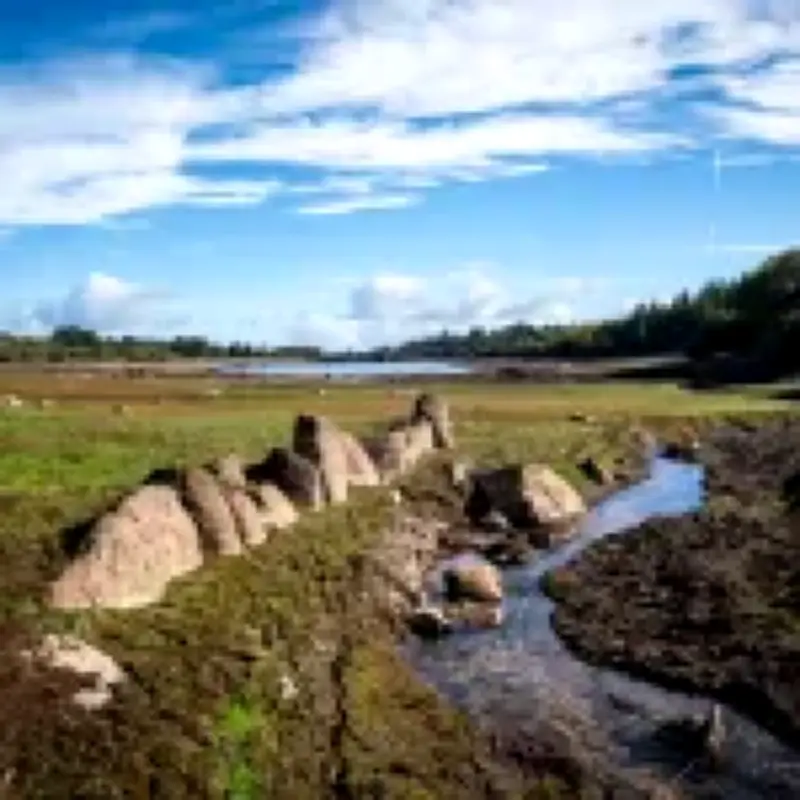
Water levels at a reservoir have dropped so low they have revealed the remains of prehistoric villages. The summer’s intense heatwave led the waters at Fernworthy Reservoir in Devon to drop to just 30% of its total capacity. As the water level dropped, remains and imprints of Bronze Age stone huts can be seen in the earth.
Dartmoor’s ancient settlements
Humans have lived around Dartmoor since at least 2300BC, with the area containing some of the highest concentration of Bronze Age settlements in the country. By 2500BC, farmers had begun to clear woodlands and build elaborate monuments, including stone circles to commemorate the dead, as well as entire villages of stone roundhouses.
But by around 1000BC, farmers had over-exploited the land, and it became waterlogged, and many of the settlements were abandoned. In 1942, Fernworthy Reservoir was constructed, covering around 76 acres of land and holding 380 million gallons of water – hiding the remains of the abandoned villages below.
Winter weather warning
The UK is still recovering from severe drought and high temperatures from this summer. But Britons could be in for a very different winter – with the country potentially facing a ‘polar vortex’ this winter as an unusual phenomenon moves in as a result of the El Niño effect. Experts have warned the incoming super El Niño could be one of the most severe on record.
While most commonly associated with warming Pacific Ocean temperatures, it also may have the effect of disrupting the Arctic polar vortex, the winds that circle the North Pole. This may allow colder air to drift southwards towards into Europe and North America, potentially bringing blizzard conditions with heavy snow. The effect also ‘heightens the potential’ for wet weather, stormy conditions and therefore flooding. Londoners have been warned to prepare for potentially severe weather, such as by keeping emergency food supplies for up to three days.