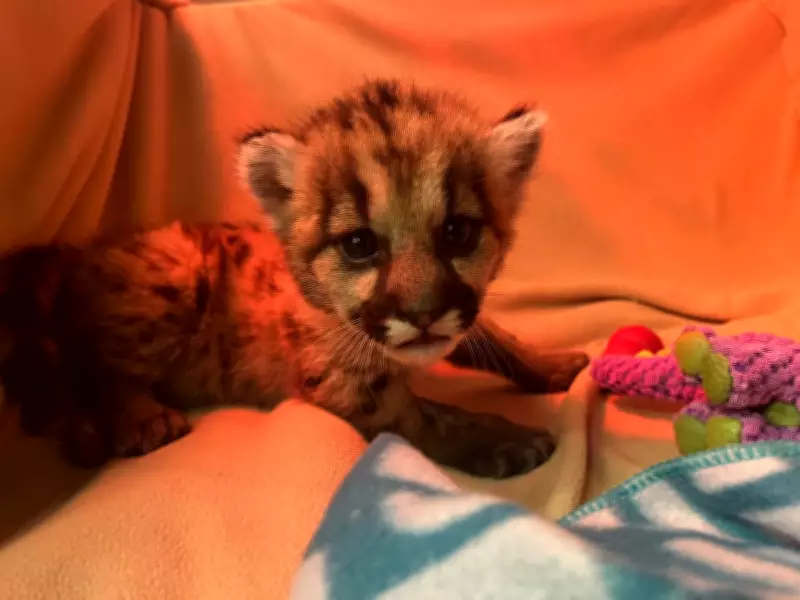
Abandoned Mountain Lion Cub Crimson Rescued in Santa Monica Mountains
In a rare and poignant wildlife event, a three-week-old mountain lion cub, later named Crimson, was abandoned by his mother in the sprawling Santa Monica mountains of southern California. Biologists from the National Park Service, who monitor the area's small mountain lion population, observed the cub alone for several days, emitting faint sounds that resembled a mix of purring and squealing, likely cries for his missing parent.
Rescue and Rehabilitation Efforts
After repeated visits to the location, the biologists concluded that the mother had likely moved to another den, leaving Crimson behind. As the cub's health deteriorated—he appeared weaker and was losing weight—they collaborated with the California Department of Fish and Wildlife to execute a rescue mission. Crimson was swiftly transported to the Oakland Zoo, where he arrived in late March in a critical condition.
According to Nik Dehejia, the zoo's chief executive officer, Crimson was emaciated and unable to stand upon arrival, described as "extremely tiny" and small enough to fit into cupped hands. It is uncommon for mountain lions to abandon their offspring, and the exact reason for Crimson's abandonment remains unclear. Dehejia noted that one hypothesis suggests the cub's abnormality—missing toes—might have signaled to his mother that he would struggle to survive, though the full circumstances are unknown.

Intensive Care and Broader Implications
Currently, Crimson is housed in an intensive care unit at the Oakland Zoo's veterinary hospital, receiving bottle feedings every three hours to restore his nutrient levels. He is the 33rd mountain lion rescued by the zoo, joining another young cub, a three-month-old named Clover, who is also under care. Dehejia emphasized that while the zoo is proud to rehabilitate Crimson, the ideal scenario is for cubs to remain with their families for nursing and socialization.
The rescue highlights broader environmental challenges, including habitat fragmentation, urban development, and human-wildlife conflicts, which often lead to distressed animals requiring intervention. Dehejia pointed out that human encroachment into natural habitats is a significant factor, stating, "More often than not we are in their habitat versus they being in ours. This is a broader scale issue over how we build, how we live, how we co-exist with wildlife around us."
Looking ahead, the zoo's immediate focus is on helping Crimson regain strength and weaning him off bottle feedings. There is potential for Crimson and Clover to become companions due to their close age, although introductions will be gradual over the coming weeks. This story underscores the delicate balance between wildlife conservation and human activity in regions like the Santa Monica mountains.