
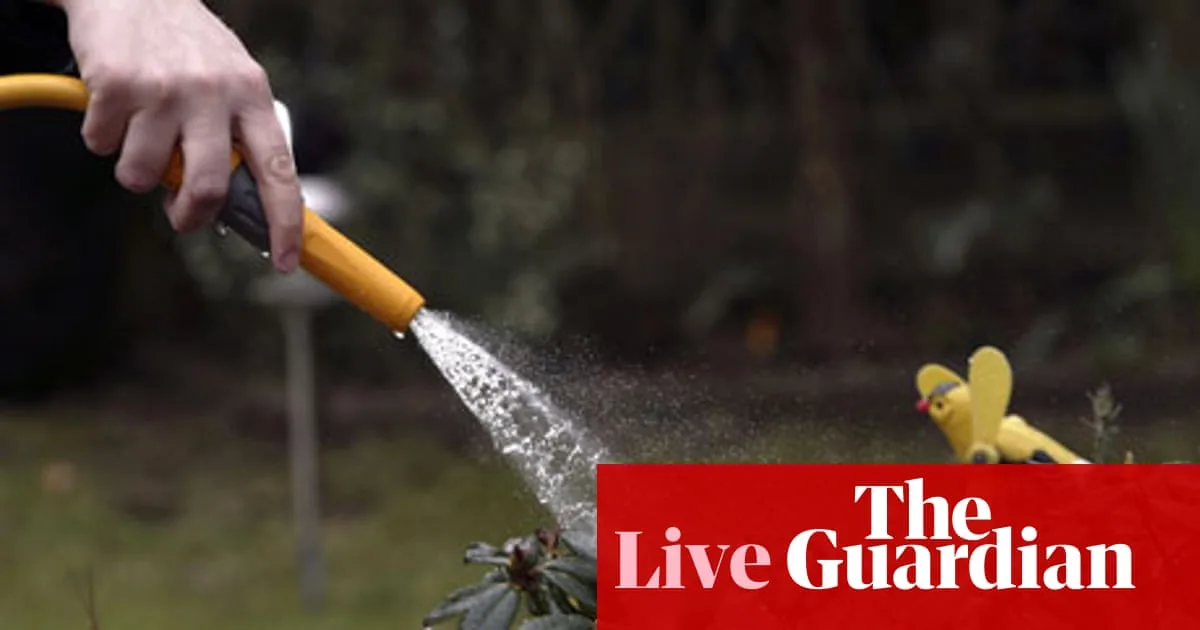
Seven water companies have announced that a hosepipe ban will come into effect across London and the south-east of England from 5 April, following two unusually dry winters. Thames Water chief executive Martin Baggs said: 'We know these restrictions will be unpopular, but they will save a lot of water. A garden sprinkler uses as much water in an hour as a family of four uses in a day.'
However, questions remain over whether hosepipe bans are the most effective conservation measure. Residential hosepipes account for only about 5% of water use, according to some estimates. Critics argue that water companies should focus more on fixing leaks, and that public education on water conservation could be a better long-term strategy.
The Environment Agency's 2008 strategy document 'Future Water' notes that the average person in England uses about 150 litres of water per day. It aims to reduce this to 130 litres per person per day by 2030 through metering, tariffs, and efficiency measures, and potentially to 120 litres with new technology. However, population growth may offset these gains.
The Country Land and Business Association has warned that around 40,000 private water supplies serving one million rural homes and businesses have been overlooked in drought contingency plans. CLA President Harry Cotterell said: 'Some private users are able to switch over to a public water supply when bore holes and springs dry up. This will lead to an unexpected increase in demand.'
Waterwise, a not-for-profit focused on water efficiency, argues that hosepipe bans are only a short-term fix. It calls for increased metering to help people and businesses measure and manage their water use, noting that 18 of the last 23 months in the south and east of England have seen below-average rainfall.




