
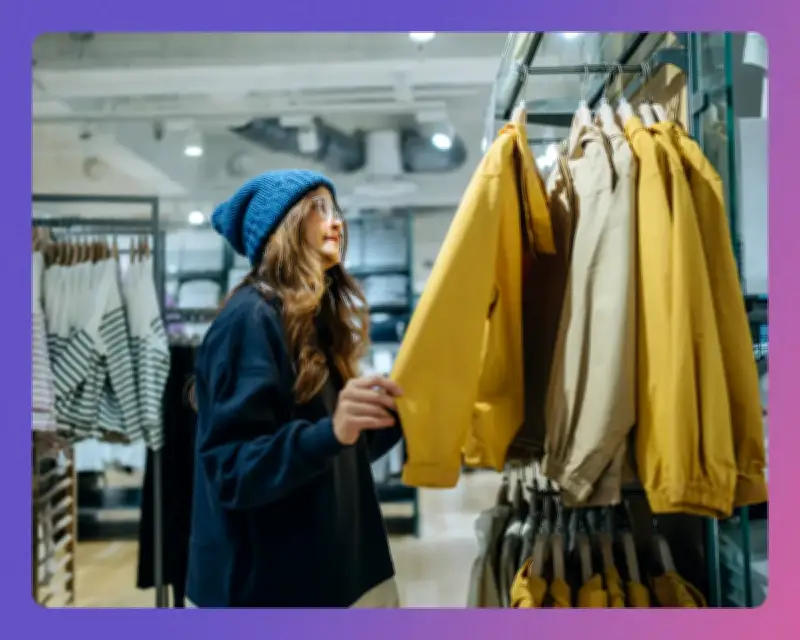
The 30 wears challenge, launched just over a decade ago by Eco-Age founder Livia Firth and journalist Lucy Siegle, encourages people to buy clothes they will wear at least 30 times. As a journalist interested in sustainable fashion, I have found this goal can often be surpassed, but only if garments are of good enough quality to stand up to repeated wear. So how do you know if your clothes really are well made? Does it mean spending a fortune? And how can we judge clothing quality before buying, especially when 37% of Britons get most of their clothes online?
Check the inside of the garment
Ask anyone who knows about clothes how to check for quality, and they will always talk about seams. “A seam’s primary purpose is to give a piece of clothing shape, and crucially structural integrity,” says Leigh Morris, a sustainability and product development consultant. “A bad seam, either poorly constructed or poorly placed, is the difference between a piece of clothing that looks good, feels great, and lasts, or one that feels awkward, looks questionable, and starts to come apart way before its time.”
It is not necessarily about whether a garment has a premium French seam (which neatly hides raw edges) or a more affordable overlock one (a quicker technique that sews over the raw edges with loops of thread). Both types have their place so long as they are done to a high standard. “It’s very much about whether or not the seams are loose and you can just tug slightly at them to see if they separate easily,” says Andrea Cheong, a fashion educator and author of Why Don’t I Have Anything to Wear? “If the inside is as good as the outside, it’s a good indication we’re on the right track. Examine high-friction areas [that are prone to] splitting, like the crotch on trousers.”
“In good garment construction, certain inner details are reinforced and properly concealed,” says Vianna Chan, a textile technologist and content creator for the blog Styled by Science. “A quality garment reinforces areas that bear the brunt of daily movement, such as pocket corners and zips. Gently pull both sides of a seam. If you see dense stitches that hold firm, rather than individual threads stretching apart and letting the light through, that is a good sign. Fast fashion skips many of these steps because labour and materials are expensive.”
She explains that fast-fashion waistbands, which are often a folded-over fabric sewn on to exposed elastic, are something to look out for, adding that well-made full waistbands, which usually consist of a band reinforced with sturdy interfacing to prevent rolling and conceal raw edges, help spread tension across the waist. “Sewing in a full waistband takes more time [ie labour costs], and requires more fabric and thread. Because these details are not visible from the garment’s outside, they are the easiest place to take shortcuts,” Chan says. So don’t worry if you know nothing about sewing – just get used to turning your potential new clothes inside-out and giving them a gentle tug.
Look out for dry-clean-only labels
We sometimes think dry-clean-only labels are a sign of good quality clothing, but they can mean the opposite, because the simple act of washing might make the garment fall apart. Morris warns this is especially true for pieces that you would have in heavy rotation in your wardrobe, such as tops and jumpers. “Brands can often default to using ‘do not wash, dry clean only’ labels if the fabric used was primarily selected for look or effect and not for wear, or if rigorous testing was not undertaken in the development and selection process.” These labels place more responsibility for care on the wearer and give the brand more scope to argue that the garment was damaged by incorrect care, rather than badly made.
Of course, there are some items that should be dry cleaned. “Tailoring is a prime example due to the complexity of construction and components used,” continues Morris. It’s also worth considering how much you’ll wear the item in question, not least because constant dry cleaning is a pain, expensive, and not great for the environment. “Is it a special garment? Is it tailoring? Is it occasionwear?” adds Cheong. “Also, where did you buy it? Because if you bought it from [a high-street store], it’s unlikely to be such a fine premium material that you do need to get it dry cleaned.”
Check what your clothes are actually made of
Beware of material deception, where marketing language can make a garment sound as though it’s made from something it isn’t. Natural fibres such as wool and linen can be more sustainable than some synthetics, and they can feel more premium and are often more breathable and comfortable to wear. That can mean – in my experience at least – you’re likely to wear them more often.
Chan suggests that if a brand uses labels such as “silk like”, it may be trying to mimic the look and feel of silk while using a synthetic fibre such as polyester. “Other sneaky examples are: ‘wool like’, ‘linen feel’, ‘premium blend’, ‘natural feel’. None of these speaks to the actual fibre composition and is instead meant to mislead the customer into thinking they are getting something of higher quality. Always read the label as your source of truth.”
Watch how the clothes move
If, like me, you don’t live near a big city, or even a town with any fashion stores, you probably do most of your clothes shopping online. So how do you virtually turn clothes inside-out? “I think watching clothes and movement is really useful,” says Cheong. “How baggy is the lining? Does the skirt move properly? Does it bunch around the hips and the waist or the shoulders when the model’s moving?” If a brand doesn’t have videos on its website, try looking at its Instagram account. If available, read product reviews and always check the returns policy so you can send back anything that doesn’t pass your home inside-out test.
It’s also a good idea to consider the cost per wear of an item before you buy it. This is calculated by dividing the cost by the number of times you expect to wear it: for example, a £30 T-shirt worn the suggested 30 times would cost £1 per wear. The longer your clothes last, the more you are likely to wear them, so even an expensive £200 cashmere sweater would cost just under £1.70 per wear if you wore it once a month for 10 years (I have one such sweater).
Buy less and from labels you trust
I haven’t shopped on the high street for nearly eight years; instead, I choose to buy from smaller, independent brands and those that produce in limited batches. These types of brands often have a wealth of information about their supply chains, to the point where they boast about the wonderful factories and artisans who make the clothing. In fact, you may even see pictures and videos of the production processes on their websites and social media feeds: a great indicator of quality. Many will add reassurance that their skilled workers are being paid fairly. They may also be using natural fibres with certifications such as the Global Organic Textile Standard, or cotton sourced through schemes such as the Better Cotton Initiative. All this may mean you pay a little more. But in my experience, buying less and wearing more evens out the cost in the long run.
If you’re unsure how the clothes you want to buy are made, drop the brand an email or social media message to ask. I have done this many times; it not only weeds out brands that don’t cut the mustard – in turn saving me money – but also builds my trust in those I’ll buy from in the future, albeit less frequently than in my fast fashion days.




