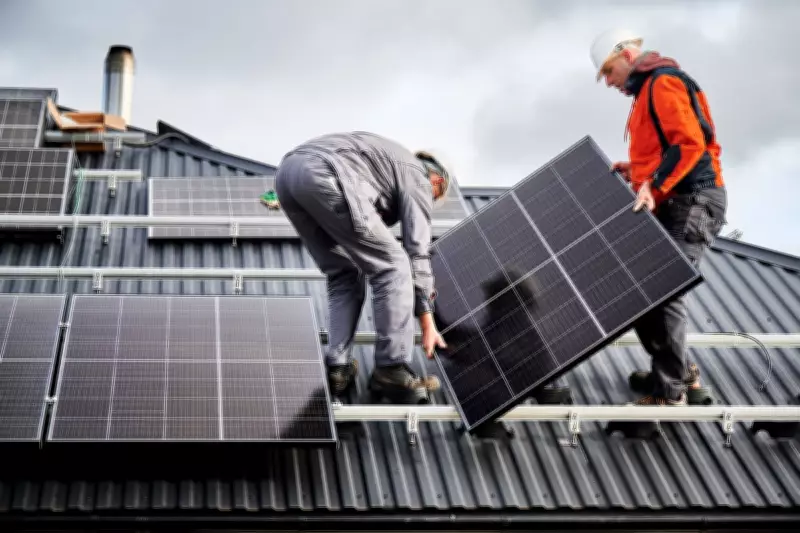
British households are increasingly turning to solar power as a reliable alternative to traditional fossil fuels, with electricity supplier E.On reporting a remarkable 62% surge in solar panel sales this month compared to the previous period. This significant uptick coincides with escalating conflicts in the Middle East that have disrupted global energy markets, causing crude oil and natural gas prices to skyrocket and prompting consumers to re-evaluate their energy dependencies.
E.On Reports Unprecedented Demand for Solar Solutions
E.On, one of the United Kingdom's largest electricity suppliers, has revealed not only the substantial sales increase but also a similar spike in website traffic to its solar energy pages during early March. The company's data indicates a growing public appetite for renewable energy solutions that can provide long-term stability amid volatile market conditions.
Executive Insights on the Energy Transition
Chris Norbury, Chief Executive of E.On UK, emphasized the critical timing of this shift during an interview with the Press Association. "There's probably never been a more important time to bring products to market that have the potential to make a significant difference to residential customers' energy bills," Norbury stated. He further explained that customers are seeking sustainable solutions that deliver enduring benefits rather than temporary relief.

"Ultimately, what all of our customers tell us very clearly is they want solutions that help bring energy prices down for them not just temporarily, but sustainably and on an enduring basis," Norbury added, highlighting the fundamental change in consumer expectations regarding energy security and affordability.
Innovative Technology to Maximize Solar Benefits
E.On has simultaneously announced the launch of a new automated service called Next Optimise, designed specifically for homes equipped with solar panels and battery storage systems. This innovative tool connects to wholesale energy markets, using automation to charge batteries during periods of low wholesale prices and then either use or export the stored energy when prices increase.
Australian Success Story Informs UK Implementation
The technology powering Next Optimise has already proven successful in approximately 80,000 Australian households, where sunnier climatic conditions have accelerated solar power adoption compared to many other nations, including the United Kingdom. Dan Adams, Chief Executive of Amber Electric, which partnered with E.On to provide this technology, believes Australia's early embrace of solar has provided valuable insulation against global energy shocks.
"I think the shift has made Australia 'less exposed to some of these big shocks because of that increased uptake' of solar," Adams remarked, suggesting that the United Kingdom could achieve similar resilience through accelerated renewable energy adoption.
Government Support for Renewable Energy Transition
Martin McCluskey, Minister for Energy Consumers, has publicly endorsed the growing movement toward solar power, connecting current geopolitical events to national energy security priorities. "Events in the Middle East remind us that our mission for clean, homegrown power is essential for our energy security," McCluskey stated.
"Solar power will play a crucial part in that mission, and it's clear that the British people are recognising that, too," he continued. The minister also announced forthcoming regulatory changes that will make plug-in solar panels available in retail stores within months, providing consumers with more accessible options to reduce energy bills and protect themselves from fossil fuel market volatility.
The Path Forward for UK Energy Independence
E.On's Chris Norbury acknowledged that while the country has made progress since the energy crises of 2022, substantial work remains to be done. "As a country, we are in a better position than we were in 2022, but there's still a hell of a lot more work to do," Norbury observed.

He argued that accelerating the electrification of home energy systems through solar panels and battery storage represents both an urgent priority and a strategic opportunity. "We have the opportunity to do that work quickly, to continue the decarbonisation of our energy system, which is ultimately what will insulate us from fossil fuel-driven events such as this," Norbury concluded, emphasizing that vulnerable households stand to benefit most from reduced exposure to price fluctuations.
The convergence of technological innovation, consumer demand, and supportive government policy appears to be creating a transformative moment for renewable energy adoption in the United Kingdom, with solar power emerging as a central component of the nation's energy security strategy.