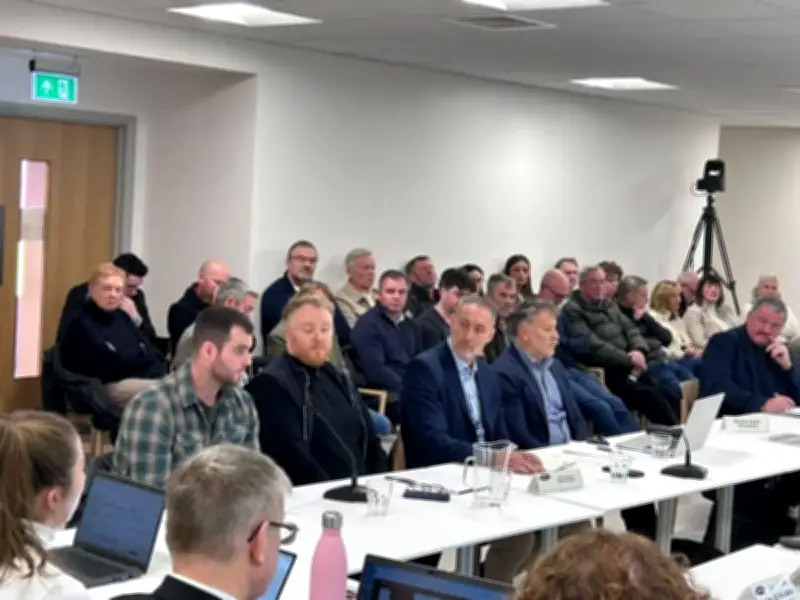
Residents cheered as proposals for a vast solar farm covering an area larger than 165 football pitches on the County Durham border were turned down.
Durham County Council's planning committee rejected the South Sharpley solar farm, near Murton, Seaham and Hetton-le-Hole, on Thursday (November 26) citing concerns over its impact on the surrounding landscape.
Scale and location of the proposed development
The development would span almost 120 hectares straddling the council boundary and would remain operational for 40 years. Its positioning means separate planning applications were submitted to both Durham and Sunderland councils.
Durham planning officers had recommended the scheme be approved, arguing the benefits of renewable energy outweighed the harm posed by the development. However, objectors voiced concerns about its scale and the increasing number of energy projects in the Murton and East Durham area.
Objections from the community
Dr Brian Brown, speaking on behalf of the East Durham Action Group, put the question to councillors: "How much is enough?". He added: "On the current trajectory, Murton is destined to become a green energy industrial complex."
Dr Brown said the group had identified approximately 418 hectares, or more than 1,000 acres, of major green energy developments in the vicinity of Murton.
Local resident Alison Turnbull raised concerns regarding the impact on the former Durham and Sunderland Railway route, which is currently used by walkers and cyclists. She said: "This route will have its views change from rolling green fields to industrial glass panels, fencing and associated infrastructure. The development would become a dominant modern feature. It changes the character and, more importantly, the experience of this historic landscape."
However, councillors also heard from one of the farming families whose land would be used for the development. The farmer stated that his family had worked the land for approximately 130 years, but that escalating costs, unpredictable weather and slim margins meant the business was forced to adapt.
Developer REG Power also contended that the scheme would deliver economic advantages. Director Matt Partridge said it could bring up to £10m of investment and around £200,000 a year in business rates.
Decision to refuse and next steps
Cllr Adrian Schulman moved to reject the plans, saying: "I'm not happy with this application because of the landscape damage, heritage damage and all that goes along with it." Cllr Liz Brown seconded the motion, describing it as an "incredibly difficult" application because the balance between the harm and benefits was so finely drawn.
Prior to the vote, councillors were informed that the authority had lost appeals against around five previous solar schemes which the committee had rejected. Despite this, Cllr Alan Bell cautioned: "If we sit back and think we're going to lose every appeal, why are we having these meetings? It's democracy and the community. We'll never know unless we challenge them."
The council's official grounds for refusal stated that the location, scale and form of the development would cause unacceptable damage to the "character, quality and distinctiveness" of the landscape. Residents broke into applause after committee chairman Cllr Scott Woodhouse called the vote and confirmed the rejection.
Speaking in the aftermath, Cllr Woodhouse said: "The committee felt that the harm outweighed the benefits, so that substantially pushed the committee more to decline the officer's recommendation." When questioned about a potential appeal, he said: "We feel there's a strong enough case against it, so hopefully this one will stick with the decision we've made today."
Cllr Woodhouse also took aim at national planning policy, arguing it had become increasingly difficult to reject solar farm applications. He said: "Until the policy changes, these fights for our land and our food security are always going to be hard."
The Sunderland portion of the scheme still requires a ruling from Sunderland City Council at its next scheduled planning committee in January.