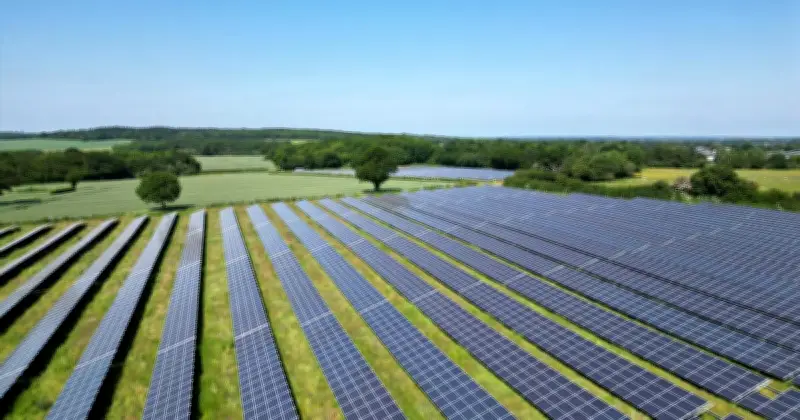
Plans for a solar farm spanning 260 acres, the equivalent of 58 football pitches, on the Shuttleworth Estate in Bedfordshire have drawn strong opposition from a rural community concerned about the loss of prime agricultural land.
The proposed development would generate enough electricity to power over 15,000 homes a year, according to the developer. However, Jason Whaley, chair of Cople Parish Council, warned that the project would sacrifice a patch of Grade-A agricultural land for solar panels.
Food security concerns raised
Mr Whaley told the Express: "The UK already has to import supplies of wheat, potatoes and other vegetables to meet current UK supply requirements. Reducing the available 'best and most versatile' land from the UK supply chain simply makes the UK even more reliant on foreign imports to supply demand."
He added: "With climate-related challenges and growing geopolitical tension, there is a growing risk to the reliability of foreign imports into the UK already. This application only helps to increase this risk."
Mr Whaley said the council "feels there should be no conflict between maintaining food security and prioritising renewable energy projects". He suggested that "there should instead be more of a focus on using brownfield, industrial roof or over car-parks for these solar panels".
Developer defends the site
Developer Quintas Cleantech maintains on its website that the site is a "great spot" for a solar farm, with "relatively flat" land which "doesn't cover any protected landscape areas". The company also says the project will deliver "significant environmental benefits" and create a net increase in wildlife habitats.
A Quintas spokesperson said: "We remain committed to engaging constructively with local stakeholders and addressing legitimate concerns as the proposal progresses."
A spokesperson for the Shuttleworth Estate said its trustees were responsible for management in the "most effective and sustainable way". They told the BBC: "Any commercial arrangements relating to the estate are confidential between the parties involved and we are therefore unable to comment on the details."
Government scrutiny of renewables
The Labour Government has drawn criticism for waving through large-scale renewable energy projects since coming to power in 2024, including the Great North Road solar farm in Nottinghamshire, which was approved on high-quality farmland last month.
While the powers to approve or reject proposed developments usually lie with local authorities, the Government can step in to determine so-called Nationally Significant Infrastructure Projects (NSIPs). The application for the Shuttleworth Estate solar farm, which was first lodged in May 2025, is yet to be decided upon by Bedford Borough Council.