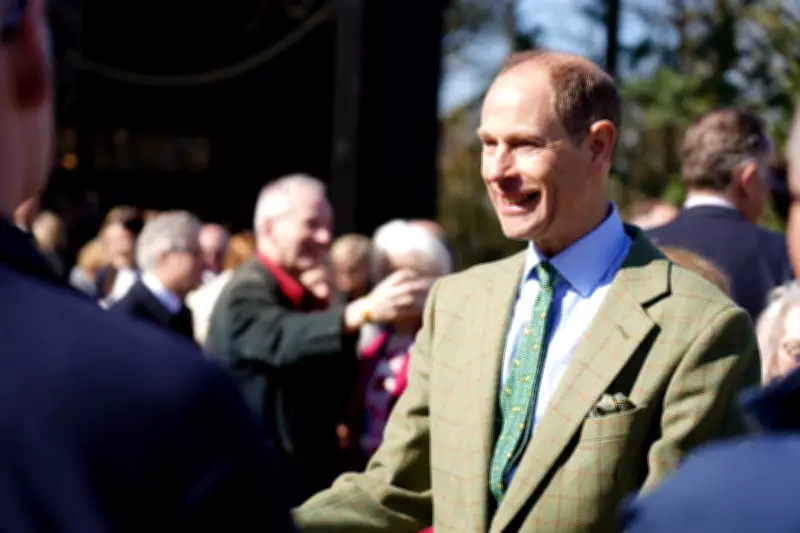
The Duke of Edinburgh, Prince Edward, undertook a unique behind-the-scenes role at Bristol Zoo Project, personally preparing food for a troop of western lowland gorillas. His visit on Tuesday formed part of a carefully orchestrated programme designed to reintroduce the gorilla troop to visitors in anticipation of the Easter holidays and the imminent public opening of the site's expansive new African forest habitat.
A Royal Patron's Hands-On Contribution
Prince Edward, who has served as patron of the Bristol Zoological Society since 2013, paid a heartfelt tribute to the dedicated staff and volunteers during his tour. He met with conservationists, zookeepers, and volunteers, and observed various animals including giraffes and crocodiles. His activities underscored the zoo's transition from a traditional facility to an immersive conservation project.
Preparing for a New Chapter
The gorilla troop remained at the original Bristol Zoo Gardens in Clifton following its closure in 2022. They have been under continuous care by dedicated keepers while awaiting the completion of their new, state-of-the-art habitat at the Bristol Zoo Project site. The public opening is scheduled for April 1st, with a phased approach to visitor access.

Initially, small groups of just 10 guests at a time will be welcomed, gradually scaling up to accommodate 2,000 members over the course of the first month. This measured approach ensures the animals can acclimatise comfortably to increased human presence.
Emphasising Habitat Conservation
In a speech delivered on-site, the Duke highlighted the critical importance of preserving natural habitats and ecosystems. "The animals that you see here that are endangered are endangered because their habitats are being threatened, not necessarily them particularly," Edward stated. He elaborated on the interconnectedness of wildlife and nature, praising the new facility as a demonstration of this vital relationship.
"I'm delighted that we've created this brilliant new facility for the gorillas and primates here, which hopefully will give them a very different experience and you'll see them mixing with others," he added, expressing optimism for the animals' welfare and visitor experience.
A New Vision for Zoological Conservation
The new African forest area is a centrepiece of the Bristol Zoo Project, housing some of the world's most threatened species. This includes the western lowland gorillas, cherry-crowned mangabeys, slender-snouted crocodiles, and African grey parrots. Justin Morris, Chief Executive of Bristol Zoological Society, explained the project's transformative vision.
"Bristol Zoo Project is not a typical zoo," Morris asserted. "It is a conservation project with a powerful mission to protect threatened species and habitats. Rather than traditional enclosures, the site is being developed as an immersive conservation zoo, where visitors experience large, naturalistic habitats designed around the needs of wildlife."
He confirmed that the African forest area will enable visitors to observe authentic interactions between species that naturally cohabit in the wild, offering an educational and impactful experience focused on ecological preservation and species survival.