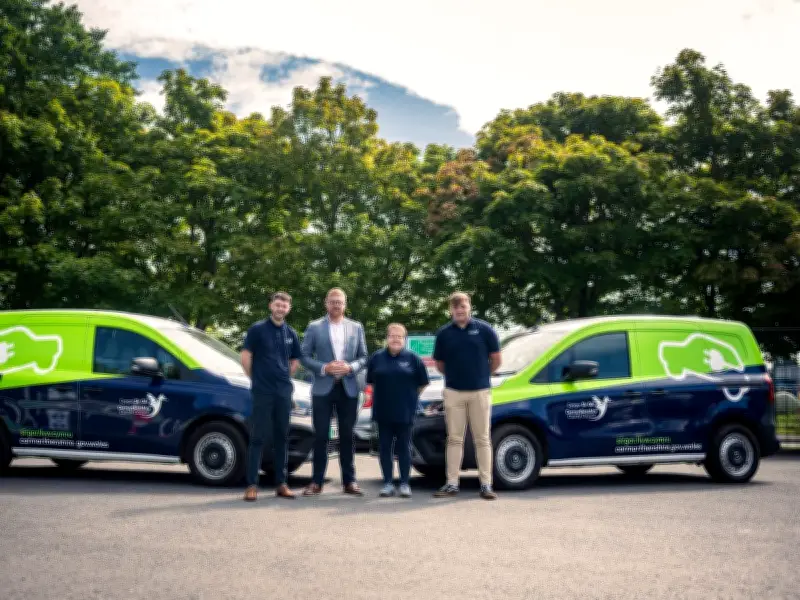
Carmarthenshire Council, which declared a climate emergency seven years ago, missed funding opportunities to buy more electric vehicles (EVs) and lacked a clear transition plan, but is now making decent progress, according to a draft report. The report found the council was the first authority in Wales to have EVs in 2010, but progress slowed before accelerating over the last couple of years. The proportion of its fleet powered fully by electric batteries grew from 1.8% to 8% by 2024 and now stands at 9%.
Advisory Panel Recommendations Approved
The draft report, produced by a council advisory panel that began examining transport and EV infrastructure in 2024, made eight recommendations that have now been agreed by the cabinet. These include investigating all available funding opportunities for the EV transition, implementing cohesive strategic policies to encourage the shift, and training staff in all aspects of relevant maintenance, infrastructure, and operability.
Speaking at a cabinet meeting on June 29, Councillor Aled Vaughan Owen, cabinet member for climate change, decarbonisation, and sustainability, said transport is one of the authority's main sources of greenhouse gas emissions. "In short this report moves us from ambition to action," he said. "We either accelerate the transition now or we risk falling behind financially, environmentally, and operationally." He added that the shift would also mean cleaner air and lower fuel costs.
Challenges and Missed Opportunities
The advisory panel report highlighted that the council's EV transition stalled after a positive start, with a key obstacle being the lack of a transition plan to coordinate efforts, allocate resources effectively, and set achievable milestones. The absence of a dedicated transition team compounded the issue. The report noted: "Another critical challenge was the missed opportunities for securing grant funding. Grant funding is vital for supporting the infrastructure development required for EVs such as charging stations and fleet upgrades." The authors acknowledged that acquiring EVs and charging points can be expensive and logistically challenging, particularly in rural counties like Carmarthenshire.
Recent Progress and Future Plans
Since 2023, the council has made strides in boosting EV numbers and developing supportive policies. Examples include a new approach in 2024 whereby all replacement fleet vehicles are to be EV by default, and the creation of an EV infrastructure group to coordinate efforts and provide oversight. Charging points have also been installed in depots and other sites. The report stated: "By implementing these recommendations Carmarthenshire Council can make significant strides towards achieving its net zero targets, enhancing the sustainability of its transport operations, and promoting the wider adoption of electric vehicles within the community."
The Welsh Government wants all public sector organisations to be net zero by 2030, meaning they cut greenhouse gas emissions and offset any remaining ones. Replacing diesel and petrol vehicles with EVs is one step towards this. Carmarthenshire Council aims to slash its carbon emissions by around 80% in four key areas, including its vehicle fleet, by 2030.
Asked by the Local Democracy Reporting Service how many vehicles it had in its fleet and how many were electric, the council said 57 of its 628-strong fleet are EVs, and it plans to add a further 20 this financial year.