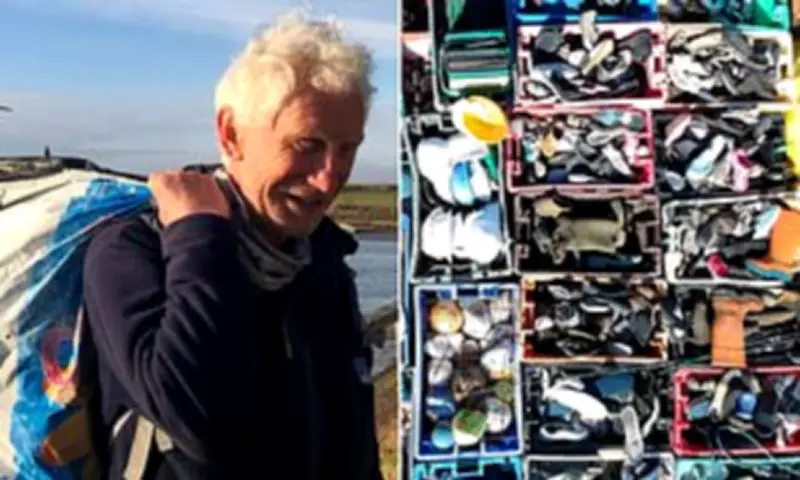
A dedicated beach cleaner has unveiled the staggering mountain of plastic rubbish he has meticulously gathered from Britain's coastal shores, with his vast collection including over twenty-two thousand bottle tops, 4,160 drinks bottles, and 3,756 cotton bud stalks.
The Relentless Collector
David Shackleton, a 63-year-old former RSPB worker, dedicates his days to accumulating rubbish from beaches in Ravenglass, located in west Cumbria. He hauls the items using a trailer and displays them in organised piles outside his home, creating a powerful visual statement about marine pollution.
Five Years of Accumulation
Mr Shackleton has spent five years gathering these mounds of plastic waste, and he asserts that the sheer volume serves as a stark indictment of how polluted Britain's waters have become. Among his most frequently found items are a total of 22,250 bottle tops, 4,160 drinks bottles, and 3,756 cotton bud stalks.

His collection extends far beyond these common items. He has also recovered 2,000 shotgun cartridges, over one thousand cigarette lighters, and 1,110 tampon applicators – a quantity he believes might constitute 'the biggest collection' in northern England.
Diverse Array of Debris
Other objects gathered include 760 celebration balloons, 700 items of footwear, 463 dog balls, 251 oil drums, and 49 tyres. In terms of bulk, Mr Shackleton has filled 500 large bin liners with plastic fishing waste and an additional 245 large bin liners with general rubbish.
The Display and Its Impact
After collecting the rubbish, Mr Shackleton – who moved to Ravenglass in 2021 – meticulously sorts the items into piles. This creates eye-catching displays outside his front door that consistently shock and educate passers-by.
Sources of the Waste
Mr Shackleton notes that most of the rubbish originates from industrial waste, particularly the fishing industry, which contributes huge amounts of netting and rope. By volume, he identifies this as the most significant issue. However, some items have travelled astonishing distances, with debris washing up from America and bait boxes from Canadian fishermen. A considerable portion of the fishing-related waste also comes from Ireland.
Motivation and Frustration
While Mr Shackleton finds the work rewarding and describes it as 'very cathartic' and a good way to stay fit, he also expresses deep frustration at the sheer volume of plastic waste polluting our waters.
'It angers me that this stuff ends up in the sea because it shows a lack of responsibility,' he said. 'When you get rubbish dropped in the countryside, that can make the national news - but if you walk along our beaches in Britain, you will see that they are covered in rubbish.'
A Call to Action
Through his display, Mr Shackleton hopes to deter further plastic pollution. He questions consumer habits and disposal methods, urging greater responsibility.
'Do people really need to keep buying plastic bottles?' he asked. 'If so, why don't they recycle them? Don't just dump them or throw them overboard. I've even seen toothbrushes washing up because people are chucking them down the toilet.'
His mission is clear: 'I'm trying to get the message out about what we're doing to our seas, particularly the amount of rubbish in them. I've begun to realise just how important my display is, because if it sends a message to people, that will really help.'

Top Items Found Washed Ashore
- Bottle tops
- Drinks bottles
- Cotton bud stalks
- Shotgun cartridges
- Cigarette lighters
- Tampon applicators
- Celebration balloons
- Footwear
- Dog balls
- Oil drums
- Tyres
- Fishing waste
- General rubbish