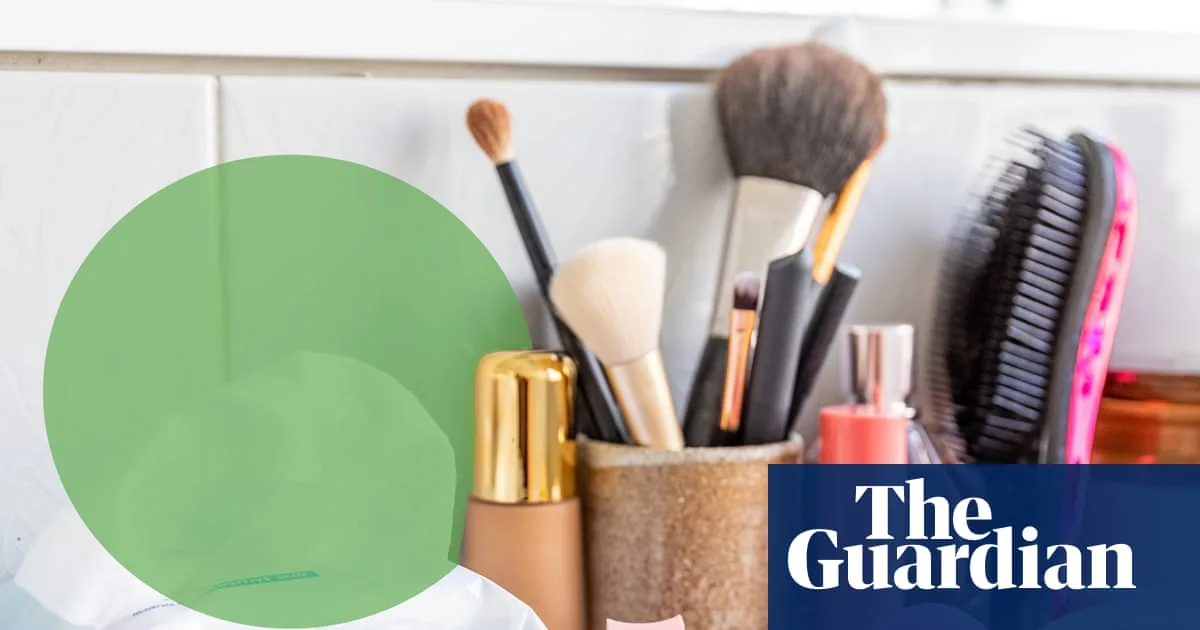
Easy Swaps to Cut Plastic from Your Personal Care Routine

Almost 60% of beauty packaging is made from plastic, and their varied components make them difficult to recycle. Here are some sustainable tips to cut down.

From bottles to bars: easy swaps to cut plastic from your personal care routine

Almost all cosmetic packaging is thrown away. But with a bit of forethought, it is not hard to keep both your skin and your conscience squeaky clean. Change by degrees offers life hacks and sustainable living tips each Saturday to help reduce your household’s carbon footprint. Got a question or tip for reducing household emissions? Email us at changebydegrees@theguardian.com.

Who has not opened a bathroom cupboard on a cleaning spree, scanned the shelves of half-full volumiser, long-forgotten eye shadow palettes and blunt razors and tossed them in the bin – one guilty, satisfying clunk at a time? Very few of us, since 95% of cosmetic packaging is thrown away. Given the Australian cosmetics and beauty industry was valued at $17.25b in 2025, this amounts to an incredible volume of waste. To add insult to injury, almost 60% of beauty packaging is made from plastic, with the complicated makeup of spray bottles, pumps and tubes meaning they are difficult to recycle.

Wide Pickt banner — collaborative shopping lists app for Telegram, phone mockup with grocery list

When it comes to personal care products, waste can be near impossible to escape. But with a bit of forethought, it is possible to reduce the plastic in your beauty cabinet.

Be sustainable by buying less

As with most sustainability advice, the best place to start is by buying less, and – where possible – buying locally made products derived from natural ingredients, and avoiding single-use items or packaging. Some swaps are simple, like replacing your plastic loofah with a plant-based one, or eliminating makeup remover wipes from your routine and replacing them with water and a face towel. Where you can, opt for products made from materials like glass and aluminium, which are easier to reuse and recycle, or wood and paper from certified sources.

Next, do a thorough analysis of your shower products, skincare and makeup bag to identify the products you actually use up. “A product you love and actually finish is infinitely better than five products you do not,” says Dr Anita Vandyke, the author of A Zero Waste Life: In Thirty Days. Resist the urge to buy products on a whim and focus on keeping your bathroom shelves minimal. “A more curated, intentional kit means less waste overall.”

Switch from bottles to bars

The simplest way to reduce plastic in the bathroom is to switch from bottles of hand and body wash to bars of soap. Many organic grocers and health food stores sell Australian bars made from natural ingredients; some come unwrapped or simply tied with a piece of string.

“Like any bar product, you do need to allow it to properly ventilate – I keep mine on a dish designed for drainage so it can dry between uses,” says Avigon Paphitis, beauty startup adviser and founder of Gorgeous Nothings.

The switch to bars is possible for shampoo and conditioner too. “I want to reassure people here,” says Vandyke. “The early days of shampoo bars were a bit hit and miss, but the formulations have come a long way.” Paphitis recommends Spanish brand Rowse and the Davines Love shampoo bar from Italy. In the interests of keeping your product air miles down, locally made bars are also available at most supermarkets and beauty retailers. Keep in mind that “performance is entirely dependent on your hair type, density and texture,” Paphitis says, so the process might involve a bit of trial and error.

Switching from bottles to bars is also possible for other product categories like cleansers and deodorants. Noosa Basics do a range of bar deodorants that come in a small aluminium tin that can be repurposed. Or, try online retailer Flora and Fauna.

Refillables for the shower and countertop

If bar soaps are simply not for you, refillable bottles are a great alternative. “This is an area that is genuinely growing in Australia, which is exciting,” Vandyke says. “The Source Bulk Foods has really broken into the mainstream here, with about 50 bulk refill stores across the country. They are a great starting point for refillable liquid soaps, shampoos and conditioners.”

Pickt after-article banner — collaborative shopping lists app with family illustration

Most supermarkets sell refillable hand and body wash including Thankyou, which is made in Australia. Other local options at varying price points include Koala Eco, Grown Alchemist, Aesop and Ikkari. Shampoo and conditioner refills are harder to come by: Hunter Lab, Skelp and The Commonfolk are all Australian made. Although they have a smaller environmental impact than a hard plastic bottle, the soft pouches that refills come in cannot go in the kerbside recycling and will need to be returned to a specialist recycler.

“Skincare packaging can feel tricky because so much of it comes in pumps, tubes and little plastic pots,” says Vandyke, who advises looking for glass, aluminium, paper-based, or refillable packaging options. Paphitis notes: “Makeup is a difficult category because finding plastic alternatives for products like mascara is harder.” The strategy here is minimisation: when you can, choose aluminium and metal alloy packaging, or wooden pencil eye and lip-liners.

Recycling

Meanwhile, there is some good news on the waste management front. Companies like Terracycle and Close the Loop have figured out how to recycle many beauty and personal care products and have even partnered with major retailers (like Mecca and Sephora) where you can drop-off cosmetic empties. They also offer mail-back programs, so you can have a box to fill up with beauty waste sent to your house. You can find details online about exactly what they accept, which stores have drop-off programs and what brands are accepted. The good news is containers do not need to be clean, but they should be as empty as possible. Be careful not to tip unused makeup and body oils down the sink as they can clog up your pipes – products should be emptied directly into the bin instead.