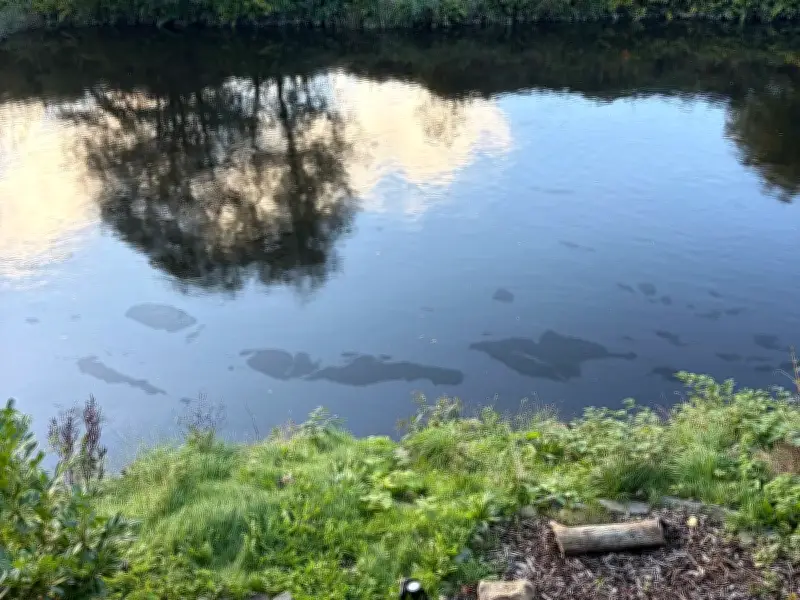
Residents have been told to keep their windows and doors closed and to avoid the area after an oil spill in the River Taff. Natural Resources Wales (NRW) received a high number of reports of a strong fuel odour and pollution in the River Taff at Glan Y Llyn, Taff's Well, Gwaelod-y-garth, and Tongwynlais on Friday, October 16.
Pollutant identified as kerosene
Officers from South Wales Fire Service joined NRW to investigate the source of the pollution around 6pm on Friday evening. Officers have identified the pollutant as kerosene, more commonly referred to as paraffin and home heating oil.
There are no natural sources of kerosene so it is only found as a result of its accidental release from domestic homes, businesses, or industry. The source of the pollution was identified and is affecting at least one mile of the River Taff and its tributaries downstream from the Treforest area, according to NRW.
Containment efforts under way
The organisation said: "Our officers have identified the pollutant as kerosene and are on site working urgently to stop the pollution at source and minimise any further harm to the environment.
"The kerosene is entering the surface water drainage system which leads to a culvert into a tributary of the Taff. We are being supported by South Wales Fire and Rescue Service who have installed fuel collection equipment to try and reduce the amount of kerosene entering the river."
Local people have been advised to keep windows and doors closed as a precaution and to avoid the area.
Health effects and advice
According to the UK Government the presence of kerosene in the environment does not always lead to exposure. For it to cause any adverse health effects you must come into contact with it by breathing its fumes, drinking it, or by skin contact with it.
Drinking kerosene may lead to nausea vomiting and abdominal pain. In serious cases damage to the digestive tract, coma, loss of muscle control, and heart and lung problems. If liquid kerosene is inhaled directly into the lungs a severe form of lung damage called pneumonitis may occur.
Breathing in kerosene fumes (not vehicle exhaust) may cause dizziness, drowsiness, and headaches. Breathing in large amounts can result in coma, loss of muscle control, and heart and lung problems. Kerosene can cause the skin to become irritated, dry, and cracked. If the skin is exposed for a long time, then burns may develop. Dermatitis (eczema) can develop if exposure to the skin happens often.
You should remove yourself from the source of exposure. If you have ingested kerosene seek medical advice. Do not make yourself sick. If you have inhaled kerosene you should seek medical advice. If you have got kerosene on your skin, remove soiled clothing, wash the affected area with lukewarm water and soap for at least 10 to 15 minutes, and seek medical advice. If you have got kerosene in your eyes, remove contact lenses, irrigate the affected eye with lukewarm water for at least 10 to 15 minutes, and seek medical advice.