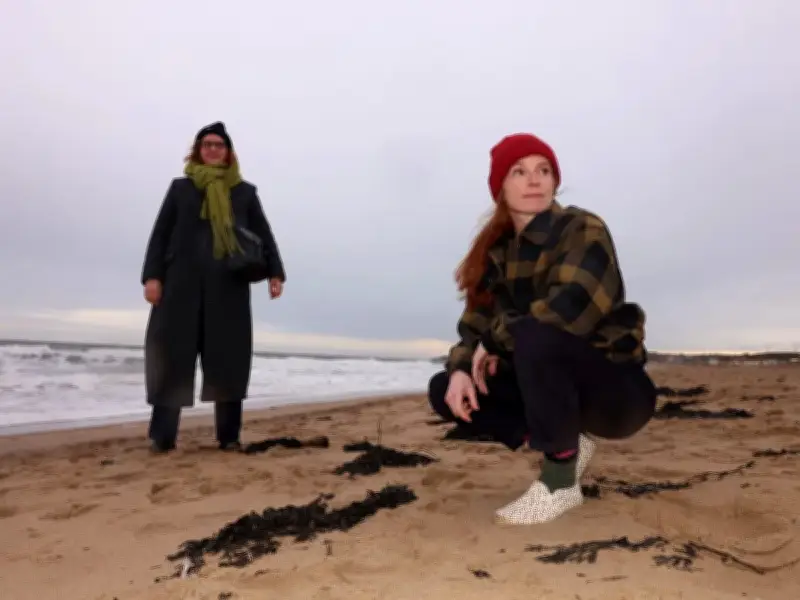
Volunteers monitoring the North East coastline say beaches still show "very high nurdle densities" months after a spill at the Port of Tyne released almost 18 tonnes of tiny plastic pellets into the river, and they are calling for a Government-funded boost to the response.
The nurdles have been washing ashore since the collision between the vessel Wind Orca and the berthed container ship BG Orange on July 19, with a fresh surge reported after last week's heavy rains. A team of 40 volunteers has spent the past three months surveying more than 40 miles of shoreline to document the scale of the pollution.
Volunteers report high densities at key beaches
The survey found that beaches including Blyth, Whitley Bay, the North Shields Fish Quay and South Shields' Sandhaven "continue to show very high nurdle densities." Some areas have recorded levels similar to those seen in the days immediately following the spill.
Harry Catherall, a marine scientist at the University of Hull coordinating the volunteer investigation, said: "Nobody is suggesting every last nurdle can be removed. ITOPF's [International Tanker Owners Pollution Federation] own guidance is clear that recovering 100% is not a realistic target, but at these sites we are nowhere near any reasonable end-point. We must continue targeting the heaviest accumulations of pellets, and our data shows exactly where those accumulations are."
Calls for specialist equipment and government funding
Newcastle-based volunteer Laura O'Connor said community teams felt "dismayed" by the lack of information about the remaining scale of lost nurdles. She called for the return of large suction equipment previously deployed by Nurdle UK, which demobilised from the spill in September.
Laura told the Chronicle: "What we want is for this to be taken seriously for what it is – a crisis and a major pollution incident. It is one of the largest pollution incidents that has occurred in Europe.
"In the early days we had specialist teams who were experienced in recovering nurdles. We need their advice, their expertise, and their machinery. 10 people with brushes and sieves that have been gaffer taped together will have little impact in comparison to specialist crews with mechanised extraction techniques."
Fellow volunteer Allison Hunter, from South Shields, added: "We need something mechanical and systematic, and we need a more coordinated response. Volunteer numbers have dropped off because of the weather and because people are feeling deflated by the monumental scale of it and the lack of input and information."
Councillors demand intervention
Green Party councillors Tom Bailey and Matt Blair have written to Prime Minister Andy Burnham and Labour environment ministers to call for funding for a "year-long, cross-boundary, mobile mechanised clean-up." They said: "For four months, our communities have watched the coastline being hit by this pollution. We came together back in July and worked to mobilise volunteers on either side of the river in the face of government obstruction. We are long past the point where it's fair on the public to ask them to fill the gap."
They added: "The specialist equipment exists and local people have months of experience chasing pellets. We need upfront backing from Downing Street to deploy them."
According to figures previously released by the Port of Tyne, more than 12 tonnes of the pellets remained unrecovered as of 23 September – in excess of 70% of the nurdles originally spilled. Updated numbers have yet to be published.
Official response denies de-escalation
The nurdle volunteer group and local councillors have claimed that professional clean-up operations funded by the shipping insurers are being "prematurely" de-escalated. However, council sources involved in coordinating the response categorically denied that recovery efforts were being scaled back.
South Tyneside Council's director of place strategy, Stuart Wright, speaking on behalf of the official multi-agency nurdle spill response group, said: "It is not correct to suggest that the insurers' contractors have withdrawn from the recovery operation. Specialist contractors continue to be part of the coordinated response. The methods and resources being used have changed as conditions on the ground have changed, but recovery and monitoring work continues.
"We have also been clear throughout that nurdles remain dispersed in the marine environment and may continue to wash ashore. Scientific modelling shows that weather, tides, currents and wind can influence where and when this happens, so further accumulations following changing weather conditions are not unexpected.
"This remains a coordinated regional response. Monitoring continues and partners remain ready to respond where renewed accumulations are identified. Recovery activity will continue to be guided by scientific advice, environmental monitoring, recovery data and shoreline surveys, with resources targeted where they can have the greatest impact."
Solis Marine, the company appointed by shipping insurers to organise the official clean-up, declined to comment when approached by the Chronicle on Tuesday. The Department for Environment Food and Rural Affairs was also contacted for a response.