Newcastle University researchers have warned that more than two tonnes of nurdles could still be in the River Tyne itself, six weeks after the plastic pellets were spilled into the water.
The pellets were released into the river following a collision between the vessel Wind Orca and the berthed container ship BG Orange at the Port of Tyne on July 19. A crane operator was also injured. It has been estimated that more than 18 tonnes of the pellets were disgorged into the river, and an extensive recovery effort has been underway since then to remove nurdles from beaches.
Modelling suggests 2.2 tonnes remain in estuary
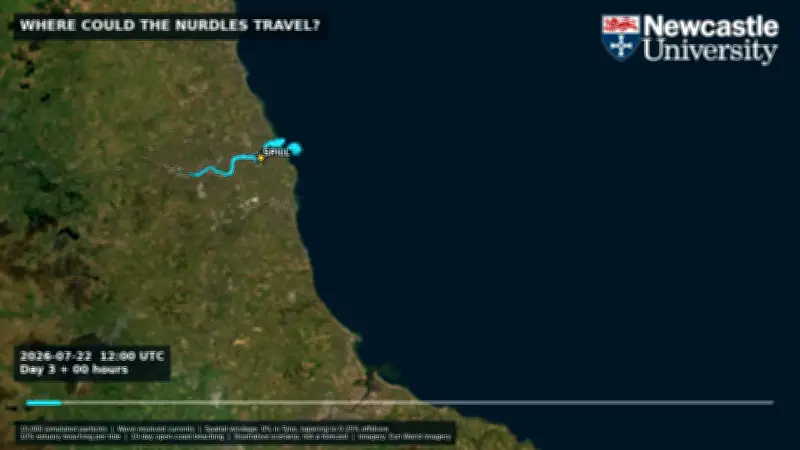
Modelling from Newcastle University scientists now suggests that 2.2 tonnes remained in the river estuary six weeks after the incident. Researchers fear that high river flows during the autumn could "flush out" nurdles.
Dr Matt Perks, who leads Newcastle University's research project into the spill, said: "Because river flows have been so low since July, pellets that moved up the estuary and were deposited have had little to move them on.
"When elevated river flows arrive, some of that material is likely to be flushed downstream, so now is the time to consider where it could be intercepted. Over the coming months our fieldwork will measure directly how pellets move with the tide, which will let us test and improve these predictions."
Port of Tyne continues recovery efforts
Port of Tyne bosses announced earlier this week that the "next phase" of the recovery work was now underway. They said the quantity of nurdles being recovered had "reduced considerably" since the early days of the spill.
The Port of Tyne is to continue daily monitoring and collection, while its partner Ambipar will remain on-water until October 11, when the port's team will take over leading daily operation. Ambipar is to provide specialist support around the spring tides which fall on October 28 and November 9. The firm has also advised Port of Tyne of specialist equipment which has been acquired to continue the clean-up.
In a statement, Port of Tyne figures added: "Thank you to everyone, including the volunteers who have supported the recovery effort and reported sightings so far. If you spot any further concentrations of plastic pellets in the river, please let us know so we can pass the information directly to our team on the water."
Research based on virtual particle modelling
The Newcastle University research is based on computer modelling which involved creating 10,000 "virtual particles" and releasing them into the environmental conditions present when the spill occurred. The model also suggests that it is much less certain where nurdles were carried once out at sea, though one "plausible scenario" would mean pellets first moved to northern shores in early August before shifting southwards afterwards.
Dr Seb Pitman, senior lecturer in physical geography at Newcastle University, said: "Our model reproduces the tide through the Tyne very closely, which gives us real confidence in what it says about the estuary itself.
"Even after allowing for everything the clean-up teams recovered, more than two tonnes of pellets were still in the river six weeks after the spill. Where the rest went at sea is much less certain, and we've been careful to present those maps as possibilities rather than predictions."
On Saturday, community groups and campaigners in South Shields are to hold an event at the Sandhaven Amphitheatre to highlight the continuing nature of the disaster. The event is called Plastic Pollution – The Never-Ending Story and runs from 12pm.
Volunteer Colin Porter said: "This disaster hasn't ended just because it has disappeared from the headlines. Nurdles are still out there, in the river and on our beaches. We want people to understand the scale of what has happened, how they can help, and why these tiny pellets matter."
The public can report nurdle sightings to the Port's clean-up operations by email at community.reporting@portoftyne.co.uk or call 07483 579324. People can also support modelling work over the coming weeks by reporting nurdle sightings - and searches that found none - at tynenurdles.org.uk/submit. More information is available at tynenurdles.org.uk.