
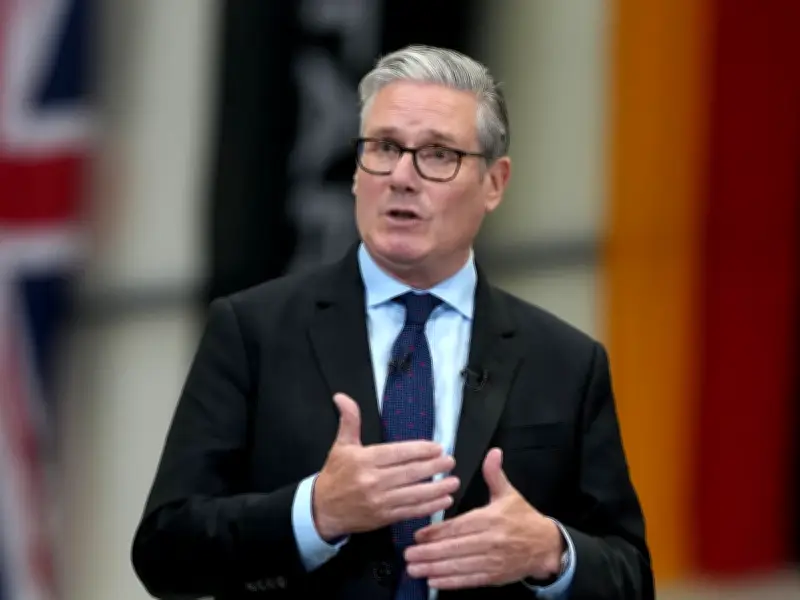
Britain is set to become the first country in the world to make it impossible for children to take, share or view naked photos on their smartphones, Prime Minister Keir Starmer announced in a major speech at London Tech Week. He issued a three-month ultimatum to tech giants like Apple and Google, demanding they activate built-in features or implement new solutions to block explicit images on millions of devices used by children.
Starmer emphasized that these companies have a moral responsibility to protect youngsters from online predators and prevent child sex abuse. He stated: "When it comes to the safety of our children, standing by is not an option." The announcement comes amid growing speculation that a ban on under-16s using social media could be announced within weeks, as law enforcement agencies warn of an urgent need to tackle sextortion, where young people are pressured into sharing explicit images and then blackmailed.
Ultimatum to Tech Firms
The government has warned that if companies such as Apple and Google do not act within three months, legislation will be introduced to force compliance. The Home Office confirmed that restrictions should apply to all devices, both existing and newly sold, and that legislation could cover operating system providers and others in the supply chain, such as retailers. Adults will have to go through a verification process to take, send or receive such images. The government is exploring measures that could see bosses who fail to implement these protections face jail time.
Reactions from Campaigners and Survivors
Online safety campaigners have welcomed the announcement. Kerry Smith, CEO of the Internet Watch Foundation, said: "An alarming amount of child sexual abuse material ... is self-generated by children as a result of grooming, coercion or manipulation. We need device-level detection and blocking alongside platform-level protections." Former minister Jess Phillips expressed "relief" at the Prime Minister's challenge, stating she looks forward to working on legislation to prevent children from being tricked into taking naked images for global paedophile networks.
Survivor Roxy Longworth, who was blackmailed after sending an explicit photo at age 13, pleaded for mandatory protective software on phones. She told The Mirror: "I feel like I'm one of the lucky ones because I'm still alive. ... I survived it, but lots of people don't. And I think that's even worse when there's this technology out there that could be protecting them."
Criticism and Warnings
Not everyone supports a ban. Ian Russell, whose 14-year-old daughter Molly died after viewing harmful content online, warned that a social media ban could cost more lives. He said Australia's ban is "unravelling" and does not address the need for platforms to implement safety measures. The Molly Rose Foundation also cautioned against a rushed ban, arguing it would "quickly unravel, make it harder for children to disclose harm, and isn't supported by the evidence."
Education Secretary Bridget Phillipson noted that "turning the clock back won't work," but stressed the need for clear, practical support for parents. Skills Minister Jacqui Smith said the government is reviewing evidence and will bring forward proposals before the summer recess in mid-July, with action expected by the end of the year.
Broader Tech Initiatives
In his speech, Starmer also unveiled a "Jobcentre in your pocket" AI tool designed by the Department for Work and Pensions to provide 24/7 guidance for jobseekers, including help building CVs and career advice. He hailed Britain as "uniquely placed to lead" on AI innovation, noting that the country has raised nearly half of all European tech investment this year. The Prime Minister opened his speech by highlighting a new AI data centre in Warrington, transforming a former Unilever factory into a hub for skilled jobs and investment.
Starmer also criticized Elon Musk's Grok AI tool for creating explicit images of women and girls, warning that all tech companies must take responsibility for safety. The government's stance is clear: tech must adapt to the needs of society, not the other way around.




