
Victoria's new violence reduction unit (VRU), modeled after Scotland's pioneering public health approach to violence, is showing early promise but faces an uncertain future as the November state election looms. The unit was launched in response to a spike in youth offences and high-profile violent incidents, including the stabbing deaths of two teenagers in Melbourne's west.
Origins in Scotland
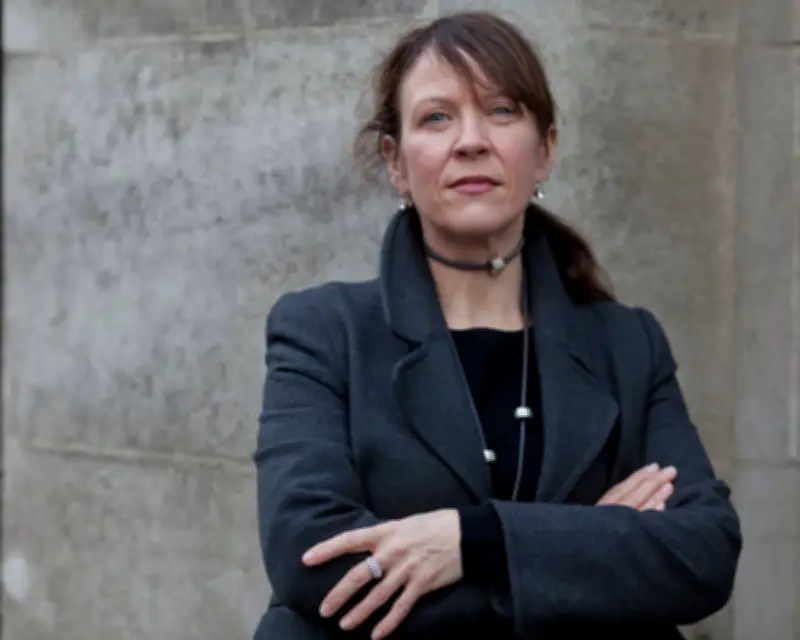
The VRU model originated in Scotland, where Karyn McCluskey, a former police officer and nurse, established the first unit in 2003. At the time, Glasgow was known as the murder capital of Europe. Over 20 years, homicides, attempted murders, and serious assaults plummeted, and in 2024, Scotland removed its last youth from prison.
“We jailed lots of people, [and it] didn’t make any difference,” McCluskey told the Guardian. “If that worked, we’d have had no crime.” Instead, she said, they “started talking about violence as a disease” that spreads through exposure to violent homes and communities, requiring a preventive public health response.
Implementation in Victoria
Andrea Davidson, Victoria's interim VRU head and former youth justice commissioner, is drawing directly on the Scottish experience. She is finalizing a program—the first of its kind in Australia—to embed youth workers and lived-experience mentors in the Alfred and Royal Children’s hospitals. When a young person is admitted with traumatic injuries from violence, a youth worker intervenes immediately to prevent retaliation and further violence.
“What I saw as the commissioner for youth justice is every time a kid ends up in the justice system on a really heinous crime, you follow it back and they’ve had heinous crimes done to them,” Davidson said. “So when a young person turns up to an emergency department … there will be an immediate response from a youth worker … rather than wait for them to retaliate.”
Another program places social workers in 23 schools identified through extensive data analysis as having students most at risk of turning to violence. The data draws on justice, crime, health, school attendance, and postcode-level disadvantage metrics.
Political tensions
The VRU was launched alongside punitive law-and-order reforms, including stricter bail measures and adult sentences for children as young as 14—measures widely criticized on human rights grounds. The state’s police commissioner, Mike Bush, has also called for mandatory minimum sentencing for youth offenders, while professing a “prevention mindset.”
Davidson is diplomatic about the apparent contradictions. “We’re in an environment where these two [approaches] coexist,” she said. “I think it’s important to acknowledge that they’re on the same spectrum.”
Labor claims the opposition Liberal party intends to axe the VRU if elected; the Liberals declined to confirm or deny this. Annual crime statistics released last month showed a drop in Victoria’s crime rate for the first time in four years, and a 6% reduction in youth crime. Labor has credited both its hardline measures and the VRU’s work.
Long-term commitment needed
McCluskey warns against “short-termism.” After the first year of Scotland’s VRU, the homicide rate dropped, but she cautioned that it could be happenstance. “You need to come back to us in five years’ time,” she said. “You can’t achieve this in a short-term political cycle … you need a 10, 15 year plan.”
Davidson echoes that sentiment. “It’s the approach that’s the focus for me,” she said. “No matter who is in power, my interests remain the same.”




