The Princess of Wales has drawn attention to the Reggio Emilia approach, an Italian early childhood educational model that emphasizes children's natural curiosity and potential, during her two-day visit to Italy. The model, used in public daycare and preschools in the northern city of Reggio Emilia, positions teachers as facilitators rather than instructors and involves active participation from parents and the community.
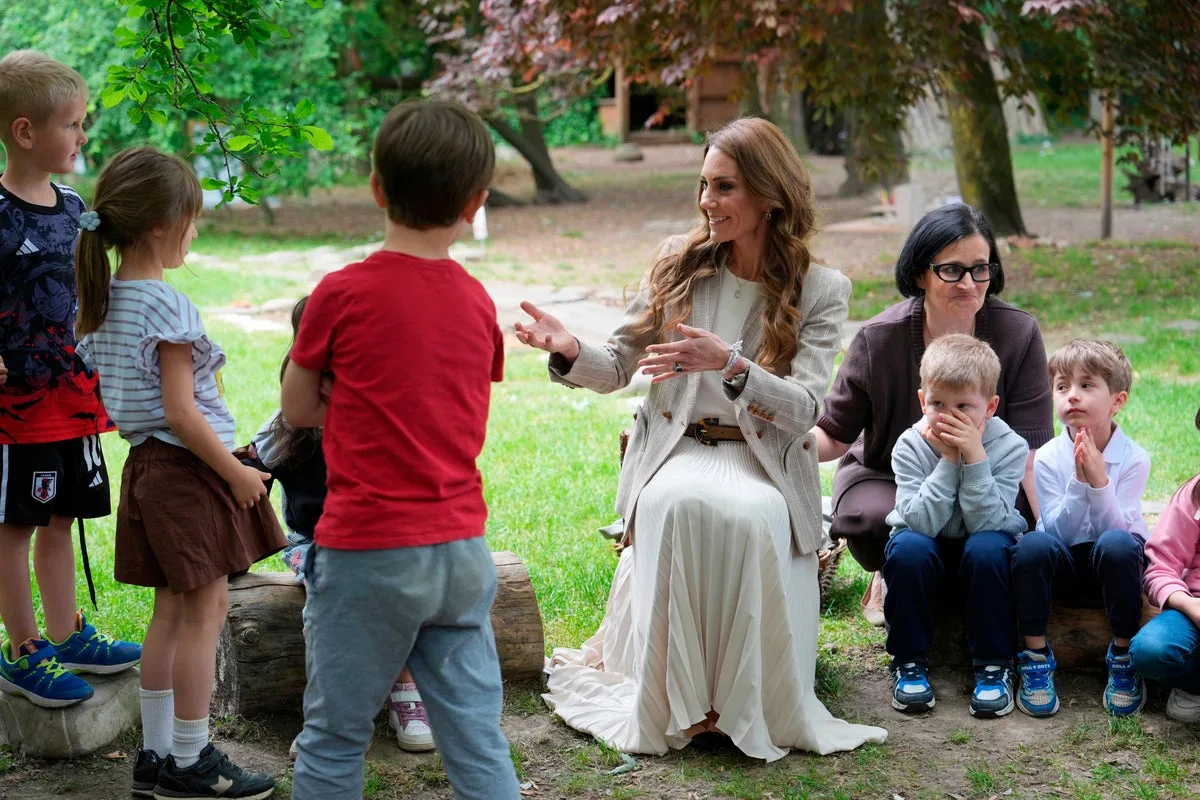
Speaking at a preschool in Reggio Emilia on Wednesday, Princess Catherine said, 'I love that you put children and childhood at the heart of the community, and I’m really fascinated to learn more about it.' The visit highlights her commitment to early childhood development, a cause she has championed.
The Reggio Approach, which partly evolved from the Montessori philosophy, contrasts with educational models in the US and UK that focus on standardization and testing for young children. However, some Italian parents, while initially supportive, become concerned as children approach primary school age, according to Kathryn Ramsay, an early-childhood educator running a Reggio-inspired project near Rome.

The approach originated after World War II when mothers in Reggio Emilia sold metal from a German tank and carried stones from a river to build a childcare centre. Loris Malaguzzi, an educational expert, developed the child-centred method for ages 0-6, which values children's communication through drawing, painting, dancing, and singing.
A 2017 study by the University of Chicago found that children in Reggio Emilia programs had higher high school graduation and employment rates compared to those without formal childcare. The model includes features like multi-year teacher assignments, meal preparation, and classrooms with natural materials.
On Thursday, the Princess visited the 'Salvatore Allende' daycare and preschool, where she played with children and held a newt. The visit is significant for Britain, where the Reggio Approach is not part of national policy and most early childhood programs are private and for-profit, said Peter Moss of University College London.