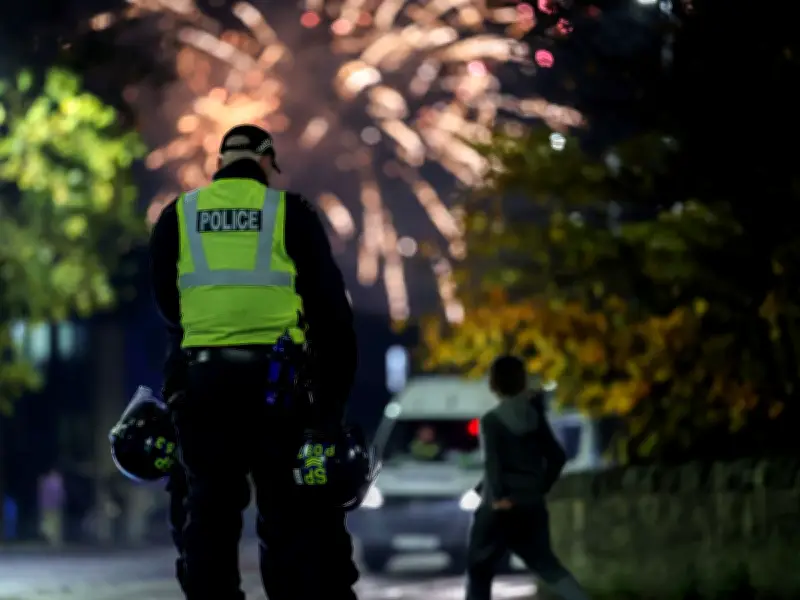
Community groups wanting to hold bonfire or fireworks events on council-owned land in East Ayrshire will now need to seek permission in advance, under a new policy agreed by the council's cabinet. The move aims to improve public safety and reduce disruption for nearby residents, with officers insisting it is not about being a 'killjoy' but ensuring events are well planned and managed.
New Requirements for Organisers
Under the new approach, organisers must contact the council's Events and Resilience Officer or Licensing Section before holding bonfire or fireworks displays on council property. Council officers stressed the policy was designed to work with community groups rather than prevent local events from taking place.
Acting Chief Governance Officer Craig Young said the aim was to encourage organisers to engage with the council so officers could provide guidance and support to help ensure events were “safe and well organised”. He told members the council wanted local groups “to come and speak to us so that we can provide them with guidance and support in relation to anything that may be proposed.”
Where a proposed location was unsuitable, officers would work with organisers to identify a more appropriate site, he said. Mr Young also said early engagement would give people advance notice of displays, giving pet owners and others affected by fireworks the opportunity to make alternative arrangements.
Addressing Unauthorised Bonfires
The new policy follows concerns over unauthorised bonfires and fireworks events on council land, with the authority receiving complaints from residents each year. Existing joint arrangements with Police Scotland and the Scottish Fire and Rescue Service already see unauthorised bonfires removed from council land, particularly in known hotspot areas including Crosshouse, Auchinleck, Stewarton, New Cumnock, Loch Doon and Innellan Drive in Kilmarnock.
Supporting the proposals, Councillor Elaine Cowan described the policy as “a pragmatic approach” and said she hoped communities would respond positively. If not, they could look at further restrictions, she added.
Ensuring Compliance and Communication
Councillor Clare Maitland welcomed the report but questioned how the council would reach organisers who were unaware of the new requirements or chose to ignore them. She also questioned the differentiation between a small scale street event and a larger one, pointing out that some of the streets are ‘very big’.
Mr Young said the council would publicise the new arrangements widely, working with partners while encouraging members of the public, community councils and elected members to help put organisers in contact with council officers before events take place.
Acting Depute Chief Executive Officer David Mitchell said the proposals were intended to provide a practical solution after years of discussions about unauthorised events. He expressed dissatisfaction with the annual debrief around bonfires, saying: “I struggle to accept we sat there at that and the claim is made every year that we don’t know who organizes some of these. In this day and age, with social media and everyone promoting everything, including what they had for breakfast, that beggars belief.”
He said the purpose of the policy was to “get the message out that we’re relying on community councils, we’re relying on councillors, we’re relying on anyone who knows.” He continued: “It’s not ‘grass your neighbours’. It’s simply to put us in touch with the organizers and we’ll have that positive discussion about fair notice, about traffic management, about suitability, etc – maybe even a clear up afterwards.”
Practical Solutions and Fee Waivers
He added that the council would work to avoid too much red tape while also waiving the £51 required for a public entertainment licence for smaller events. Mr Mitchell continued: “It's not big brother killjoy stuff, but if people won’t work with us and they turn up, we at least have authority, if not the resources, to say no, this isn’t happening on council land because it hasn’t been properly managed and planned.”
Under the new arrangements, organisers of small-scale neighbourhood events will be offered advice and support, while larger public events will continue to require a Public Entertainment Licence.