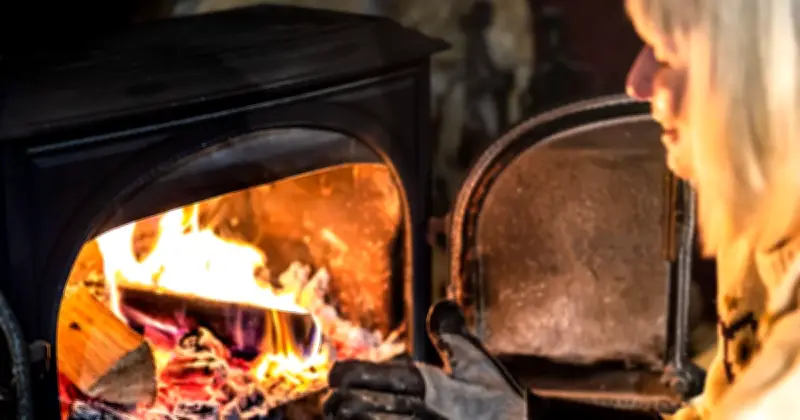
The Department for Environment, Food and Rural Affairs (DEFRA) is considering stricter new wood-burning stove laws, including tougher emissions limits, after a consultation on proposals to tackle pollution from domestic burning.
Consultation proposals and health concerns
Earlier this year, a consultation was launched on proposals that encompass tighter emissions limits, compulsory labelling on new appliances and fuels, and heftier penalties. DEFRA stated that the objective was to address "one of the largest environmental risks to human health".
It clarified that fine particulate matter (PM2.5) comprises tiny particles capable of penetrating the lungs and entering the bloodstream. It said it is: "Linked to conditions such as heart disease, asthma, and premature death. Vulnerable groups, including children, older people, and those with existing health conditions, are most affected."
Impact of domestic burning
DEFRA confirmed that domestic burning of solid fuels, such as wood and manufactured solid fuels, represents a significant source of PM2.5 emissions. It noted that in 2023, this accounted for roughly 20% of the UK's total PM2.5 emissions, comparable to road transport.
During the consultation, officials added: "While air quality has improved overall, emissions from domestic burning have risen in recent years as stove use has grown in popularity. Tackling this issue is essential to protect health and reduce the estimated £20 billion annual cost of air pollution to society."
Three key parts of the plan
- Stricter emission limits for new stoves – introducing tougher smoke emission standards for new appliances placed on the market.
- Mandatory labelling for stoves and fuels – providing clear information on emissions, permitted fuels, and health impacts to help consumers make informed choices.
- Increased enforcement penalties – raising penalties for suppliers who breach fuel standards to ensure compliance.
When asked when DEFRA would be releasing the results of the consultation, which are now due, a spokesperson said: "We are currently carefully considering all responses to the consultation and will publish a formal government response in due course."
This is a UK-wide consultation, undertaken by Defra in collaboration with the Scottish Government, Welsh Government and DAERA. Any subsequent measures taken in response to the consultation's findings will be developed alongside the Devolved Governments.
Research on pollution from home burning
Recent research from the University of Birmingham revealed that burning wood at home generates more pollution than road traffic. The findings show that a quarter of harmful particles in the air, known as PM2.5s, originate from domestic fires, while traffic accounts for 22%.
Wood-burning stoves have soared in popularity across the UK, with an estimated 1.9m homes now owning one, according to the Stove Industry Alliance. The study's lead investigator, Prof Zongbo Shi, admitted he was taken aback by his own conclusions. He said it "demonstrates the huge impact" burning wood at home has. Prof Shi added he hoped it would make people consider "if there is a real need to use their stoves".