
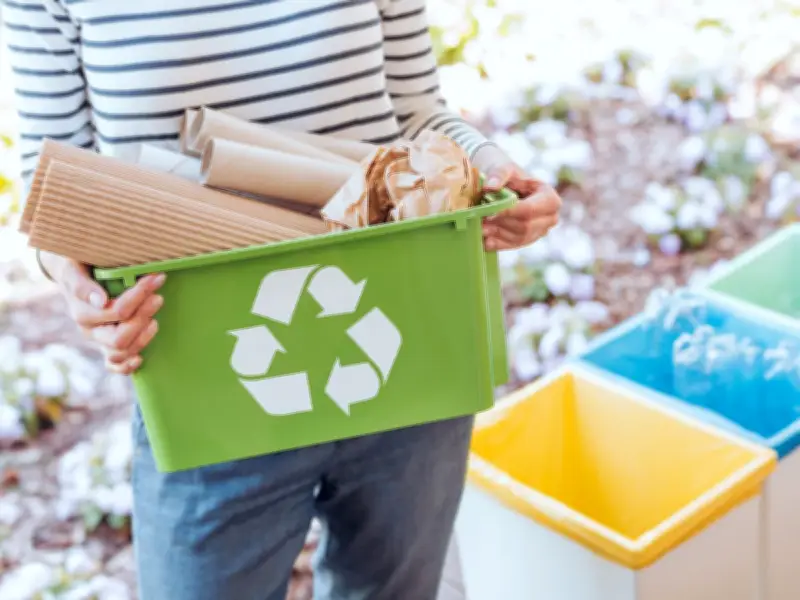
England's Simpler Recycling reforms have introduced mandatory and consistent recycling requirements for businesses and households across the country. These changes, which took effect on March 31, aim to simplify recycling, reduce landfill waste, and boost sustainability. However, certain bathroom items are now banned from recycling bins, and failure to comply could result in your bin being left uncollected.
Absorbent hygiene products
Under the updated regulations, local authorities are not required to collect absorbent hygiene products (AHPs), which include nappies, period products, and incontinence products. These items should never be flushed down the toilet. While policies vary between councils, AHPs must be disposed of in general waste bins or through specialist hygiene collection services.
Cotton wool and makeup pads
Cotton wool and makeup pads are common bathroom items that cannot be recycled. They must go straight into your general waste bin. Never flush them down the toilet, as they expand when wet and are a leading cause of plumbing blockages.
Tissue or toilet paper
Although tissues and toilet paper are made from paper, they cannot be recycled because their fibres are too short and low in quality. Tissues belong in the general waste bin, while toilet paper can be flushed down the toilet.
Wet wipes
Whether they are baby wipes, cosmetic wipes, cleaning wipes, or moist toilet tissues, wet wipes are neither recyclable nor flushable. They must always be disposed of in the general waste bin.
Mirrors
Most bathrooms have at least one mirror, but when it is time to dispose of it, it cannot go in the recycling bin. The metallic coating on most mirrors contaminates glass recycling. Your best option is to take the mirror to your nearest recycling centre, where it will be handled responsibly. Alternatively, if the mirror is still in good condition, consider donating it to a charity shop or passing it on to someone who might find it useful.
It is important to check with your local authority, as some councils are excluded from the new regulations until at least 2040. Always follow local guidelines to ensure proper disposal.




