
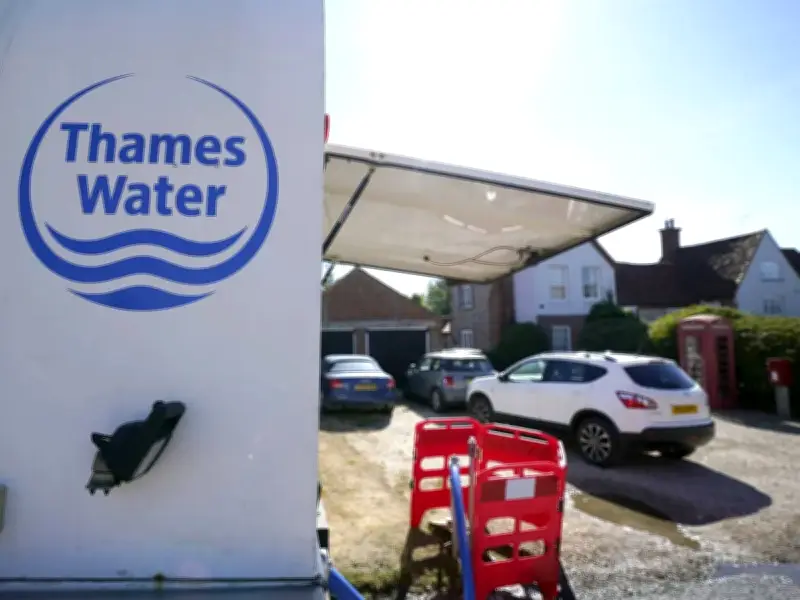
New analysis has claimed that bringing failing water companies back under public control and turning them into not-for-profit co-operatives could save households £58 a year.
The Good Growth Foundation (GGF) said water companies should be owned by their customers with a focus on affordability and the environment, instead of generating dividends and bonuses. Water companies have distributed £53.5 billion in dividends since privatisation, an average of £1.5bn a year.
Potential savings from co-operative model
By banning dividends in the sector, the GGF calculates this could save households £58 a year, provided profits were instead funneled into reducing bills. As cooperatives often have lower borrowing costs, the GGF says a further £53-£143 per household could be saved a year in future, provided infrastructure investment is solely funded through borrowing.
Praful Nargund, Director of The GGF, said: "Bills are rising, sewage is pouring into our rivers and seas, and yet billions have still been siphoned off in dividends. We need public control but we should not bail out these failing companies. Instead, by converting water companies into not-for-profit cooperatives, we would put customers - and our public finances - first."
Context of rising bills and bonuses
This week PM Andy Burnham branded a £1million golden hello to embattled Thames Water’s finance boss “unacceptable”. The debt-drenched supplier sparked outrage after it emerged the seven-figure bonus was made to chief financial officer Steve Buck at the end of July.
It comes in a week water bills are set to rise yet again after Ofwat announced a plan to make cash-strapped households pay even more to fix the industry's failures. The regulator wants to let 13 companies spend an extra £3.4billion on infrastructure with five recouping the costs through higher prices.
Support from mayors and campaigners
This is despite mounting anger at raw sewage being dumped into rivers and seas and massive bonuses being lavished on executives. Debt-laden Thames Water is one of the firms provisionally allowed to increase customer bills between 2027 and 2030, alongside Severn Trent Water, Southern Water, Wessex Water and South East Water.
The policy was also backed by regional mayors including Oliver Coppard, the Mayor for South Yorkshire, Tracy Brabin, the Mayor of West Yorkshire, and David Skaith, Mayor of York and North Yorkshire.
A spokesperson for campaign group Surfers Against Sewage said: “Customer owned, not-for-profit water companies delivering in the public interest must be one of the options our new Prime Minister considers as part of a total redesign of our broken water systems.”
Joe Fortune, General Secretary of the Co-operative Party, said: “Our water system has for too long been accountable only to shareholders, with communities paying the price for companies’ chronic failures. If we want to see meaningful empowerment of communities around the country and rewire our economy so it serves the interests of the many, water is a good place to start.”




