Lagos Lagoon Dredging Crisis: How Sand Mining Devastates Fisheries and Coastal Communities
Lagos Lagoon Dredging Crisis: Sand Mining Harms Fisheries and Communities

Lagos Lagoon Dredging Crisis: How Sand Mining Devastates Fisheries and Coastal Communities

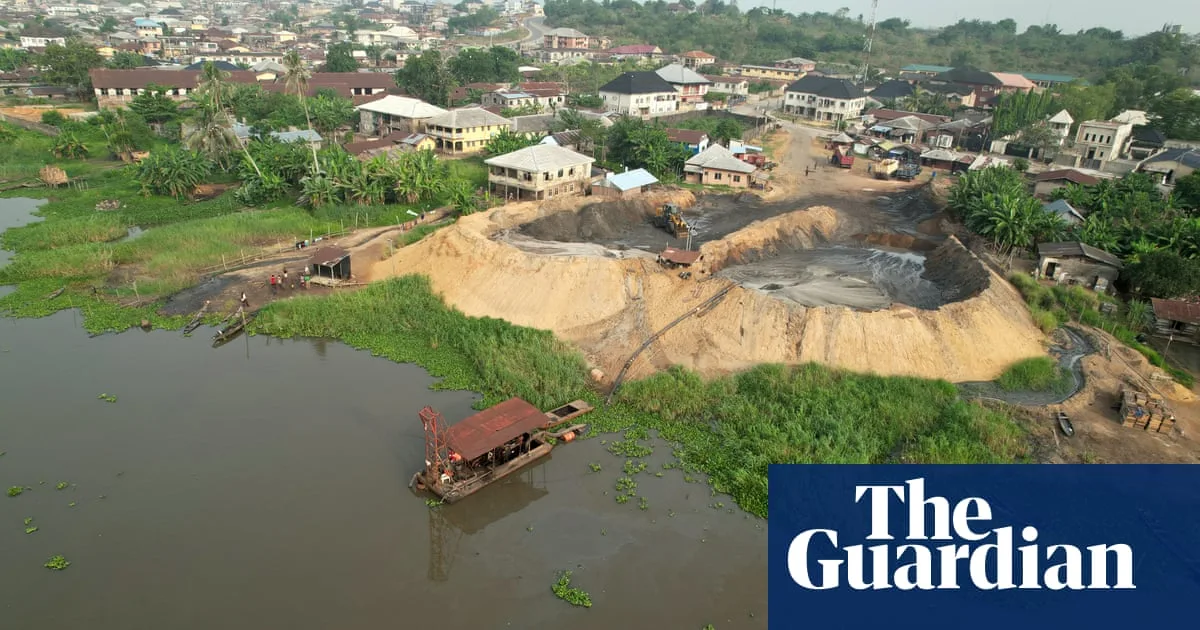
Before the first light of dawn breaks over Lagos, while the city's notorious danfo buses begin their noisy routes and generators rumble awake, another sound dominates the waters of the Lagos Lagoon. It is not the splash of fish or the gentle glide of canoes, but the relentless mechanical hum of dredging machines. Their long suction pipes plunge into the lagoon bed, extracting wet sand destined for the construction sites fueling Nigeria's building boom.

This sand, essential for high-rise blocks, housing estates, and flyovers, comes at a devastating cost. While regulated by the Lagos state government and waterways authority, the insatiable demand for sharp sand in a metropolis of over 20 million people has spawned widespread unregulated dredging. The consequences extend far beyond the immediate extraction sites, harming the entire food chain, accelerating coastal erosion, and stripping fishing communities of their traditional livelihoods.

Scientific Evidence of Seabed Destruction

A stark study from the Nigerian Institute for Oceanography and Marine Research (NIOMR) reveals the scale of the damage. Unregulated dredging and mining have eroded the seabed by nearly six metres along a critical five-kilometre stretch between the reclaimed Banana Island and the nearby Third Mainland Bridge. This area forms a central channel linking Lagos's island districts to the mainland.

Wide Pickt banner — collaborative shopping lists app for Telegram, phone mockup with grocery list

"When you dredge sand at that scale without a proper assessment of its environmental impacts, it destroys or wipes out certain species, which harms fisheries and, ultimately, everyone who depends on them," warns Dr Nnimmo Bassey, director of the ecological thinktank Health of Mother Earth Foundation (Homef). The ecological damage is profound and multifaceted, affecting marine life, fisheries, and the very stability of the coastline.

Livelihoods Washed Away

For coastal communities like Epe, Oto-Awori, Era Town, and Makoko, the lagoon's transformation is a daily catastrophe. Fasasi Adekunle, a 55-year-old fisher from Epe, embodies the struggle. For over three decades, his life followed a reliable rhythm: mending nets, checking tides, reading winds. Now, his mornings are defined by the low, grinding hum of dredgers.

"We used to cast our nets at 7pm and return before midday the next day with enough tilapia to earn at least 30,000 naira (£16)," Adekunle recounts. "Now we go farther, spend more on fuel, and sometimes return almost empty handed." The lagoon, once a dependable lifeline, has become an unpredictable adversary. "The water is no longer our friend," he says despairingly.

The economic impact is severe. Ajoke Orebiyi, a 42-year-old fishmonger in Oto-Awori, negotiates for meagre quantities of tilapia. A decade ago, she needed three boatloads to meet demand. "Before, fishers would return before noon with full nets," she says. "Now they travel much farther, and spend even more on fuel, only to return with almost nothing." Her income has halved in five years, forcing impossible choices between food, school fees, and rent.

Ecological Chain Reaction

The direct physical changes to the lagoon are undeniable. Fishers report deeper dredged channels, murkier water, unpredictable swirling currents, and nets constantly snagging on an uneven, ravaged bed. "When the dredgers operate, the water turns cloudy," explains Jeremiah, a 77-year-old fisher in Oto-Awori. "The fish move away, and sometimes we find them floating dead on the surface."

Scientists confirm that dredging increases turbidity, muddying the water and obliterating crucial breeding grounds. For communities, however, the complex science is secondary to the stark reality of survival. "What we know is this: the fish are disappearing," states Adekunle. "And our children still need to eat."

A Global Crisis with Local Severity

Lagos's crisis is a acute local manifestation of a global problem. Sand is the world's second-most extracted resource after water, a fundamental component of concrete, glass, and asphalt. The construction industry prizes coastal and marine sharp sand. Yet in Lagos, the consequences are magnified by the city's flood-prone, low-lying geography, already vulnerable to sea-level rise.

Pickt after-article banner — collaborative shopping lists app with family illustration

Dr Joseph Onoja, director general of the Nigerian Conservation Foundation (NCF), warns that the damage extends beyond fisheries. "We are already seeing early signs of ecosystem collapse in fisheries, migratory birds, and endangered sea turtles that nest on our beaches," he says. Unregulated dredging destroys sea turtle nesting sites and migratory bird habitats, pushing regional species toward extinction. It intensifies other pressures like sea-level rise and stronger waves, which erode shorelines and displace long-established communities.

Mark Ofua, West Africa representative for the conservation advocacy group Wild Africa, reports that dredging is driving local species to extinction. More than 230 fish species in Nigeria's inland waters are already in population decline, partly due to these activities. "Dredging causes severe environmental destruction, affecting every level of the food chain, and the entire society ultimately feels the impact," he emphasises.

Weak Enforcement and Powerful Incentives

Despite existing regulatory frameworks, enforcement in Lagos is notoriously weak. "Most mechanised dredging is usually carried out at night, allowing operators to work under the radar," reveals Akan Okiji, a fisher from Epe. "They also change locations to evade being detected." There are widespread allegations of complicity among local leaders, creating a climate of fear where community members are reluctant to speak out against powerful interests.

"When traditional leaders endorse a dredging company, it becomes very difficult for ordinary people to speak out," explains a community organiser in Oto-Awori. "Many fear the consequences or losing the small benefits they've been promised."

The economic drivers are formidable. Sand mining is highly lucrative, fueled by relentless demand for land development and the transformation of swamplands into luxury real estate. For local power brokers, covert deals with dredging firms offer a discreet income stream. For artisanal miners like Wasiu Olaniyi, a 36-year-old former bricklayer who now dives for sand in Oto-Awori, it is a vital, if destructive, lifeline in a failing economy.

Calls for Sustainable Solutions

Environmental activists and conservationists are advocating for urgent intervention. Organisations like Homef and the NCF call for comprehensive environmental monitoring, habitat restoration programs, and a moratorium on dredging in ecologically sensitive areas.

"Development is essential, but it must be sustainable so we don't destroy the ecosystems that sustain us," insists Dr Onoja. "We're seeing a breakdown in scientific assessment, EIA approvals, enforcement and even political commitment – and the government must be held responsible."

The Guardian's attempts to obtain comment from the Lagos State Ministry of Waterfront Infrastructure and Development and the National Inland Waterways Authority were met with silence. This lack of official response underscores the governance challenges at the heart of the crisis. Without decisive action, rigorous regulation, and a commitment to balancing development with ecological preservation, the future for Epe and countless other Lagos fishing communities remains perilously uncertain, their homes and heritage slowly washing away with the dredged sand.