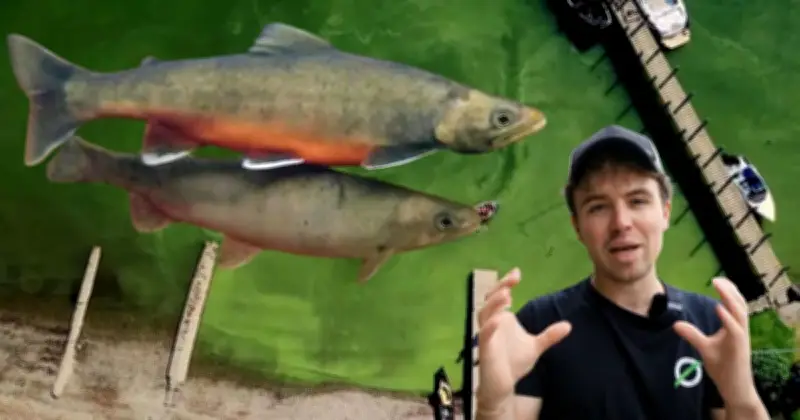
Arctic charr, an ancient fish that has lived in England's largest lakes for 10,000 years, is facing extinction in Lake Windermere due to sewage pollution, according to campaigners and researchers.
A film by campaigner Matt Staniek highlights how the once thriving Windermere population has all but vanished. The fish is genetically distinct from Arctic charr in the region's other lakes and lives in four separate populations in Windermere that spawn at different times and places, without interbreeding.
Research shows alarming decline
Research from the Freshwater Biological Association (FBA) found that no Arctic charr have been detected in historic spring spawning sites in Windermere or in the south basin of the lake. The research also found fewer detections of Arctic charr and poorer “eDNA” signals of genetic material from the fish in the water of Windermere in 2025 than in previous surveys in 2017.
Surveys show the lakebed habitat where the fish lay their eggs has declined markedly since 2017, with an increase in algae and silt. Sewage from waste water treatment works and poorly managed private sewer systems, along with agricultural runoff, is increasing nutrients in the lake and driving algae growth.
Campaigners call for urgent action
Simon Johnson, executive director of the FBA, said: “We need to act now. And if we don’t act now, and with a sense of urgency and a sense of partnership, there is a very real chance that we will lose the iconic Arctic charr – a fish that’s been here for 10,000 years plus from this incredibly special lake that we call Windermere.”
Invasive species such as ruffe and roach are putting extra pressure on Arctic charr, while rising water temperatures caused by climate change are also harming the cold water fish.
Fisherman’s personal plea
Harvey Lord, a charr fisherman on Windermere, was introduced to the fish through his father 40 years ago. The Cumbrian angler described how his dad would take him out of school for a week in May when he was seven years old to fish for the species.
He said: “For me, charr and Windermere go together. They’re synonymous with each other. I can’t envisage Windermere without charr.” He added: “I’d like to pass on the legacy and the tradition of charr fishing to my kids. And there might not be any charr in the lake by the time they’re older and that’s really sad. It would be a quiet tragedy and most people won’t even know about it.”
Mr Staniek, founder of the Save Windermere campaign, urged the Government to take immediate action on stopping sewage pollution from entering the lake and harming the Arctic charr’s habitat. In the film, he shares his “relief” after catching a charr for the first time while out on a boat with Harvey. The pair took a sample of its scales for research purposes before releasing it back into the lake.
Mr Staniek said: “It wasn’t really until now, like a couple of weeks afterwards, that I’ve actually started to feel something different and that is just anger. I feel unbelievably angry about what is being done to this fish.” He added: “What feels just so clear to me once again in the process of making this film is that we know what the primary issue is that is causing the destruction of England’s largest freshwater lake and that is sewage pollution.”
He said: “Over the last five years we’ve created this opportunity where the water company and the government are both saying that they want to end sewage pollution in the lake. We have to hold them accountable for that. We can’t have empty words and just promises. We have to act now to save the Arctic charr and if we don’t, this fish will go extinct. If the Arctic Charr dies then Windermere will die with it.”
Government response
An Environment Department spokesman said the Government shared the “public’s determination to protect this iconic lake”. He said: “This Government is already acting to reduce sewage discharges, including deploying 33 additional Environment Agency specialists in the region, increasing inspections and, through our regional water councils, giving the local community in Windermere a greater say in decision making.”
The full film is available to watch on the Save Windermere YouTube channel.