
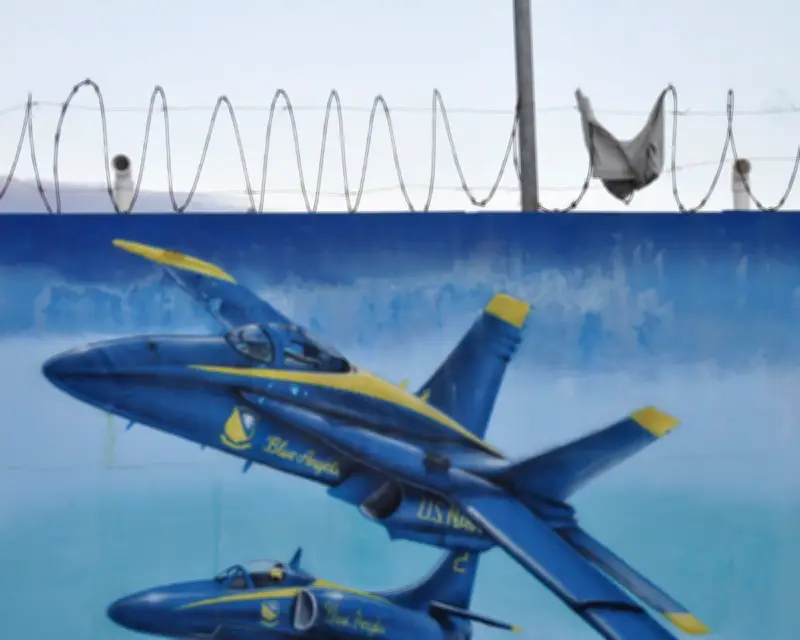
When the ferry docks in Vieques, a small island about 6 miles off Puerto Rico, the first person many tourists see is José Belardo, known as “Gato”, a retired police chief who now drives a taxi. Driving to Esperanza, he points to Sun Bay, a popular beach, and to large cleanup tents behind a barbed-wire fence. Gato notes the wildlife preserve, riddled with unexploded munitions, and the health centre, recently built but without doctors. He mentions a woman walking by, whose husband recently died of cancer.
Cancer Rates Soar
A 2003 study by the Puerto Rican department of health reported that the cancer rate in Vieques was 27% higher than the rest of the archipelago between 1990 and 1994, 35% higher between 1995 and 1999, and 18% higher from 2000 to 2004 – with the increase for males being even higher at 40%. Experts suggest that the main cause may be contamination of the soil and water with carcinogenic metals from the US military occupation that lasted until 2003. From the 1940s until 2001, the US navy practised bombing and shelling techniques in Vieques, expanding its control to more than 70% of the island.
Unexploded Munitions and Cleanup
Thousands of bombs and smaller explosive devices remain scattered across the island’s east side and surrounding waters, leaving about a third of the island off-limits. The navy oversees the cleanup under the EPA’s Superfund programme, projected to continue until at least 2032, according to the US Department of War. Despite the withdrawal and ongoing cleanup, residents face persistent health crises and inadequate medical provision, amid fears that cancer statistics do not reflect the true extent of contamination.
Fear of Military Reactivation
After the Trump administration attacked Venezuela in January and stepped up threats towards Cuba, some Viequenses fear imminent military reactivation. Last November, the Roosevelt Roads military base in Ceiba, on the main island, was reopened 21 years after it was shut down. Dr Lorena Estrada-Martínez of the University of Massachusetts has been assessing since 2020 the effect of the navy’s presence, funded by an EPA grant. The project lost funding in 2025, but she still hopes to complete it.
Personal Tragedies
Viequenses have for years supplemented the statistics with stories of personal tragedy. One was of five-year-old Milivy Adams Calderón, who died of lymphoma in 2002. She had above-average levels of uranium in her blood. Carlos “Prieto” Ventura, 65, a local organiser, says: “In our neighbourhood, our community, almost everyone has died of cancer, one house after another. Although the navy continues to deny any kind of connection, we don’t see how we can have some other elements that could justify so many deaths.” Ventura was diagnosed with Burkitt lymphoma in 2024, a rare cancer. During chemotherapy, he lost 19kg.
Healthcare Challenges
Zaida Torres, 71, is recovering from a double mastectomy. Every three weeks, she takes the ferry to Ceiba for medical appointments, a trip that can take 35 minutes to an hour. Her son drives her to the hospital in Fajardo for radiation therapy lasting four to six hours. Often, she leaves Vieques at 6am and returns as late as 1am. “After a day of chemotherapy, I am devastated, but it is what I have to do,” she says. Since their hospital was obliterated by Hurricane Maria in 2017, residents have had to seek care on the main island. FEMA approved $39.5m in funds to build a replacement, but it took six years for the new health centre to open. Residents allege its facilities remain barely functional, lacking staff for services like kidney dialysis and a birth centre. One resident described it as an “emergency room”.
Ferry Death and Protests
The ferry’s schedule is unreliable and deadly, says Torres. In early February, protests erupted when a Viequense woman, Sheila Sanabria, died after a heart attack while waiting for the ferry at Ceiba. A day before her death, she had appeared on local TV news, saying the medication she needed was six miles away on Vieques.
History of Military Violence
In 1999, the navy killed a civilian security guard, David Sanes Rodriguez, during a bombing practice. His death ignited years of protests. In April 2001, the navy began transferring 17 sq km of the former Naval Ammunition Support Detachment. In 2003, when President George W Bush withdrew US forces, all 59 sq km of the former training range were transferred.
Impact on Ceiba
When a plane takes off from the Roosevelt Roads base, Monisha Rios’s home in Ceiba goes through what she likens to an earthquake aftershock. Cracks spider across her ceiling that were not there when she bought the home in 2022. Rios, a US army veteran, has watched F-35s and Osprey aircraft take off, especially before the capture of Maduro in Venezuela, and noticed an increase in planes. Many Viequenses still grapple with trauma. “Band-Aids are getting ripped off; wounds that were healing little by little have been reopened,” she says. “You can’t heal from something when you’re being actively harmed by it.”
Call for Self-Determination
Dissatisfaction grows over Puerto Rico’s status as a US “colony”. Members of the group Vidas Viequenses Valen have worked to support self-determination. Last month, president Alexandra Connelly testified to the UN’s special committee on decolonisation about the health crisis and open detonation of explosives as part of the navy’s cleanup. “We’re an island within a colony, forced for generations to endure decisions made about our land, our health and our future. What are we going to leave future generations? A contaminated, displaced island or an island where children can be born, can grow up and decide their own future?” asked Connelly.
Resilience and Resistance
Torres recently joined Connelly at the UN as a petitioner. In 1999, after the navy killed Sanes Rodriguez, Torres helped form the Vieques Women’s Alliance, instrumental in ousting the military in 2003. Now she mentors a new generation fighting for women’s health and against further militarisation. Despite everything, Torres remains in her home. “This is my land. I was born here, and I’m not leaving,” she says. “I’ll die here, I’ll be buried here. I’ll stay here.”




