Two remote coral atolls in the Pacific Ocean have been identified as among the last wild, virtually untouched tropical marine ecosystems on Earth, according to a study published on November 11 in the peer-reviewed journal Frontiers in Marine Science.
The atolls, Bikar and Bokak, are located in the Marshall Islands, northeast of Australia. They sit approximately 116 km and 385 km from the nearest inhabited atoll, respectively, and were found to retain relatively intact tropical marine habitats rich with wildlife, including two species that may be new to science.
First comprehensive ecological baseline
The study provides the first comprehensive ecological baseline of the newly created National Marine Sanctuaries of Bikar and Bokak atolls, covering habitats from the sky and land to the deep sea. It highlights some of the most intact ecosystems remaining in the region, according to first author Dr Alan Friedlander, a marine ecologist at the University of Hawai'i, who served as Pristine Seas' chief scientist aboard the joint expedition.
"Bikar and Bokak are not just treasures for the Marshall Islands but for the entire planet, a gift from the community of Utirik Atoll, which has traditionally and vigilantly safeguarded these fragile ecosystems for decades," Friedlander said.
Surveys and sanctuary designation
In 2023, the team conducted extensive monitoring of local land, sea, and sky ecosystems. They assessed sea- and shorebird populations, characterised vegetation, and carried out surveys of turtle nesting, coral reefs, and fish assemblages using scuba, underwater video, deep-sea camera deployments, and a submarine.
"We set out to inform the creation of a highly protected area within the scope of the Marshall Islands' Reimaanlok vision, which means 'looking towards the future,'" said Friedlander. "It is a national, community-led conservation framework designed to protect marine and terrestrial resources while ensuring island life thrives for generations to come."
Two years after the assessment, an area of roughly 48,000 square kilometres around the atolls was declared the country's first national marine sanctuary.
Rich biodiversity findings
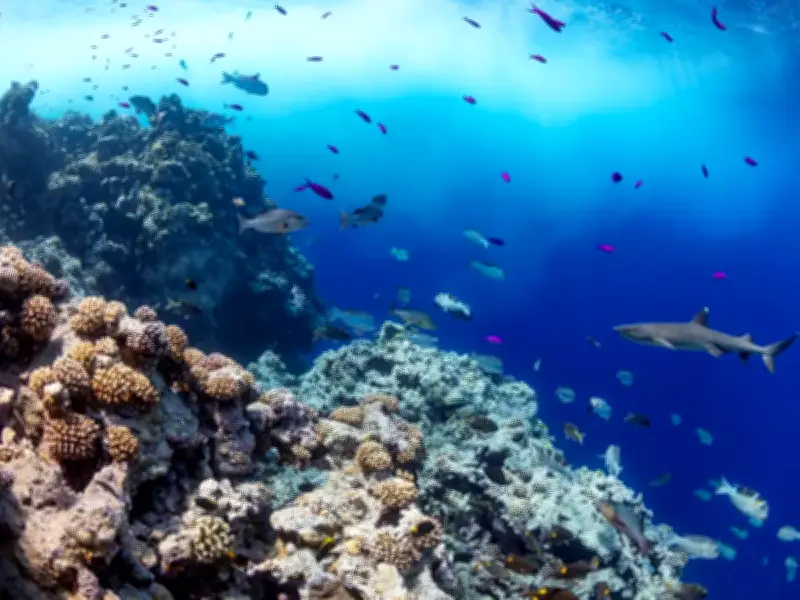
"These atolls have extensive seabird colonies, mature native vegetation, active turtle nesting, high reef-fish biomass and large predators, coral-dominated reefs at Bokak, structurally complex mesophotic habitats, and surprisingly diverse and poorly known deep-sea communities," said Friedlander.
Across both atolls, researchers found 15 seabird colonies that were confirmed or likely to be breeding. They also recorded at least 266 groups of reef fish, 138 groups of fish living at greater depths, and 79 groups of deep-sea fishes. Fifteen groups of open-water predators, including sharks, jacks, and wahoo, were recorded. Of these, 14 groups had not previously been recorded in the Marshall Islands, and two may be species new to science.
Friedlander concluded: "As human activities increasingly threaten biodiversity, areas devoid of intense human impacts serve as vital refugia. Large marine protected areas serve as globally important ecological reference systems for understanding the structure and future trajectories of tropical oceanic ecosystems in the Anthropocene."