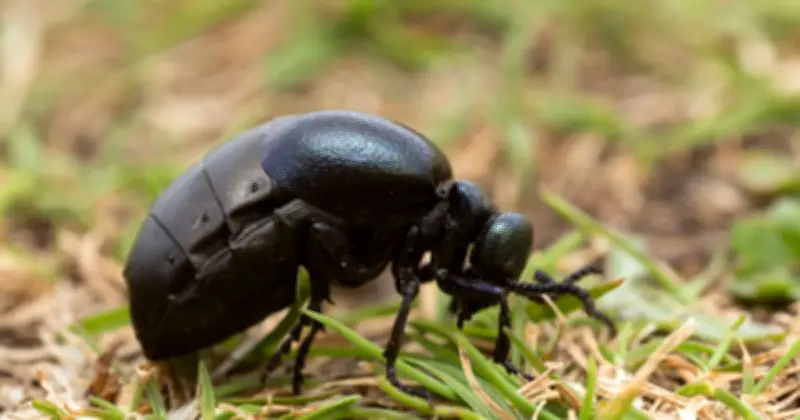
The Short-Necked Oil Beetle has been rediscovered in Wales for the first time in almost six decades, according to conservationists. The insect was found at Castlemartin Range in Pembrokeshire after three years of searching, Natural Resources Wales (NRW) said.
Surveys of the area in 2022 and 2025 found only dead adults of the beetle, raising concerns about the future of the species and its continued presence at the site.
Dependence on Solitary Bees and Specific Habitat
The insects are dependent on solitary bees for their lifecycle, as well as a particular habitat to survive. This includes bare earth for egg laying, thick vegetation for shelter and dense flower coverage to reproduce.
The NRW said these specific conditions mean there are only a "handful" of suitable sites for the beetle in the whole of the UK.
Discovery at Castlemartin Range
Castlemartin Range has been regularly surveyed and monitored by the Bumblebee Conservation Trust as part of a wider, national flagship species recovery programme. Anna Hobbs, project delivery officer at the charity, said rediscovering the Short-Necked Oil Beetle was significant.
She said: "It was very exciting to find this species and evidence of its breeding again, especially considering it will be the last survey for the species for our project. The Short-Necked Oil Beetle is an amazing creature and not only depends on a very specific habitat to survive, but the presence of solitary bees as well. So, the work we do needs to consider the needs of several species to be effective."
The Bumblebee Conservation Trust has also been working on the conservation of other endangered species, such as the Shrill Carder Bee and Goldilocks Aster, during its project.
Larvae Evidence and Conservation Status
The Short-Necked Oil Beetle discovery was made after larvae of the beetle was found on a small area of Castlemartin Range. The number and distribution of larvae, along with the time of the year, suggested conservationists had managed to find some of the hatchlings from a larger batch of immature beetles, the NRW said.
The insects are classed as nationally rare within Britain and listed as vulnerable on the IUCN Red List. They can grow up to 24mm (0.9 inches) in length, with a lifespan of about a year.
The beetle was rediscovered in Devon in 2006, while populations have since been found in the Hebrides and Salisbury Plain. Despite this, the NRW said Castlemartin Range is the only location in Wales where the species can be found.