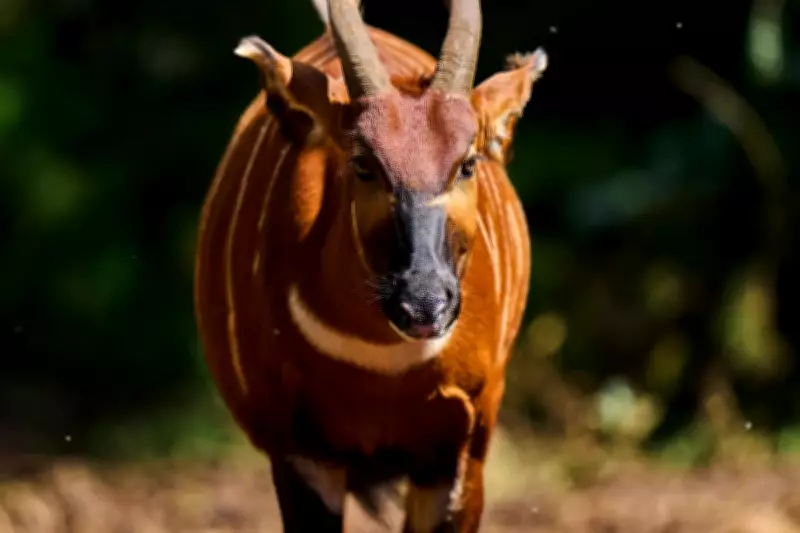
Conservationists in Kenya are working to bring the elusive mountain bongo, often called the 'ghost of the forest,' back from the brink of extinction. This critically endangered antelope, known for its brown coat and distinctive white stripes, is being slowly reintroduced into its natural habitat to increase its dwindling population.
A Rare Sight in the Wild
With fewer than 100 individuals remaining in the wild, the mountain bongo is one of Africa's most endangered mammals. The Mount Kenya Wildlife Conservancy, located on the slopes of Mount Kenya, is leading efforts to breed these animals and release them into the forest. Their goal is to achieve a wild population of 750 bongos by 2050.
The conservancy, spanning 1,250 acres near Nanyuki, has been restoring the survival instincts of zoo-bred bongos. The animals must learn to feed without human assistance, evade predators, and build immunity against diseases before they can be released.

Genetic Diversity Boost
Last week, the conservancy imported four male bongos from the European Association of Zoos and Aquaria via the Czech Republic. These new arrivals are currently in quarantine and under constant observation. They will interbreed with the descendants of 18 bongos that arrived from the United States in 2004, ensuring a more diverse genetic pool.
Dr. Robert Aruho, head of the conservancy, emphasized the importance of genetic health. 'We want bongos that are not only strong in body, but strong in the genes they pass to the next generation,' he said.
Historical Decline
The mountain bongo is native to Kenya's Mount Kenya, Aberdare, Eburu, and Mau forests. These forests play a critical role in the country's water supply. The last wild bongo was spotted in the Mount Kenya forest in 1994. In the 1960s, thousands of bongos died in disease outbreaks. During the 1980s, conservationist Don Hunt exported 36 bongos to the United States as an insurance policy, breeding them in captivity with plans to return them to the wild when conditions improved.
When the Mount Kenya Wildlife Conservancy opened in 2004, 18 descendants of these bongos were imported. Since then, they have interbred, bringing the conservancy's population to 102 individuals.
Community and Conservation
Caroline Makena, 33, grew up in the Mount Kenya region and recalls her grandmother's stories about bongos being a favorite bush meat. She never saw one until she started working as a gardener at the conservancy. 'I never knew the bongos were this beautiful, and I think my community loved them not just for the meat but because of their beauty,' she said.
Bongos are shy and can camouflage despite their stripes, which is critical for survival. Andrew Mulani, the bongo program assistant, explained that the shyest individuals are selected for release because docile animals would fall easily to predators. His most fulfilling moment was when the fourth calf was born in the wild last year, indicating that the bongos are thriving.
Challenges and Hope
Bongos have a gestation period of nine months, which slows population growth. They are also sensitive to certain plants and weather conditions. The conservancy supplements their diet with nutritious pellets and monitors them closely.
Thousands of tourists visit the conservancy annually, marveling at the bongos' spiraled horns. Conservationists hope that these efforts will make the 'ghost of the forest' a more common sight in Kenya's forests.